
Exploring the Most Majestic and Sacred Places of Worship in Barcelona
When you wander through the streets of the Catalan capital, you are not just visiting a modern Mediterranean hub; you are traversing a landscape shaped by centuries of faith and architectural genius. The various places of worship in Barcelona serve as silent witnesses to the city's evolution, from its Roman origins and medieval prosperity to the soaring heights of Modernisme. Whether it is the world-famous Sagrada Família or a hidden monastery in the hills, these sites offer a profound sense of peace.
I recommend treating these sacred spaces as more than just tourist stops. They are chronicles of a city that has survived wars, urban expansions, and cultural shifts. In this detailed guide, we will explore the must-see basilicas within the city and the essential spiritual escapes just beyond its borders, providing specific, actionable information for your journey.
The Evolution of Barcelona’s Sacred Architecture
To truly appreciate the places of worship in Barcelona, one must understand the "Then and Now." Centuries ago, the city’s skyline was dominated by stout Romanesque towers and heavy stone walls. During the medieval period, the "Catalan Gothic" style took over, characterized by wide naves and a sense of horizontal majesty.
By the late 19th century, Antoni Gaudí and his contemporaries revolutionized religious art with "Modernisme," introducing organic shapes and vibrant colors. Today, many of these sites have transitioned from exclusive places of prayer to cultural monuments that welcome millions of global travelers while still maintaining their spiritual heartbeat.
The Iconic Basilicas of the City Center
1. Basílica de la Sagrada Família
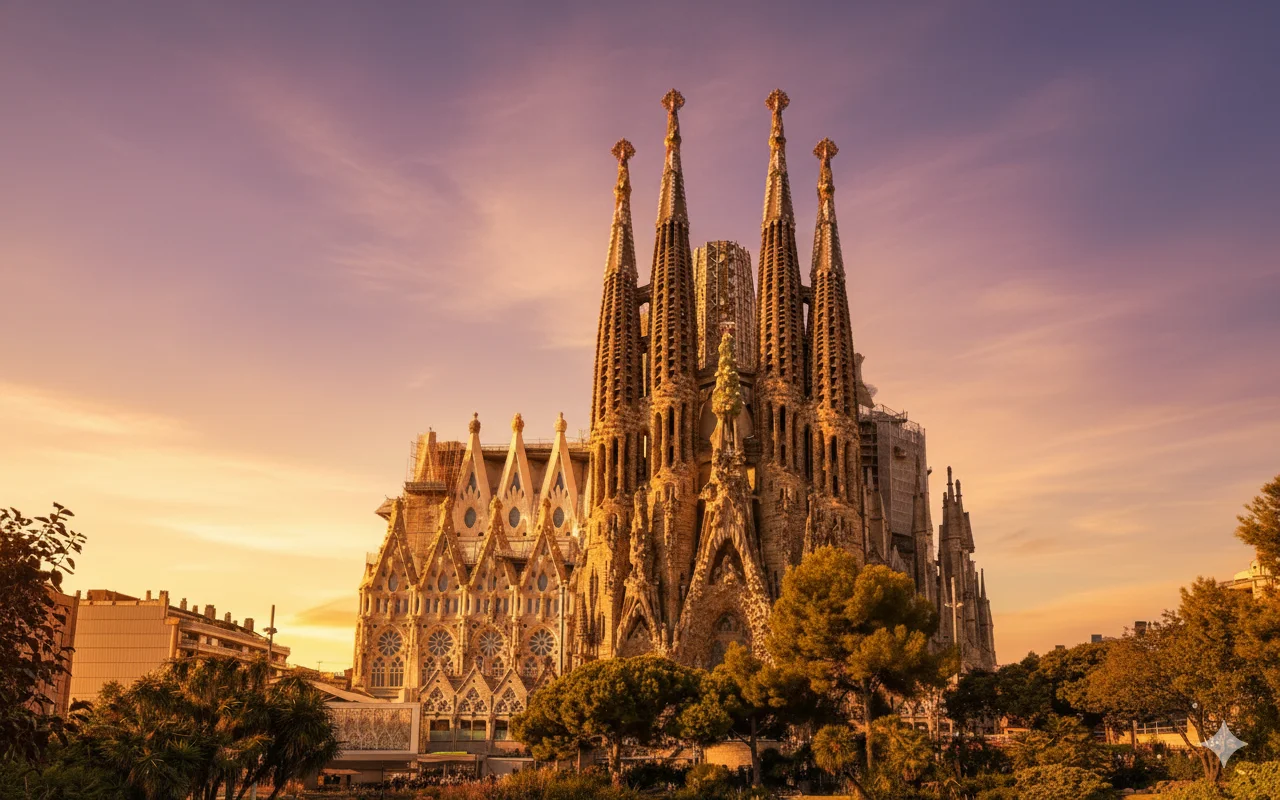
No conversation about religious landmarks can begin without Gaudí’s magnum opus. This is a "Bible in stone," where every pillar and carving tells a story.
- Then vs. Now: For decades, the site was a construction zone that felt like a shell. Today, the interior is a finished "stone forest." The sensation of light filtering through the stained glass is a modern experience that Gaudí planned over a century ago.
- When to visit: I recommend late afternoon. As the sun begins to set, the warm hues of the western windows flood the nave in oranges and reds.
- Insider Tip: Download the official app beforehand; the audio guide is essential for spotting details like the tortoises at the base of the columns.
- Cost: Basic entry is €26; adding tower access brings it to around €36-€40 depending on season and any temporary surcharges.
- Google Maps: Basílica de la Sagrada Família
Nearby Dining: After your tour, walk to Can Kenji, a wonderful Japanese-Catalan fusion spot. For a view, the rooftop bar at Ayre Hotel Rosselló offers a direct perspective of the spires.
For the full breakdown of facades, stained glass, and booking strategy, see our dedicated Sagrada Família guide.
2. Barcelona Cathedral (La Seu)
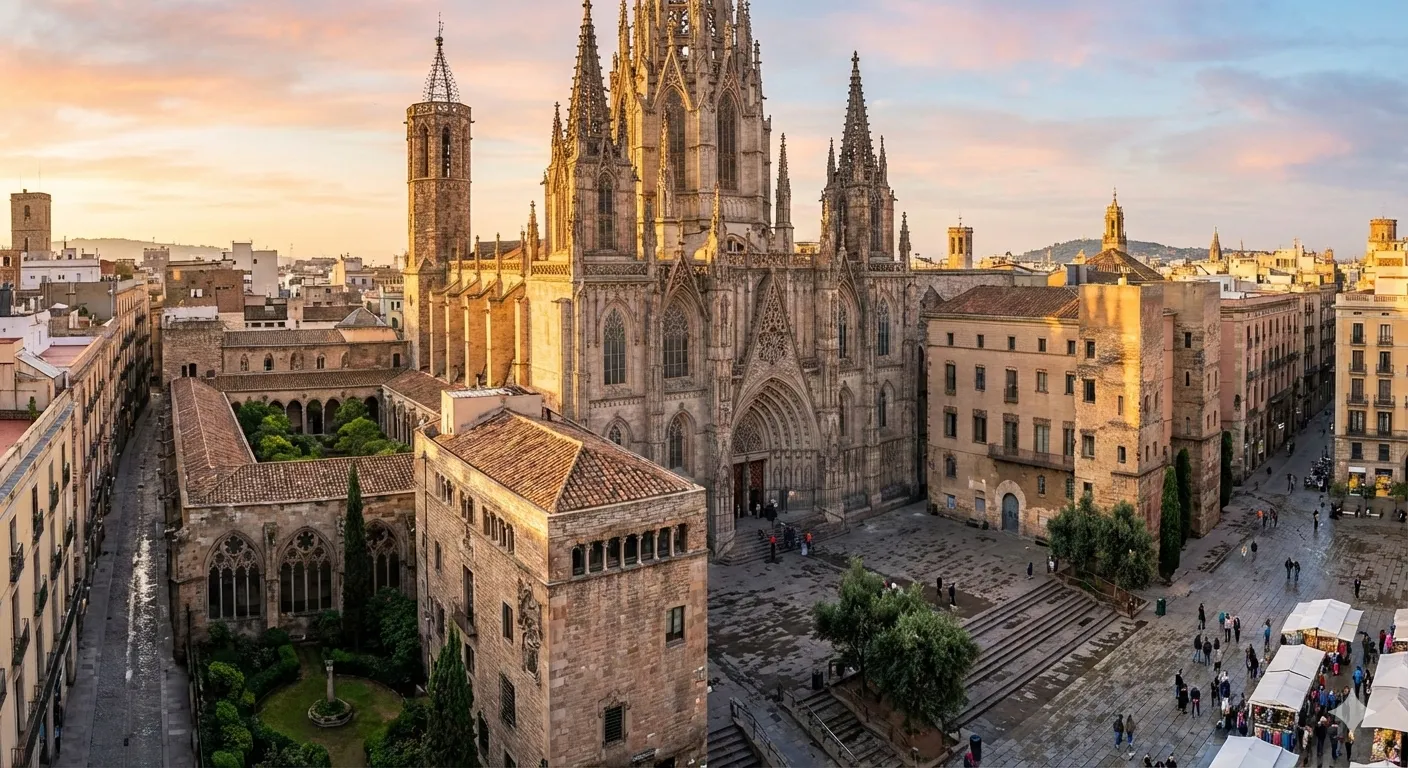
Located in the heart of the Gothic Quarter, this cathedral is dedicated to Saint Eulalia.
- The Experience: I highly recommend visiting the Cloister, home to 13 white geese representing Eulalia's age at her martyrdom.
- Then vs. Now: The elaborate facade you see today was added in the late 19th century. For centuries, the cathedral had a very simple, flat medieval front.
- Roof Access: Take the elevator to the roof for a close-up look at the gargoyles and a view of the Old City.
- Google Maps: Barcelona Cathedral
3. Santa Maria del Mar Church
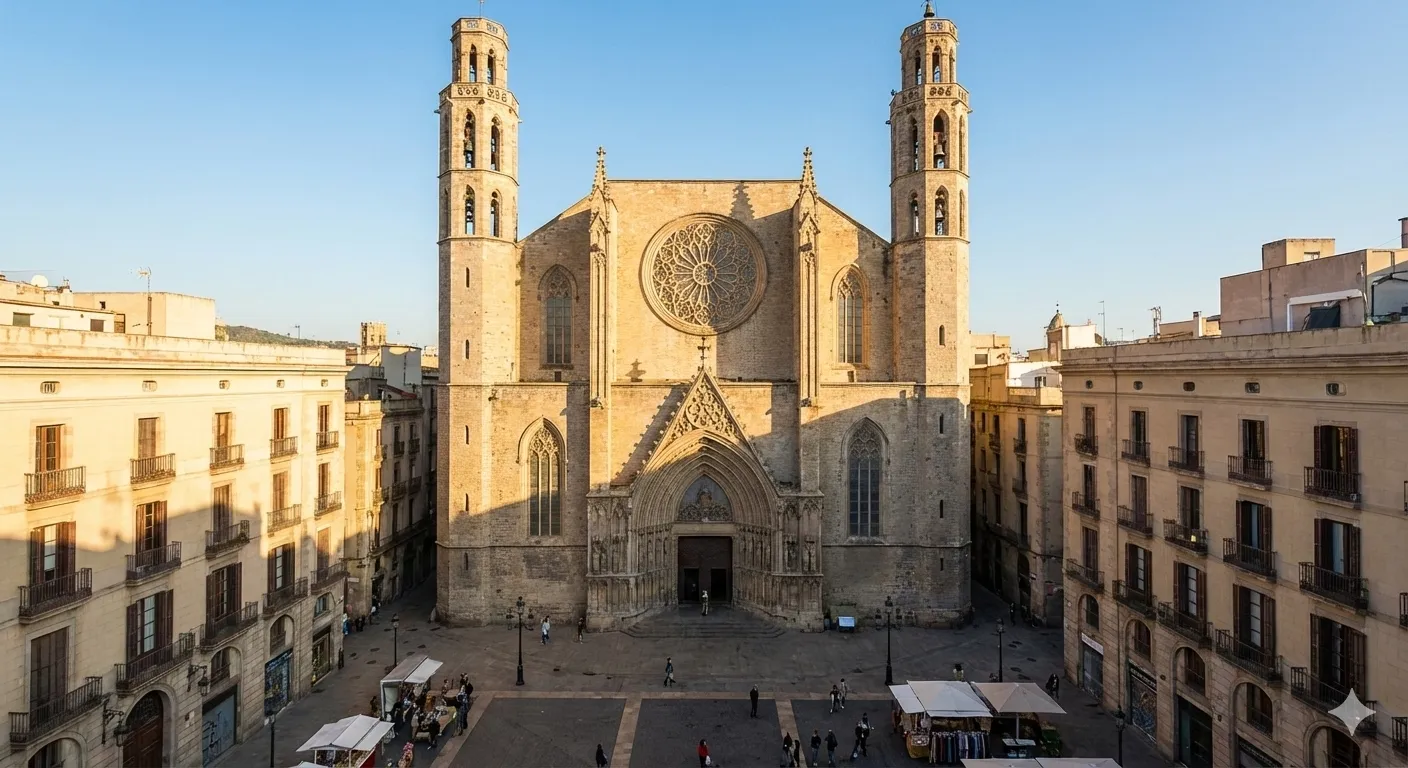
Often called the "Cathedral of the Sea," this 14th-century church was built by local shipworkers and porters.
- The Architecture: It is the finest example of pure Catalan Gothic. The interior is sparse because much of its art was lost during the Civil War, which actually highlights its architectural purity.
- Insider Tip: Look for the small figures of the "bastaixos" (porters) carved into the main doors—a tribute to the men who carried the stones from Montjuïc.
- Google Maps: Santa Maria del Mar Church
Local Spot: Visit La Vinya del Senyor, a wine bar right in front of the church facade, for a quintessential Mediterranean afternoon.
4. Basílica de Santa Maria del Pi
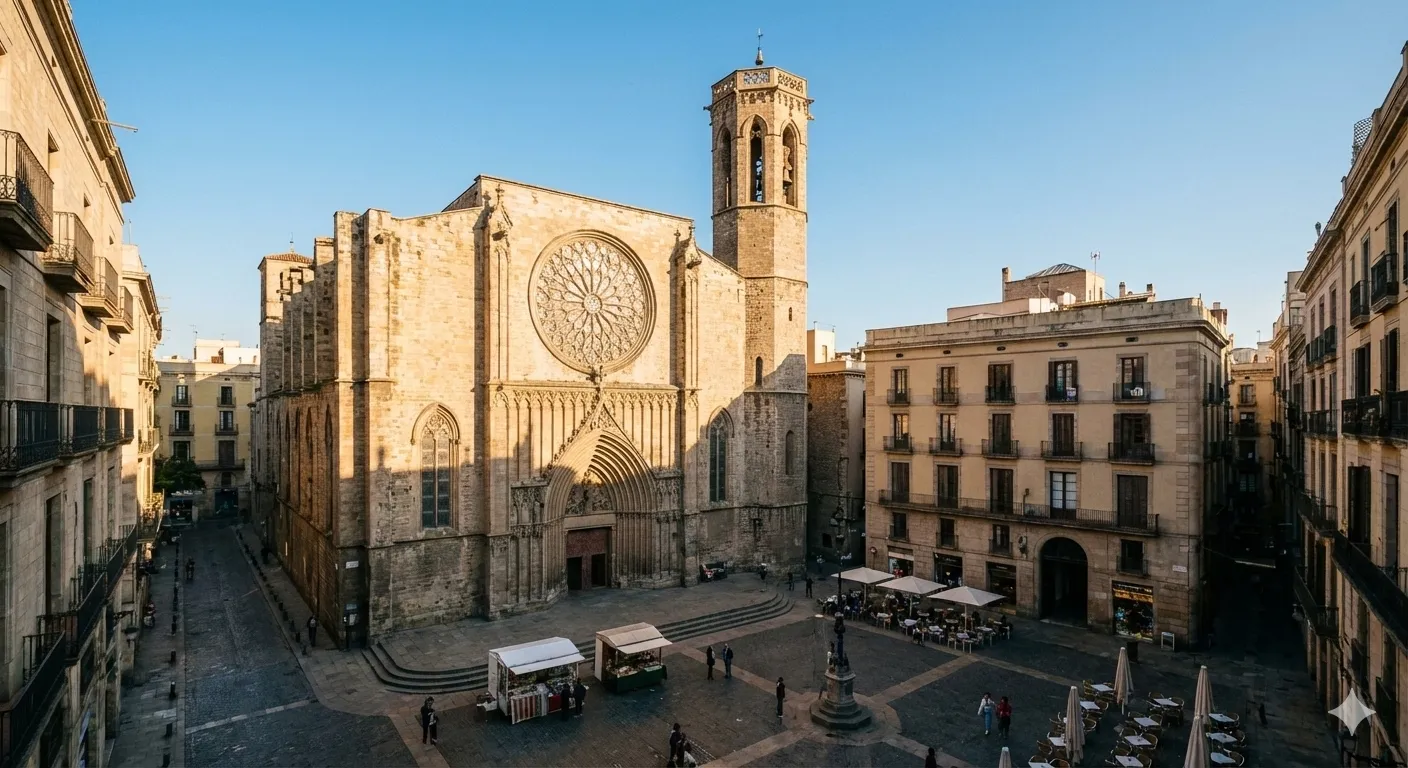
Tucked between the Plaça del Pi and Plaça de Sant Josep Oriol, this church features one of the largest rose windows in the world.
- The Vibe: The squares surrounding the church often host artisan markets. I recommend climbing the bell tower for an "intimate" view of the Gothic Quarter’s rooftops.
- Google Maps: Basílica de Santa Maria del Pi
Nearby Sweet Spot: Visit Caelum, a cafe selling pastries made by monks and nuns. It is located in a basement that was once part of ancient Jewish baths.
Reaching the Heights: Spiritual Escapes
5. Temple del Sagrat Cor (Tibidabo)
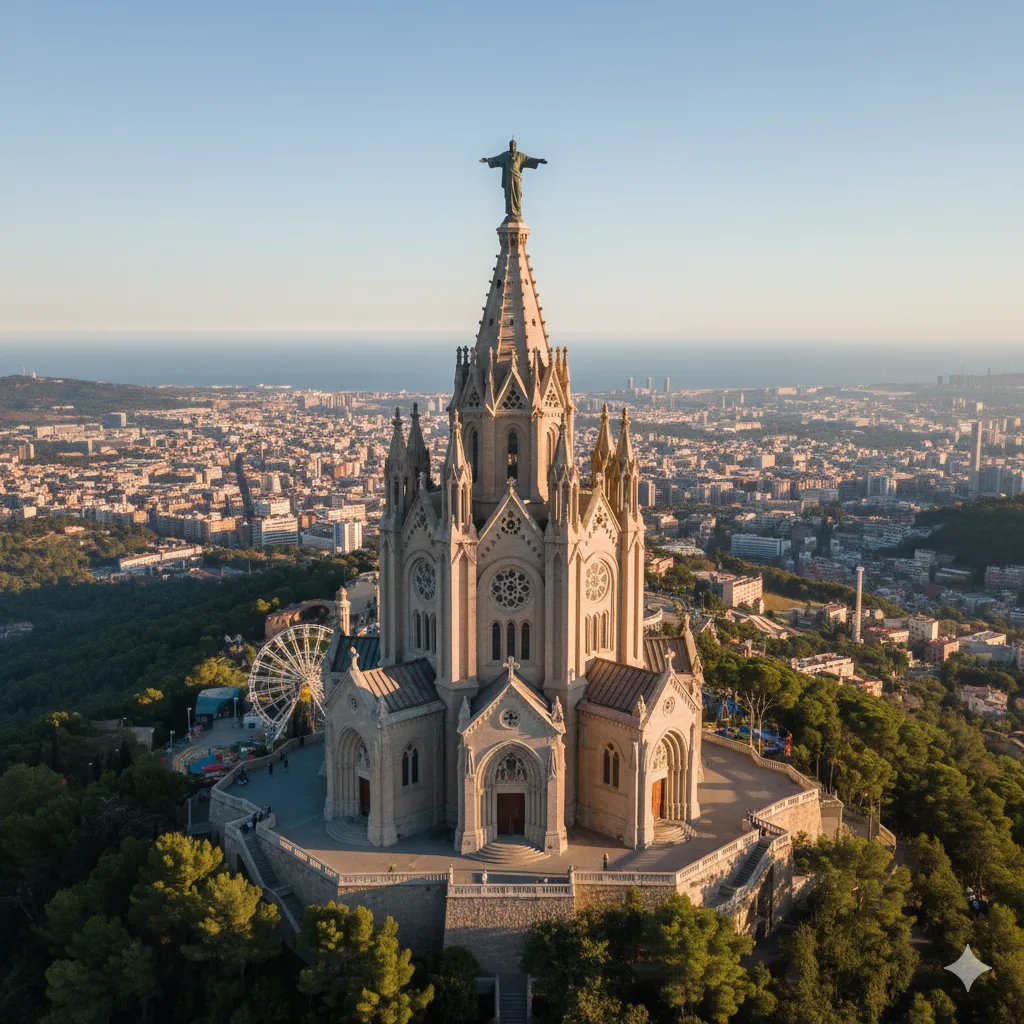
Perched on the highest point of Barcelona, this church is visible from almost anywhere in the city.
- The Structure: It is two churches in one—a dark Romanesque crypt at the bottom and a bright neo-Gothic church on top, crowned by a massive statue of Jesus.
- The Journey: I recommend taking the funicular for the best views. It shares the mountain with one of the world's oldest amusement parks.
- Google Maps: Temple del Sagrat Cor
Dining with a View: Grab a bite at Mirablau, a restobar with panoramic windows providing an unbeatable view of the city lighting up at night.
For rides, hours, and the funicular details, see our dedicated Tibidabo guide.
6. Abadia de Montserrat
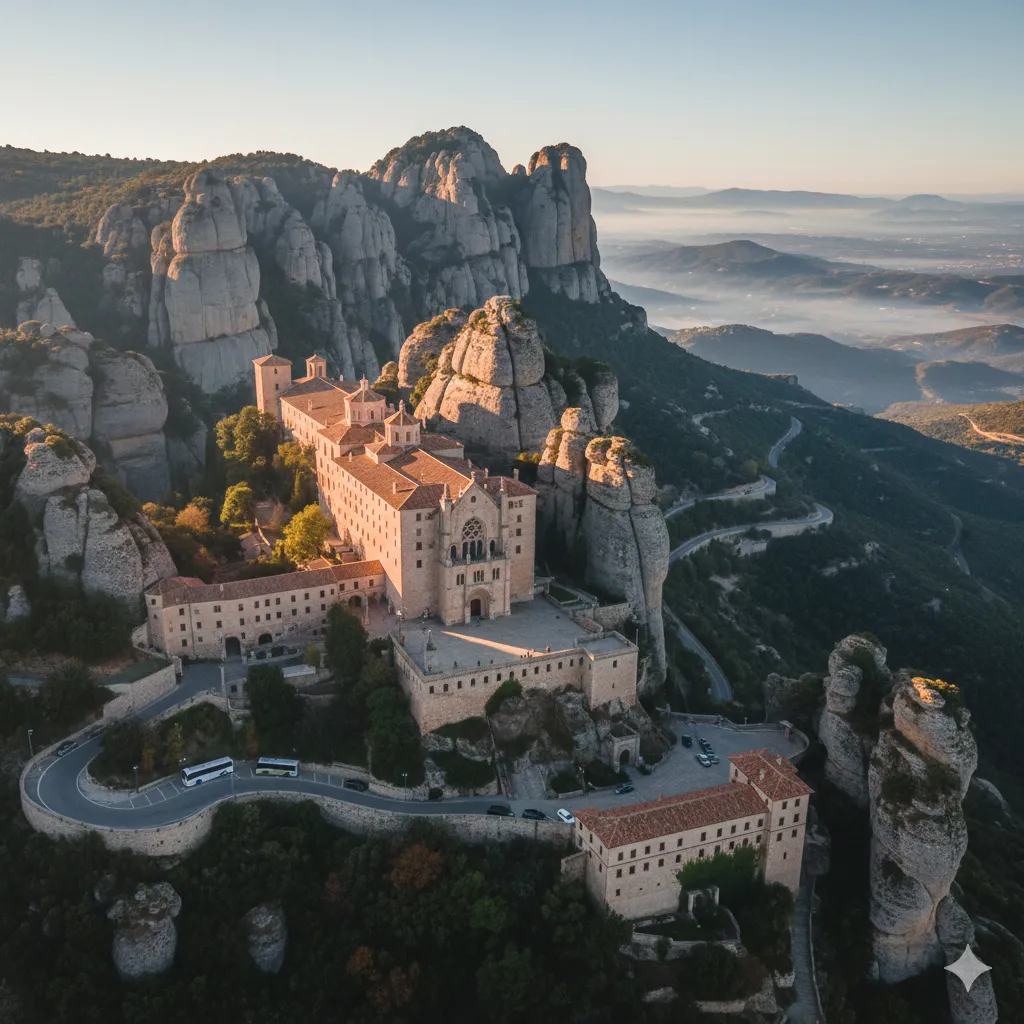
Located about an hour from the city, this is the spiritual heart of Catalonia.
- The Highlight: The "Moreneta" or Black Madonna. I also recommend checking the schedule for the Escolania de Montserrat, one of the oldest boys' choirs in Europe.
- When to visit: Go early. Take the train from Plaça d'Espanya and use the cable car (Aeri) to reach the top.
- Google Maps: Abadia de Montserrat
For the full itinerary, hiking trails, and boys' choir schedule, see our dedicated Montserrat day trip guide.
Hidden Gems and Historic Monasteries
7. Barcelona Synagogue (Sinagoga Major)
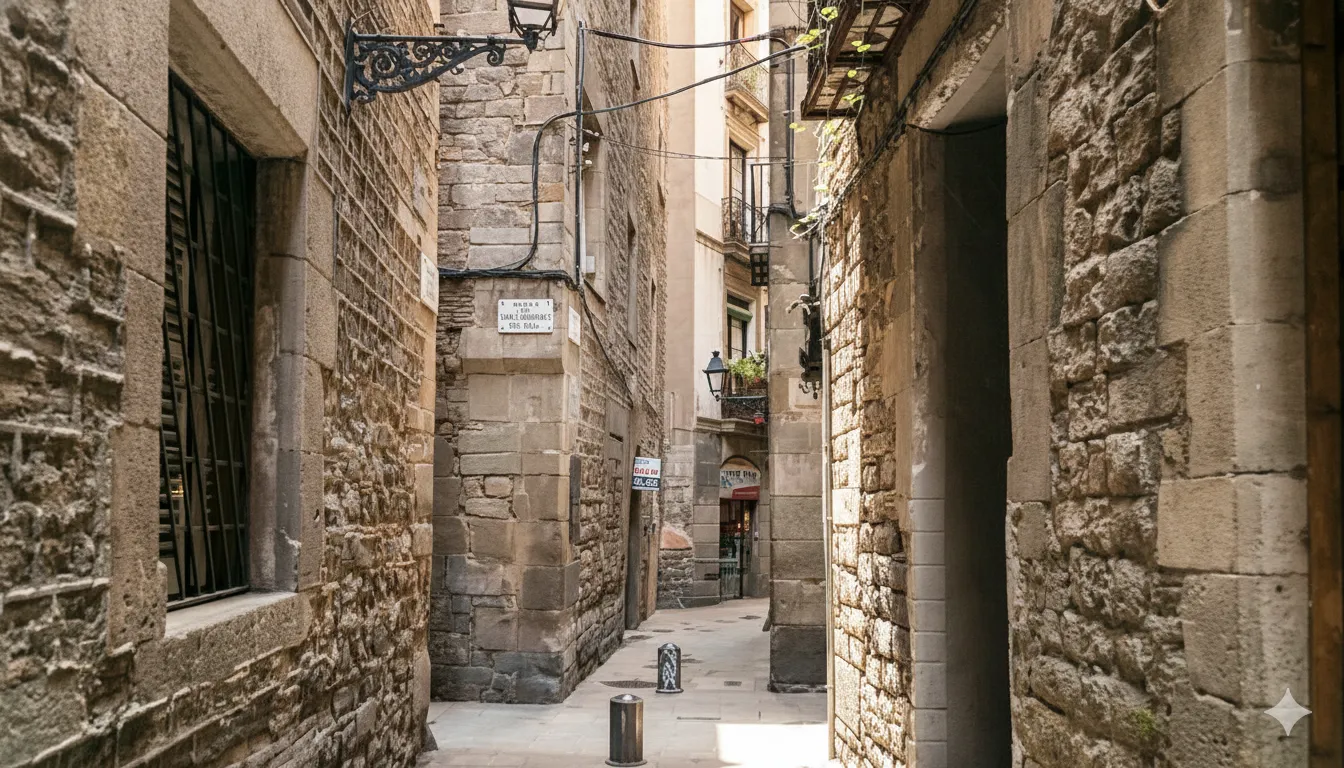
Located in the old Jewish Quarter, this is one of the oldest synagogues in Europe.
- The Experience: It is a small, underground space rediscovered in the late 1990s. It feels deeply moving and provides a window into the city's diverse past.
- Google Maps: Sinagoga Major de Barcelona
8. Monestir de Pedralbes
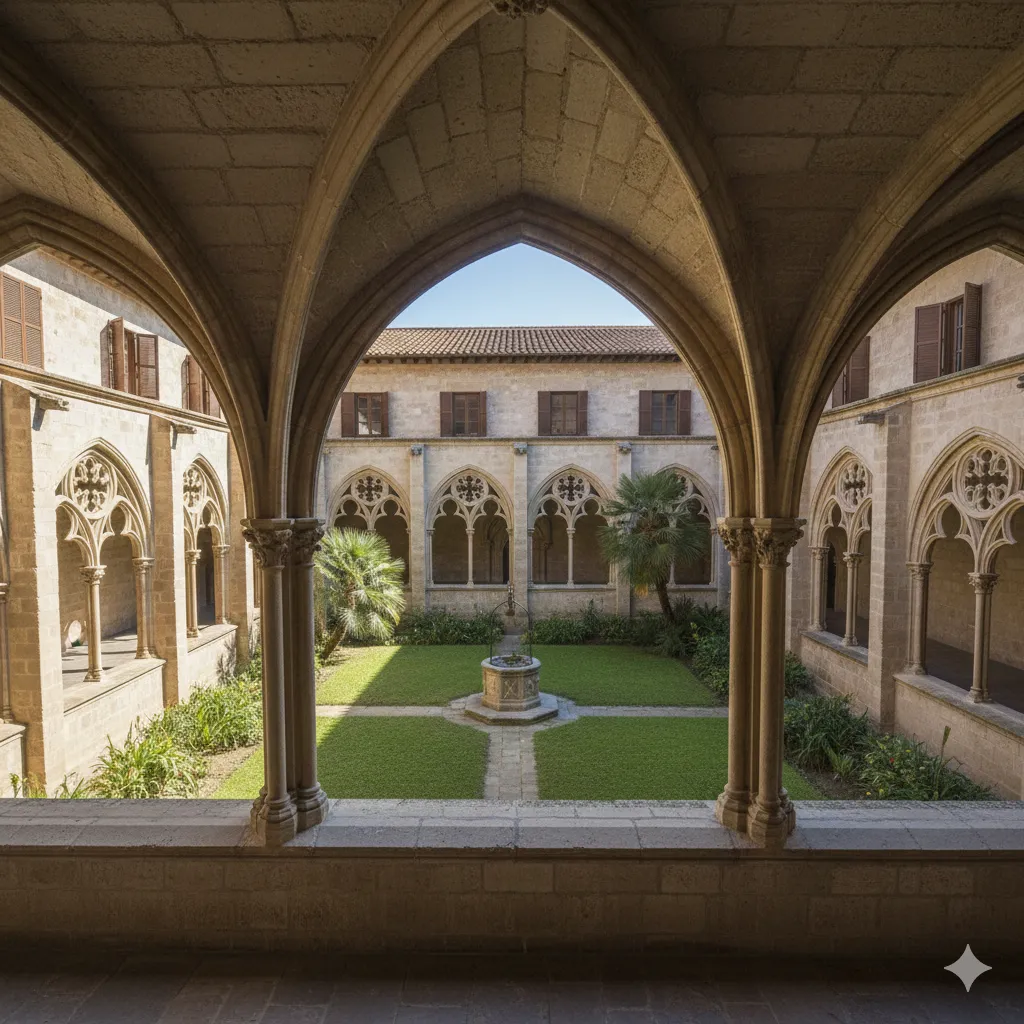
A bit further from the center, this Gothic monastery is a haven of absolute silence.
- The Cloister: The three-story cloister is one of the best-preserved in the world. I recommend this place if you need a break from the city's pace.
- Google Maps: Monestir de Pedralbes
For opening hours, ticket prices, and more history, see our Barcelona hidden gems guide.
9. Monastery of Sant Cugat
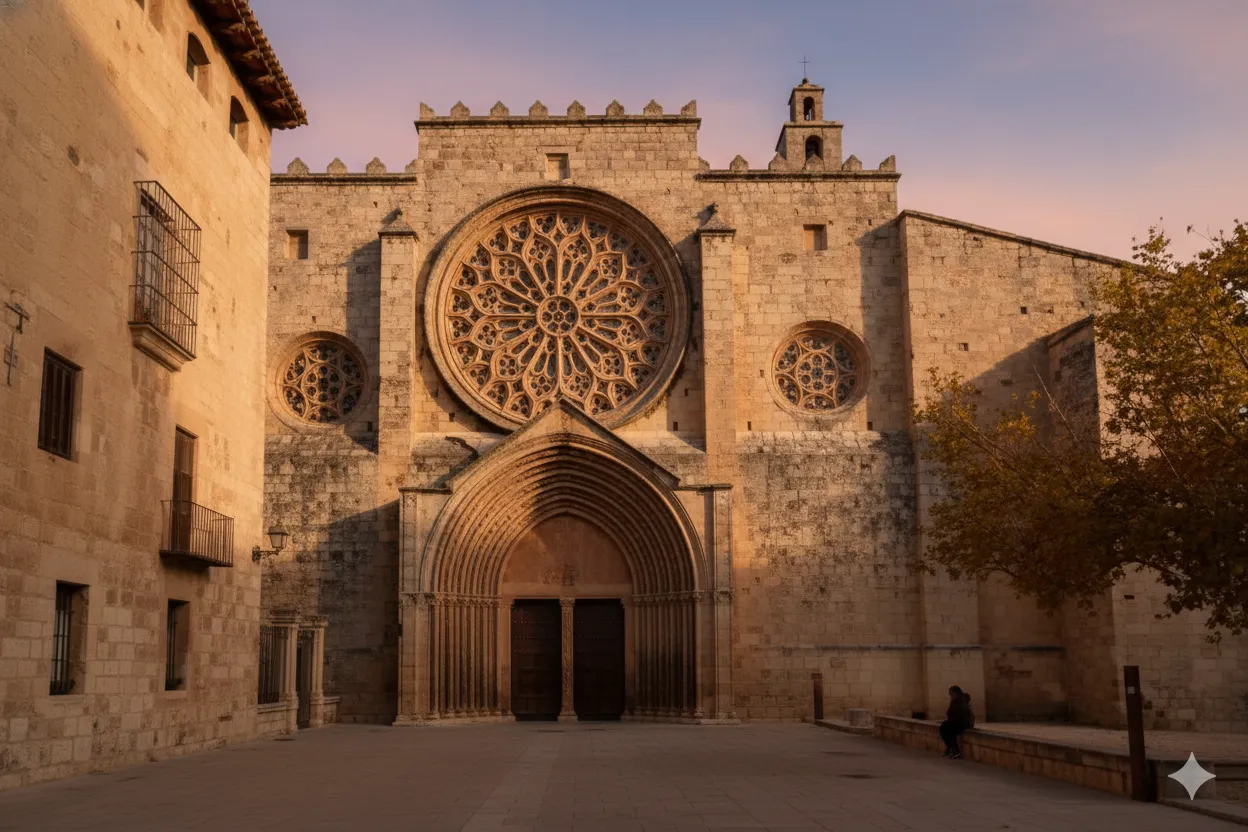
Just a 20-minute train ride away, this town features a monastery with an incredible Romanesque cloister.
- The Capitals: Look closely at the 144 capitals of the columns; each is carved with a different scene, from biblical stories to medieval life.
- Google Maps: Monestir de Sant Cugat
10. Monastery Món Sant Benet
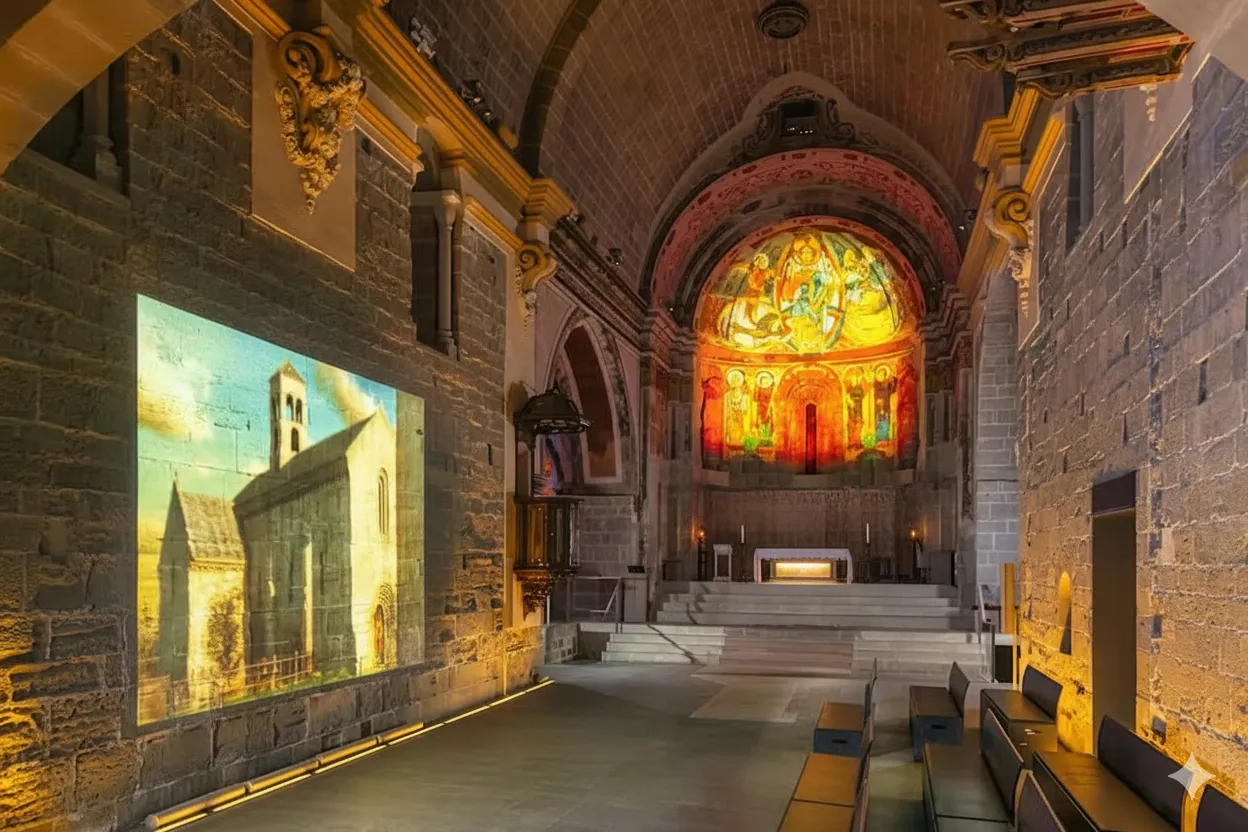
Located in the Bages region, this site blends a medieval monastery with modern art and gastronomy.
- The Experience: They offer an immersive tour using light and sound projections. It is also home to the Alicia Foundation, a food research center.
- Nearby Food: If you are a foodie, book a table at the Michelin-starred L'Ó on the grounds.
- Google Maps: Món Sant Benet
Practical Tips for Your Spiritual Tour
To ensure your visit to these places of worship in Barcelona is respectful and rewarding, keep these points in mind:
- Dress Code: Most sites are active parishes. Shoulders should be covered, and shorts/skirts should reach mid-thigh. I recommend carrying a light pashmina or scarf in your bag to drape over your shoulders.
- Mass Times: Entry for mass is free, but you cannot walk around or take photos during the service. Check the "Horari de Misses" at the doors.
- Respect the Silence: Even if you aren't religious, many locals use these spaces for prayer. Keep your voice low and turn off your camera flash.
- Booking: For Sagrada Família and Montserrat, I recommend booking tickets at least a week in advance, especially during the summer (June-August).
- Accessibility: Note that Gothic towers (like Santa Maria del Pi) often have narrow, winding stone stairs. However, the Cathedral and Sagrada Família have elevators for roof access.
Frequently Asked Questions
What is the dress code for visiting Barcelona's churches?
Most sites are active parishes, so shoulders should be covered and shorts or skirts should reach mid-thigh. Carrying a light scarf or pashmina in your bag to drape over your shoulders is an easy fix if you show up underdressed.
Can I visit Sagrada Família for free?
Not for general sightseeing, but entry for mass is free — you just can't walk around or take photos during the service. Check the "Horari de Misses" (mass times) posted at the doors.
What is the Black Madonna of Montserrat?
The "Moreneta" is Montserrat's most venerated icon, housed in the abbey that serves as the spiritual heart of Catalonia. Time your visit around the schedule of the Escolania de Montserrat, one of Europe's oldest boys' choirs, if you want to hear them perform.
What should I look for at the Monestir de Sant Cugat?
The cloister's 144 carved capitals, each depicting a different scene — biblical stories and medieval life — are the highlight, reachable by a 20-minute train ride from the city.
Do I need to book Sagrada Família and Montserrat in advance?
Yes, especially in summer (June-August) — book at least a week ahead for both, since same-day tickets often sell out.
Why Visit These Sacred Spaces?
The places of worship in Barcelona are the anchors of their neighborhoods. They are where the city's history is stored in stone and glass. Whether you are marvelling at the mathematical genius of Gaudí or the simple, sturdy walls of the Sinagoga Major, you are seeing the layers of Barcelona's identity.
I recommend taking your time. Don't try to "check off" all these churches in one day. Visit one in the morning, enjoy a long lunch at a nearby cafe, and let the atmosphere of the space sink in. These sites aren't just for the religious; they are for anyone who appreciates beauty and the incredible things humans can build when inspired by something greater than themselves.
From the vibrant stained glass of the Eixample to the silent stone courtyards of the Gothic monasteries, your journey through Barcelona’s spiritual heritage will likely be the most memorable part of your trip. Enjoy the silence, the light, and the timeless history of these Mediterranean sanctuaries.