
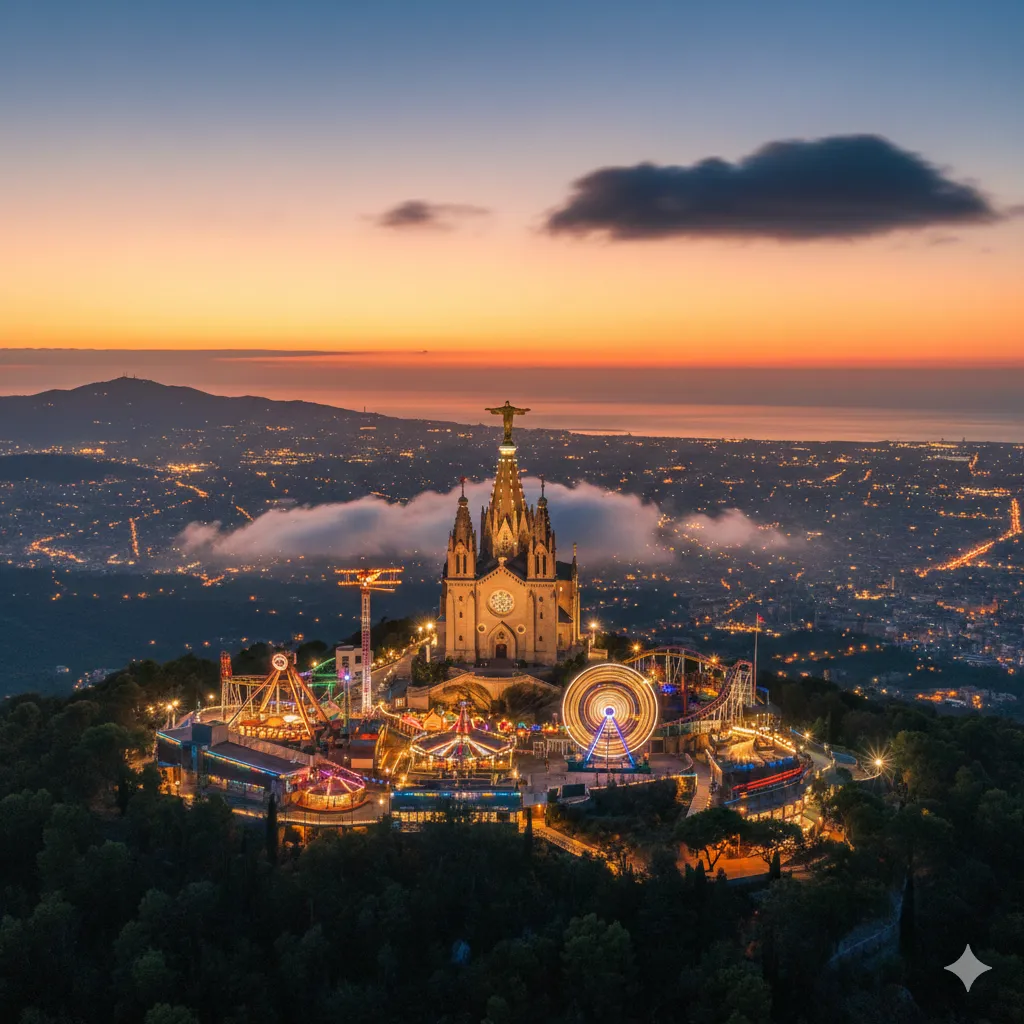
Experience the Magic of Tibidabo: The High Point of Barcelona
Perched on the tallest peak of the Serra de Collserola, Tibidabo Barcelona is far more than just a mountain; it is a symbol of the city’s skyline and a sanctuary of nostalgia. Standing at 512 meters above sea level, this destination provides a unique combination of a century-old amusement park, a magnificent neo-Gothic church, and sprawling natural trails. Whether you are looking for a thrilling ride on a vintage attraction or a quiet moment of reflection looking out over the Mediterranean Sea, I recommend making Tibidabo a priority on your Barcelona itinerary.
In this guide, we will explore everything you need to know about the "Magic Mountain," from its historical evolution to the best spots for a sunset dinner.
The Evolution of the Magic Mountain: Then and Now
To understand Tibidabo, you have to appreciate its history. The name itself comes from the Latin "Tibi dabo," meaning "I will give to you," a reference to the biblical temptation of Christ.
The Journey Then vs. Now
Historically, the journey up the mountain was an adventure in itself. Since 1901, the Tramvia Blau (Blue Tram) carried passengers through the elegant neighborhoods of Sant Gervasi to the foot of the funicular. While the Blue Tram is currently undergoing a long-term restoration, the modern experience has been elevated—literally—by the Cuca de Llum (Glow-worm). This new, state-of-the-art funicular replaced the old wooden cars in 2021. Where the old funicular was a slow, rattling climb, the Cuca de Llum is a fast, glass-walled technological marvel that offers panoramic views of the city as you ascend in just a few minutes.
The Park Atmosphere
What makes Tibidabo special is its commitment to preservation. While other parks modernise every few years, Tibidabo has kept its soul. You can still ride attractions that your great-grandparents might have enjoyed, yet they are maintained with modern safety standards. It feels like a living museum of leisure.
Top Things to See and Experience
1. Temple Expiatori del Sagrat Cor
The most iconic silhouette on the mountain is the Temple Expiatori del Sagrat Cor. This church, designed by Enric Sagnier, took over 60 years to complete.
- The Crypt: I recommend starting in the crypt, which features beautiful mosaics and a warm, stony atmosphere.
- The Terrace and Towers: Entry to the church and crypt is free; a small €3 fee gets you the elevator ride to the upper terraces. From here, you are standing directly below the massive bronze statue of the Sacred Heart. On a clear day, you can see all the way to the Montserrat mountain range.
- Google Maps: Temple del Sagrat Cor
2. The Historic Amusement Park (Parc d'Atraccions)
Tibidabo is one of the oldest functioning amusement parks in the world. I recommend focusing on the "Emblematic Rides" that define the park’s character.
- L'Avió (The Airplane): This is the world’s first flight simulator, dating back to 1928. It is a replica of the first plane to fly the Barcelona-Madrid route. It doesn't use an engine; it's powered by its own propeller!
- Talaia: A giant metal arm from 1921 that lifts you 550 meters above sea level. It is a simple but terrifyingly beautiful way to see the city.
- Giradabo: The colorful Ferris wheel which has become the modern icon of the park. It’s a great spot to spend time with kids or for a romantic photo.
3. The Sky Walk (Panoramic Area)
If you don't want to pay for the full amusement park experience, you can still visit the Panoramic Area. This level is open even when the main rides are closed and features the most iconic vintage attractions. You pay per ride here, or simply walk around for free to enjoy the viewpoints.
Where to Eat: From Picnics to Panoramic Dining
Visiting Tibidabo can work up an appetite. Depending on your mood, you have several fantastic options nearby.
For a Romantic Dinner: Mirablau
Located at the base of the funicular, Mirablau is an institution. It is a restobar and club that offers floor-to-ceiling windows looking over the city. I recommend coming here just before sunset. Watching the city lights of Barcelona flicker on while you enjoy a glass of local Cava is an experience you won't forget.
- Google Maps: Mirablau
Authentic Catalan Cuisine: Can Cortès
If you are looking for something more traditional and "away from the crowds," a short drive or bus ride into the Collserola forest will bring you to Can Cortès. This is a beautiful old farmhouse (Masia) serving grilled meats and seasonal Catalan dishes like calçots in the winter.
- Google Maps: Can Cortès
Quick Bites and Desserts
Inside the park, you will find classic stalls. I recommend trying the Churros with Chocolate near the Talaia ride during the cooler months. For a summer treat, there are several ice-cream parlors along the Sky Walk that serve local artisanal flavors.
Exploring the Natural Side: Collserola Park
Many people forget that Tibidabo is part of the Parc Natural de la Serra de Collserola, the largest metropolitan park in the world.
Carretera de les Aigües
I recommend a visit to the Carretera de les Aigües if you enjoy walking or cycling. This is a flat, 10km dirt path that runs along the ridge of the mountain. It got its name from the water pipes that used to run along the route. It is the favorite spot for local runners and offers a spectacular, unobstructed view of the Eixample district and the sea.
Hiking to the Top
If you are feeling energetic, you can hike from the city to the summit. The trail starts near the Peu del Funicular station. It’s a moderate climb through pine and oak forests. You will likely see locals walking their dogs or even the occasional wild boar—don't worry, they are used to people, but I recommend keeping your distance!
Practical Information for Travelers
When to Visit
- Best Time: I recommend visiting on a weekday if possible, as weekends can get very busy with local families.
- Seasonal Considerations: The Amusement Park is generally open on weekends and holidays during the winter, and Wednesday through Sunday in the summer. Always check the official Tibidabo calendar before you go.
- Sunset: Tibidabo is the absolute best place in Barcelona to watch the sunset. Aim to be at the Sky Walk or the Sagrat Cor terrace about 30 minutes before the sun dips behind the mountains.
Transport Tips
- The Funicular: The Cuca de Llum leaves from Plaça del Doctor Andreu.
- The Tibibús: This is a direct shuttle bus (T2A) that leaves from Plaça de Catalunya. It’s the easiest and most cost-effective way to get there if you aren't interested in the funicular ride.
- FGC Train: Take the S1 or S2 to Peu del Funicular, then a smaller funicular up to Vallvidrera Superior, and finally a bus (111) to the summit. This is the most "local" route and is covered by a standard T-Casual or T-Usual transport card.
Things to Keep in Mind
- Weather: It is often 3-5 degrees Celsius cooler on the mountain than in the city center. Even in summer, I recommend bringing a light jacket for the evening.
- Belongings: While Tibidabo is a safe and family-oriented area, it is always a good practice to be mindful of your personal belongings in crowded areas near the park entrance.
- Ticketing: You can buy a "Panoramic Area" ticket or a "Full Park" ticket. If you only want the views and a couple of historic rides, the Panoramic ticket is much cheaper.
Summary of Cost Ranges (Approximate)
- Amusement Park Full Ticket: Around €35-€39 for adults (over 120cm), €14-€15.50 for children 90-120cm tall, and free under 90cm. Prices shift by day and season, so check the official Tibidabo site before you go.
- Panoramic Area Only: Access is free; individual emblematic rides cost around €4 each.
- Transport (Cuca de Llum): Around €12 for a return trip (often cheaper if bought with a park ticket).
- Food: €15-€25 per person for casual dining; €40-€60 for a full meal at a place like Mirablau.
Why Tibidabo is Unmissable
Tibidabo offers a perspective of Barcelona that you simply cannot get from the ground. It allows you to see the city as a whole—the grid of the Eixample, the winding streets of the Gothic Quarter, and the massive scale of the Sagrada Família.
I recommend Tibidabo to travelers because it captures the Catalan spirit of Seny i Rauxa—the balance of common sense (represented by the solemn church) and creative madness (represented by the whimsical rides). Whether you are screaming on the roller coaster or standing in awe on the church balcony, you are experiencing the very best of Barcelona.
Spend a full afternoon here. Start with a hike or the funicular, visit the Sagrat Cor, enjoy the vintage charm of the Avió, and finish with a cold drink at Mirablau. You will leave the mountain understanding why locals have called this the "Magic Mountain" for over a hundred years.
Nearby Experiences to Combine
If you have extra time, I recommend visiting the CosmoCaixa Science Museum at the base of the mountain. It is one of the best science museums in Europe and features a massive "flooded forest" that is spectacular for all ages.
- Google Maps: CosmoCaixa
Frequently Asked Questions
How much does it cost to visit Tibidabo?
The Panoramic Area itself is free to enter, with individual emblematic rides around €4 each. The Full Park ticket runs roughly €35-€39 for adults, €14-€15.50 for children 90-120cm tall, and is free under 90cm — prices vary by day and season.
How much is the elevator to the Sagrat Cor terraces?
Entry to the church and its crypt is free. The elevator ride up to the terraces beneath the Sacred Heart statue costs a small €3 fee.
What is L'Avió at Tibidabo?
It's the world's first flight simulator ride, dating to 1928 — a replica of the first plane to fly the Barcelona-Madrid route. It has no engine; it's powered entirely by its own propeller.
How do you get to Tibidabo without a car?
The Cuca de Llum funicular from Plaça del Doctor Andreu, the direct Tibibús shuttle (T2A) from Plaça de Catalunya, or the FGC train (S1/S2) to Peu del Funicular followed by a smaller funicular and bus 111 — the last option is covered by a standard T-Casual or T-Usual transport card.
What's the best time to visit Tibidabo for sunset?
Arrive at the Sky Walk or the Sagrat Cor terrace about 30 minutes before sunset. Tibidabo is widely considered the best sunset spot in Barcelona, and weekdays are noticeably quieter than weekends.