
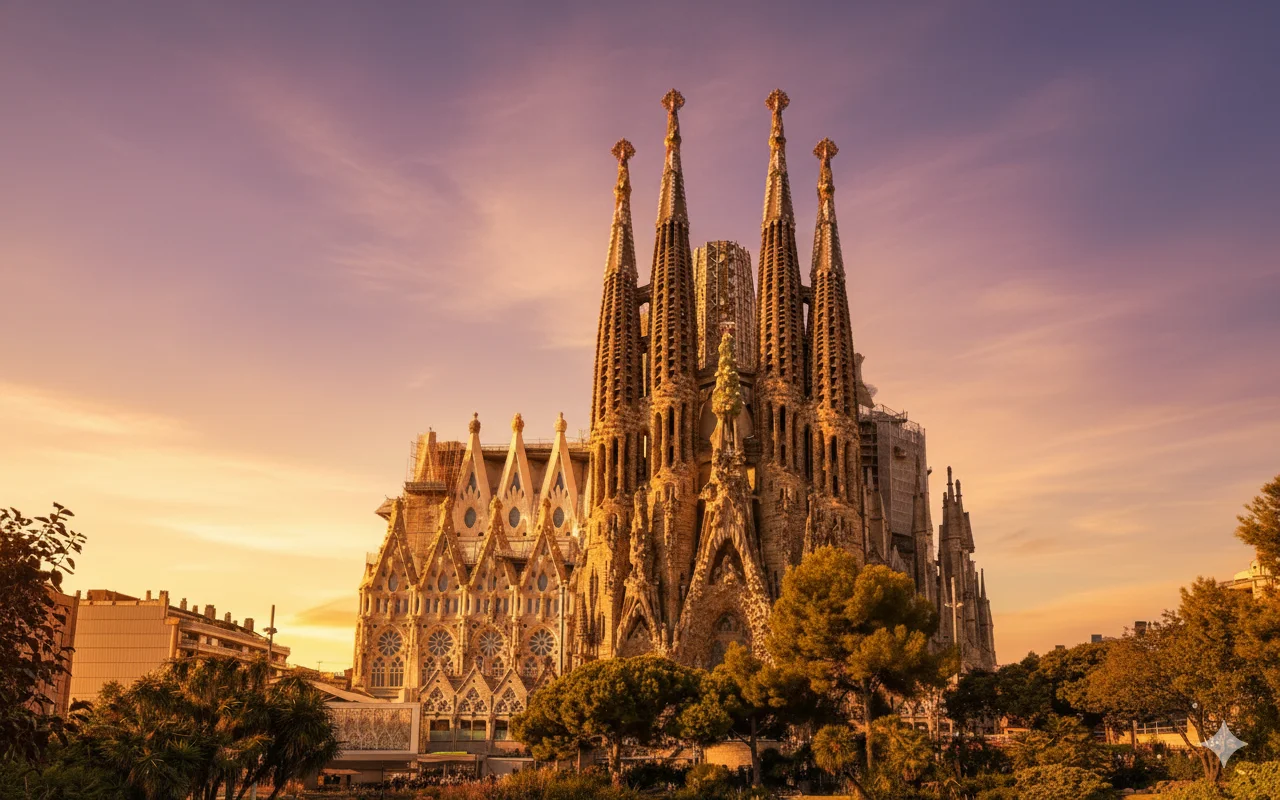
Exploring the Majestic Sagrada Familia: A Complete Barcelona Guide
When you first step out of the metro station and look up, the sheer scale of the Sagrada Familia is enough to take your breath away. It is not just a church; it is a stone forest, a mathematical marvel, and a testament to the lifelong dedication of Antoni Gaudí. As someone who has spent hours wandering its aisles, I recommend this place as the absolute "must-see" on any Barcelona itinerary. It is the crowning jewel of Catalan Modernism, and even after over 140 years, it remains a work in progress.
In this guide, I will walk you through how to experience the Sagrada Familia like a seasoned traveler. We will dive into the history, the architectural shifts from the past to the present, and the best ways to spend your time both inside and around the basilica.
A Tale of Two Eras: The Past vs. The Present
The history of the Sagrada Familia is a fascinating journey of persistence. When construction began in 1882 under architect Francisco de Paula del Villar, it was meant to be a standard Neo-Gothic church. However, when Gaudí took over a year later, he completely reimagined the project.
How it Used to Be
In the early 20th century, the site looked very different. For decades, only the Nativity Facade and one tower stood against the Barcelona skyline. It was a lonely, skeletal structure surrounded by fields. Gaudí knew he wouldn't live to see it finished, so he left detailed 3D models and drawings. Sadly, during the Spanish Civil War, many of these models were destroyed, leaving later architects to piece together his vision like a giant, stone jigsaw puzzle.
What it is Now
Today, the transformation is staggering. In late 2023, the four Towers of the Evangelists were finally completed and illuminated, marking a massive milestone. The central Tower of Jesus Christ is currently under construction and, once finished, will make the Sagrada Familia the tallest church in the world. What was once a hollow shell is now a fully consecrated Basilica with a finished roof, stunning stained glass, and a vibrant museum.
You can find the entrance to the site at C/ de Mallorca, 401, 08013 Barcelona, Spain.
The Facades: Stories Written in Stone
The exterior of the Sagrada Familia is divided into three main facades, each representing a different stage in the life of Christ. I suggest spending at least 30 minutes just walking around the perimeter to appreciate the contrast between them.
The Nativity Facade (The Past)
This is the only facade that Gaudí saw almost to completion. It faces the east (sunrise) and is incredibly ornate. Look closely, and you will see a celebration of life: intricately carved animals, plants, and scenes of the birth of Jesus. It feels organic, almost as if the stone is breathing.
- Where to find it: Facing Carrer de la Marina.
- Insider Tip: Look for the "Tree of Life," the green cypress tree at the top, which symbolizes eternal life.
The Passion Facade (The Present)
In stark contrast to the Nativity Facade, the Passion Facade—located on the opposite side—is harsh, angular, and skeletal. Designed by Josep Maria Subirachs, it depicts the suffering and death of Jesus. Many people initially found it jarring compared to Gaudí’s softer style, but its emotional impact is undeniable.
- Where to find it: Facing Carrer de Sardenya.
- Key Detail: Look for the "Magic Square" next to the statues; the numbers in the grid always add up to 33, the age of Christ at his death.
The Glory Facade (The Future)
This will eventually be the main entrance to the Basilica. Currently, it is still very much under construction. Once finished, it will represent the path to God: Death, Final Judgment, and Glory.
Stepping Into the Stone Forest: The Interior
While the outside is impressive, the interior is where the Sagrada Familia truly becomes magical. Gaudí hated straight lines, believing they didn't exist in nature. Instead, he designed the columns to look like massive trees that "branch out" as they reach the ceiling.
The Play of Light
The stained-glass windows are arranged chronologically and emotionally. On the Nativity side (East), the glass is composed of cool blues and greens, representing the birth and the morning. On the Passion side (West), the colors shift to fiery reds, oranges, and yellows, representing the sunset and the end of life.
- Best Time to Visit: I highly recommend visiting in the late afternoon. As the sun begins to set, the West-facing windows cast a warm, golden glow across the entire nave that is simply unforgettable.
The Altar and the Canopy
The altar is relatively simple but powerful, featuring a suspended crucifix under a glowing baldachin (canopy). It creates a sense of weightlessness that draws your eyes upward toward the hyper-paraboloid structures of the ceiling.
Ascending the Towers: A Bird’s Eye View
If you aren't afraid of heights, I suggest booking a ticket that includes tower access. You usually have to choose between the Nativity Tower and the Passion Tower.
- The Nativity Tower: Offers views toward the east of Barcelona and the sea. You get a closer look at the colorful fruit mosaics atop the pinnacles.
- The Passion Tower: Offers views toward the city center and the mountain of Montjuïc.
- What to expect: You take an elevator up, but you must walk down a narrow, winding stone staircase. It’s a bit of a tight squeeze, so keep that in mind if you are claustrophobic.
The Museum and the Schools
Don't make the mistake of leaving right after seeing the main nave. Beneath the Passion Facade lies the Sagrada Familia Museum. This is a great spot to spend time if you want to understand the "how" behind the "what."
- Original Models: You can see the reconstructed plaster models that architects use today.
- The Workshop: There is a glass-walled viewing area where you can see modern-day craftsmen and architects working on the project in real-time.
- The Schools: Just outside the Passion Facade is a small, wavy-roofed building. This was a school Gaudí built for the children of the construction workers. It is a beautiful example of his functional yet artistic architecture.
Practical Information for Your Visit
To ensure your visit is smooth, here are some essential details to keep in mind.
Opening and Closing Hours
The Sagrada Familia is generally open every day of the year, though hours can change based on religious ceremonies.
- November to February: 9:00 AM to 6:00 PM.
- March and October: 9:00 AM to 7:00 PM.
- April to September: 9:00 AM to 8:00 PM.
- Special Dates: On December 25th and 26th, and January 1st and 6th, the hours are usually 9:00 AM to 2:00 PM.
Things to Keep in Mind
- Booking: You must book your tickets online in advance. They often sell out weeks ahead, especially during peak season.
- Dress Code: This is a functioning Church, please dress respectfully.
- Security: There is a security screening at the entrance similar to an airport. Avoid bringing large luggage or sharp objects.
- Stay Mindful: The area around the basilica is very busy. While it is safe, I suggest staying mindful of your personal belongings and bags while you are distracted by the beautiful architecture.
Where to Eat and Relax Nearby
After spending a few hours exploring, you’ll likely be hungry. The area immediately surrounding the basilica can be crowded, but there are some wonderful spots just a few blocks away.
For a Hearty Meal
- La Paradeta (Sagrada Família): If you love seafood, I recommend this place. It’s a "market-style" restaurant where you pick your fresh fish at the counter and tell them how you want it cooked.
- Bardeni El Meatbar: A great spot for meat lovers. It’s a bit more upscale but offers incredible quality in a relaxed atmosphere.
Cafes and Quick Bites
- Brunch & Cake by the Sea (or nearby branches): Known for their colorful, Instagram-worthy plates that actually taste great. Their Sagrada Familia location is perfect for a late breakfast.
- Sagradas Mamas: A cozy cafe perfect for a coffee and a sandwich after your tour.
Dessert and Ice Cream
- Gelaaati Di Marco: While there are many shops nearby, walking a few blocks to find authentic gelato is worth it.
- Xurreria Sagrada Familia: You cannot leave Barcelona without trying Churros con Chocolate. This spot is right by the park and offers a classic taste of Spain.
Nearby Experiences to Pair with Your Visit
Since you are already in the Eixample district, why not make a day of it?
-
Avinguda de Gaudí: This is a beautiful pedestrian-only street that starts right at the Nativity Facade. It is lined with cafes and leads you straight to the Hospital de Sant Pau Recinte Modernista, another stunning architectural gem that is often much quieter than the Sagrada Familia.
-
Plaça de Gaudí: This is the park located directly across from the Nativity Facade. It has a small pond that provides the perfect reflection of the basilica for photos. I recommend spending 10 minutes here just to sit on a bench and soak in the view.
Do’s and Don’ts for a Great Experience
- DO download the official Sagrada Familia app. It includes an excellent audio guide that helps explain the complex symbolism you might otherwise miss.
- DON'T buy tickets from unauthorized street sellers. Always use the official website.
- DO look up. Some of the most intricate details are on the ceiling and the very tops of the columns.
- DON'T rush. Even if you aren't religious, the atmosphere inside is designed for contemplation. Find a seat in one of the pews and just observe the light.
- DO check the weather. If it’s a very cloudy day, the stained-glass effect inside won't be as dramatic, though the architecture remains stunning.
FAQ
What are the Sagrada Familia's opening hours?
They vary by season: 9:00 AM to 6:00 PM from November to February, 9:00 AM to 7:00 PM in March and October, and 9:00 AM to 8:00 PM from April to September. On December 25th and 26th and January 1st and 6th, hours are usually 9:00 AM to 2:00 PM.
Do I need to book Sagrada Familia tickets in advance?
Yes — tickets must be booked online in advance and often sell out weeks ahead, especially in peak season. Always use the official website rather than street sellers.
What's the best time to visit for the stained glass?
Late afternoon, when the sun is setting in the west. The Passion-side windows cast a warm, golden glow across the nave that's most dramatic at that time of day.
Should I book tower access?
If you're not afraid of heights, yes — you choose between the Nativity Tower (views toward the sea) or the Passion Tower (views toward the city center and Montjuïc). You take an elevator up but walk down a narrow, winding staircase, so it's not ideal if you're claustrophobic.
Is there a dress code at the Sagrada Familia?
Yes — it's a functioning church, so dress respectfully. There's also airport-style security screening at the entrance, so avoid bringing large luggage or sharp objects.
Final Thoughts
The Sagrada Familia is more than just a building; it’s a living piece of history that continues to grow. Every time I visit, I notice something new—a small carving of a turtle, the way the light hits a specific pane of glass, or the progress on a new spire. It is a place that rewards patience and curiosity.
Whether you are an architecture buff, a history lover, or simply a traveler looking for beauty, the Sagrada Familia will leave an imprint on your heart. Enjoy your visit, take plenty of photos, and remember to look beyond the stone to see the vision of the man who started it all.