
Mastering the Barcelona Metro and Bus System Like a Local
Barcelona is a city designed to be explored, but its real magic is unlocked when you master the Barcelona Metro, the extensive bus network, and the seamless bus transfers. In 2026, the city’s public transportation is more integrated and tech-forward than ever. Whether you are heading to the heights of Montjuïc or the sun-soaked shores of Barceloneta, the urban mobility here is world-class. I recommend embracing the transit system not just as a way to get from point A to B, but as a way to experience the city's diverse neighborhoods like a true resident.
In this guide, I’ll walk you through how to navigate the subterranean lines, the orthogonal bus grid, and the clever ticketing systems that make travel efficient and affordable.
This guide focuses specifically on the metro, the bus network, and — most usefully — exactly how the ticketing and transfer rules work, since that's where most visitors overpay or get confused. If you also want funiculars, the tram, regional trains to day trips, and biking, our complete Barcelona transportation guide covers those modes in depth.
Navigating the Barcelona Metro
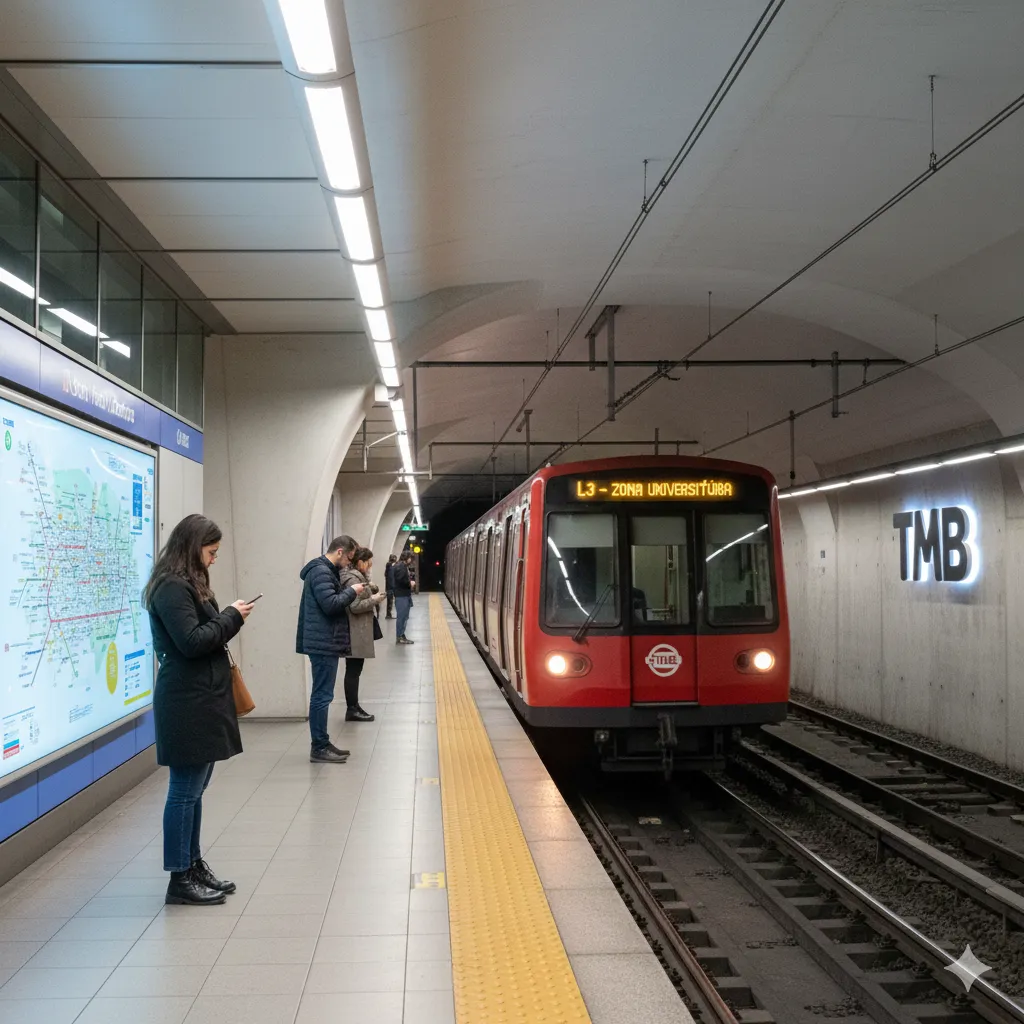
The Barcelona Metro is the heartbeat of the city. It is fast, air-conditioned, and remarkably frequent.
Key Lines for Travelers
- L3 (Green Line): This is the ultimate "sightseeing" line. It connects the Gothic Quarter (Drassanes), the luxury shopping of Passeig de Gràcia, and the base of the funicular to Montjuïc (Paral·lel).
- L4 (Yellow Line): This is your beach line. It takes you straight to Barceloneta and Vila Olímpica. I recommend using this line if you want to catch a Mediterranean breeze.
- L5 (Blue Line): Essential for architecture lovers, as it stops right at the doorstep of the Sagrada Família.
- L9 Sud (Orange Line): This is the dedicated airport link connecting Terminal 1 and Terminal 2 to the city’s metro network. Standard T-Casual tickets don't cover this line — see the ticketing section below.
Operating Hours
- Monday to Thursday: 05:00 to 00:00 (midnight).
- Friday: 05:00 to 02:00.
- Saturday: Continuous service (24 hours).
- Sunday: 05:00 to 00:00 (midnight).
Insider Tip for the Metro
I recommend downloading the TMB App. It gives you real-time arrivals and tells you exactly which car of the train to board for the fastest exit at your destination. It saves you those precious minutes when you're rushing to a dinner reservation!
The Modern Bus Network
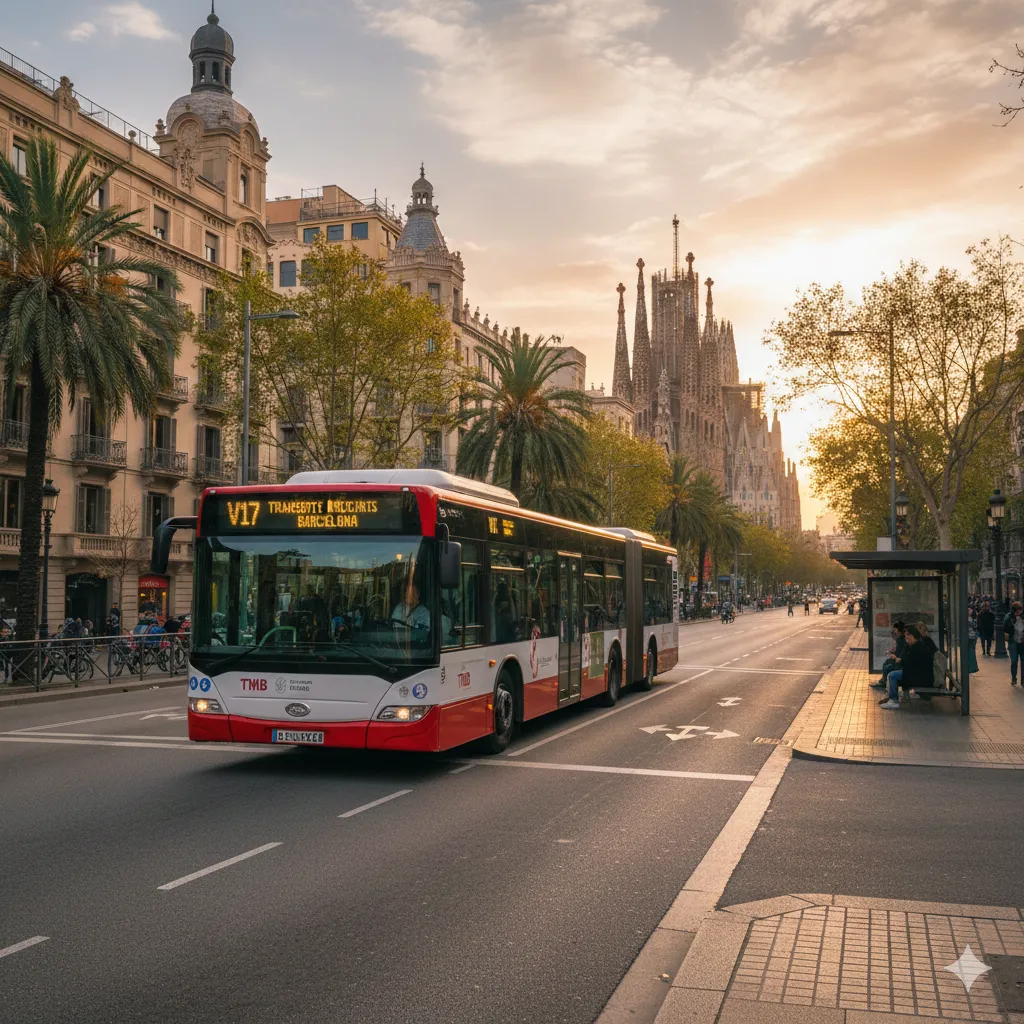
The Barcelona Bus system (TMB) is often overlooked by travelers, but it is a fantastic way to see the city's architecture above ground.
- H Lines (Horizontal): Run east to west (parallel to the sea).
- V Lines (Vertical): Run from the mountains toward the sea.
- D Lines (Diagonal): Run along the major avenues like Diagonal.
- The Nitbus: When the Metro closes on weeknights, the yellow Nitbus (Night Bus) takes over. Most lines start or end at Plaça de Catalunya, ensuring you can always get home after a late-night tapas session.
Nearby Treat: Brunch near Plaça de Catalunya
If you are waiting for a bus or metro transfer at the central hub of Plaça de Catalunya, I recommend stopping at Brunch & Cake. Their vibrant, flower-topped dishes are a local favorite.
Mastering Bus Transfers and the 75-Minute Rule
One of the best-kept secrets of bus transfers in Barcelona is the integrated fare system. When you use a multi-journey ticket (like the T-usual or T-casual):
- The 75-Minute Window: You have 75 minutes from the time you first "tap in" to make up to three transfers between different modes of transport (e.g., Metro to Bus, or Bus to Tram) without being charged for a second journey.
- The Golden Rule: You must validate your ticket/card every time you enter a new vehicle. As long as it’s within the 75-minute window and you are switching lines or modes, it won't deduct an extra ride.
This makes it incredibly cost-effective to zip across the city. You could take the Metro to a landmark, spend 20 minutes taking photos, and hop on a bus to your next destination all for the price of one ride.
Ticketing: Finding Your Perfect Pass
Choosing the right ticket can save you significant money. Here are the options I recommend for travelers:
1. T-Casual
- Best for: Casual travelers staying 2-3 days who won't use the airport metro.
- Details: Gives you 10 rides across metro, bus, FGC, tram, and Rodalies within Zone 1. It's individual and cannot be shared (you cannot tap once for yourself and once for your partner). It does not cover the L9 Sud airport metro — you'd need a separate airport supplement or a different card for that leg.
- Cost: Roughly €11-13 for the 10-ride pack (prices are set by the regional transport authority and adjust periodically — check the TMB app or a station machine for the current fare).
2. T-Usual
- Best for: Staying a week or more and using transit daily.
- Details: Unlimited travel for 30 days, and unlike the T-Casual, it does include the airport metro at no extra charge. It's linked to your T-Mobilitat card, so keep the physical card or the app handy.
- Cost: Roughly €23 for 30 days of unlimited travel — it typically pays for itself after 15-20 individual rides.
3. Hola Barcelona Travel Card
- Best for: Stress-free short-term tourism.
- Details: Unlimited rides for 48, 72, 96, or 120 consecutive hours across metro, bus, tram, FGC, and Rodalies Zone 1 — including the airport metro, which is its main advantage over the T-Casual.
- Cost: Starts around €19 for the 48-hour option, rising with duration.
4. T-Mobilitat (The Physical Card)
Every ticket type above is loaded onto a T-Mobilitat card or the TMB app — it's the payment rail, not a ticket itself. The cardboard version costs a small one-time fee (well under €1) at any station and is rechargeable indefinitely; tap it on the red readers on buses and metro turnstiles.
Logistics: Getting to and from the Airport
When you arrive at El Prat (BCN), you have two main transit choices:
- The Aerobús: A blue express bus that takes you directly to Plaça de Catalunya in about 35 minutes, running roughly every 5-10 minutes during the day (dropping to about every 20 minutes late at night) from around 5:00 AM to 1:00 AM. A one-way ticket costs about €7.50, or around €13 for a return (valid 90 days). It has free Wi-Fi and USB chargers.
- The Metro (L9 Sud): Great if your hotel is near the Fira (Convention Center) or the University district. Remember, a T-Casual ticket doesn't cover this line — you need the T-Usual, a Hola Barcelona Travel Card, or a specific airport supplement fare.
Nearby Stop: La Boqueria at Liceu
The L3 Metro's Liceu stop drops you right on La Rambla, a short walk from the Boqueria Market — worth timing your transfer around if you're hungry.
Practical Tips for Your Transit Journey
- Stay Mindful: While the transit system is safe and clean, I recommend being attentive to your personal belongings in busy hubs like Sants Estació or Sagrada Família. It's always best to keep your bag in front of you in crowded cars.
- Accessibility: Barcelona is incredibly proud of its accessible transit. Over 90% of Metro stations have elevators, and every single bus has a retractable ramp for wheelchairs and strollers.
- Avoid Peak Hours: I recommend avoiding the 08:00 to 09:30 morning rush if you can. The city is bustling, and the Metro can get quite snug with locals heading to work.
- Validation: On buses, the validation machines are near the doors. On the Metro, they are at the turnstiles. Always validate, as "inspectors" do check regularly, and the fines can be steep.
Culinary Stops Near Major Transit Hubs
Transit hubs are often surrounded by incredible food. Here are my favorite "pit stops":
- Near Passeig de Gràcia (Metro L2/L3/L4): Visit El Nacional. It’s a spectacular multi-space dining experience inside a renovated 19th-century industrial pavilion. Great for a quick tapa or a full meal.
- Near Barceloneta (Metro L4): After your beach bus ride, head to La Cova Fumada. It's a historic, family-run spot where the "Bomba" (a potato and meat ball) was invented.
- Near Gràcia (Metro L3/L4 or FGC): I recommend Gelaaati Di Marco. It’s a short walk from the Fontana stop and offers some of the most authentic Italian-style gelato in the city.
Things to Keep in Mind
- Sustainability: Barcelona is committed to becoming a greener city. Most buses are now hybrid or electric. By using public transport, you are directly helping the city maintain its Mediterranean charm.
- Temperature: The Metro stations can get warm in August, but the trains themselves are icy-cool. The buses are also perfectly climatized.
- Language: While most transit signs are in Catalan, Spanish, and English, knowing a few words like parada (stop), proxima (next), and sortida (exit) will help you navigate with confidence.
Frequently Asked Questions
What's the difference between T-Casual and T-Usual?
T-Casual is a 10-ride pack (roughly €11-13) that doesn't cover the L9 Sud airport metro and can't be shared between people. T-Usual is unlimited travel for 30 days (roughly €23) and does include the airport metro, making it the better choice if you're staying a week or more and traveling daily.
Does the T-Usual card cover the airport metro?
Yes. Unlike the T-Casual, the T-Usual's unlimited 30-day pass includes L9 Sud airport metro access at no extra charge.
How does the 75-minute transfer rule actually work?
Once you tap in on your first ride, you have 75 minutes to make up to three transfers between different modes (metro to bus, bus to tram, etc.) without paying for a second journey, as long as you tap your card or phone every time you board a new vehicle within that window.
How much is the Aerobús from the airport?
A one-way ticket costs about €7.50, or roughly €13 for a return valid for 90 days. It runs from about 5:00 AM to 1:00 AM, roughly every 5-10 minutes during the day.
Do I need to validate my ticket every single time, even with a contactless card?
Yes. Tap in at the start of every journey, on buses at the validators near the doors and on the metro at the turnstiles — inspectors do check regularly, and fines for unvalidated travel are steep.
Mastering the Barcelona Metro, the vast bus network, and the logic of bus transfers will transform your trip. It gives you the freedom to explore the city's hidden courtyards and mountain-top vistas with the confidence of a local. I recommend spending your first hour in the city getting your T-Mobilitat card sorted—it is the best investment you will make for your Mediterranean holiday. Enjoy the ride!