
La Boqueria: Barcelona's Legendary Food Market
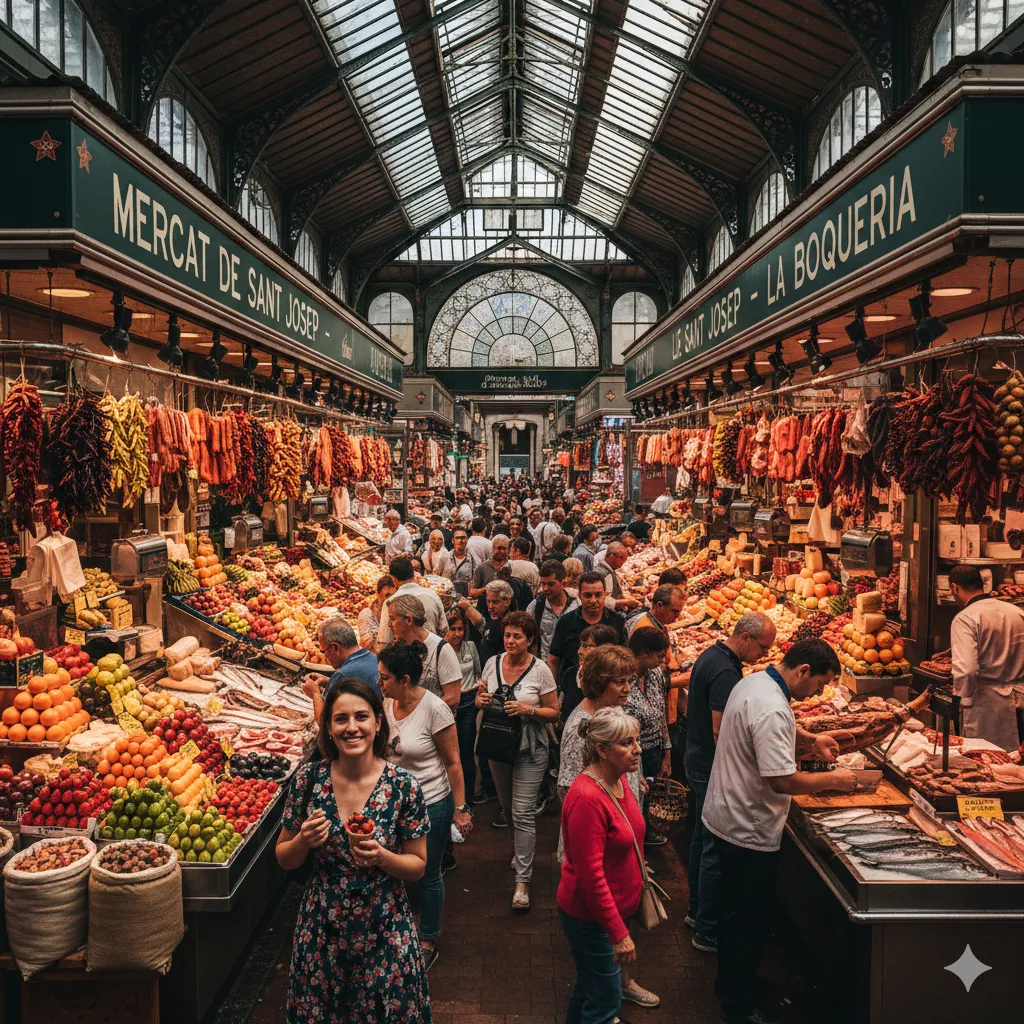
Halfway down La Rambla, behind an Art Nouveau iron-and-glass entrance, sits the market that every food-loving visitor to Barcelona ends up at sooner or later: La Boqueria, officially the Mercat de Sant Josep de la Boqueria. It's the most visited food market in Spain, and it earns that title honestly — a working market that still supplies local restaurants and households, not a staged tourist attraction, even though it now draws crowds that rival the Sagrada Família on a busy morning.
I recommend going in with a plan. La Boqueria rewards travelers who know where to look and punishes the ones who just wander into the first stall by the entrance. Here's how to actually enjoy it.
A Market That's Survived 800 Years of Change
La Boqueria's origins trace back to the 13th century, when farmers and traders sold produce and livestock just outside the old city walls near La Rambla. What started as an open-air pig and poultry market slowly formalized over the centuries, eventually gaining the iron-and-glass roof structure it's known for in the 1800s, in step with the same wave of market modernization that produced Mercat de Sant Antoni and Mercat de Santa Caterina elsewhere in the city.
Today it functions on two levels at once. It's still a genuine working market — the fishmongers, butchers, and produce stalls toward the back and sides serve chefs and locals doing their weekly shop. And it's also become a global food stage, with counter bars, tapas counters, and juice stands clustered near the entrance to serve the thousands of visitors who pass through daily. Both versions of the market are real; the trick is knowing which one you're standing in front of at any given stall.
What to See
Start with the entrance itself — the Art Nouveau ironwork arch is worth a photo before you even step inside. Once in, head toward the central fish section, widely considered the most photogenic and impressive part of the market: rows of glistening seafood on ice, arranged with an obsessive, almost sculptural precision.
Beyond the fish counters, wander the aisles selling wild mushrooms in season, whole hams hanging from the ceiling, and candy and dried fruit stalls in colors that don't look real until you see them in person. The deeper into the market you go, away from the main entrance, the more the stalls shift from tourist-facing to locals-only — that's usually a good sign you're seeing the market as it actually operates.
What to Buy
- Jamón Ibérico — vacuum-sealed for travel, available at multiple stalls at a range of price points depending on the cure.
- Spanish saffron — a compact, lightweight souvenir that's genuinely useful.
- Fresh fruit cups and juices — a market classic, though prices near the entrance run higher than deeper inside.
- Candied fruit and dried nuts — sold by weight, easy to sample before you commit.
A quick tip: prices at the stalls immediately inside the main entrance are consistently higher than the ones another 30–40 meters in. It's the same market, just less foot traffic to subsidize.
Where to Eat Inside the Market
The counter bars are the real reason many people come. El Quim de la Boqueria is the standout — their fried eggs with baby squid (huevos con chipirones) is one of the most talked-about dishes in the city, and it's worth the short wait for a stool at the counter. Other counter bars scattered through the market serve fresh-shucked oysters, grilled seafood, and glasses of cava for a mid-morning treat that feels distinctly Barcelona.
Practical Information
Opening Hours: Monday to Saturday, 8:00 AM – 8:30 PM. La Boqueria is closed on Sundays, which surprises a lot of first-time visitors planning a Sunday morning stroll down La Rambla.
Best Time to Visit: Arrive before 10:00 AM for the quietest experience and the freshest selection at the fish and produce stalls, or come after 4:00 PM once the day-trip crowds have thinned. Midday on a Saturday is the busiest window by far.
Cost: Entry to the market is completely free — you only pay for what you buy or eat.
Things to Keep in Mind:
- Keep an eye on your belongings; a market this busy naturally attracts pickpockets.
- Cash is still useful at some smaller stalls, though most now take cards.
- The floor gets slippery near the fish counters — comfortable, closed shoes help.
Nearby to Pair With Your Visit
La Boqueria sits right on La Rambla, making it easy to combine with a walk toward the Gothic Quarter on one side or Plaça de Catalunya on the other. Palau Güell, one of Gaudí's early works, is a short walk away in the Raval district if you want to continue the morning with some Modernisme.
FAQ
Is La Boqueria free to enter?
Yes. There's no admission fee — it's a public market. You only pay for food and items you buy.
What are La Boqueria's opening hours?
Monday to Saturday, 8:00 AM to 8:30 PM. It's closed on Sundays.
Is La Boqueria too touristy to be worth visiting?
The stalls right by the entrance lean touristy, but the market is still a genuine working food market for the city. Walk further in, and you'll see mostly locals doing their shopping alongside the visitors.
Can you eat a full meal at La Boqueria?
Yes — the counter bars scattered through the market, especially El Quim de la Boqueria, serve full tapas-style meals, not just snacks.
What's the best time to visit to avoid crowds?
Before 10:00 AM or after 4:00 PM on a weekday. Saturday midday is the busiest time by a wide margin.
La Boqueria isn't a museum piece dressed up for tourists — it's a market that has simply kept working, century after century, while the city grew up around it. Go early, walk past the first few stalls, and let yourself get pulled into whichever counter smells the best.