
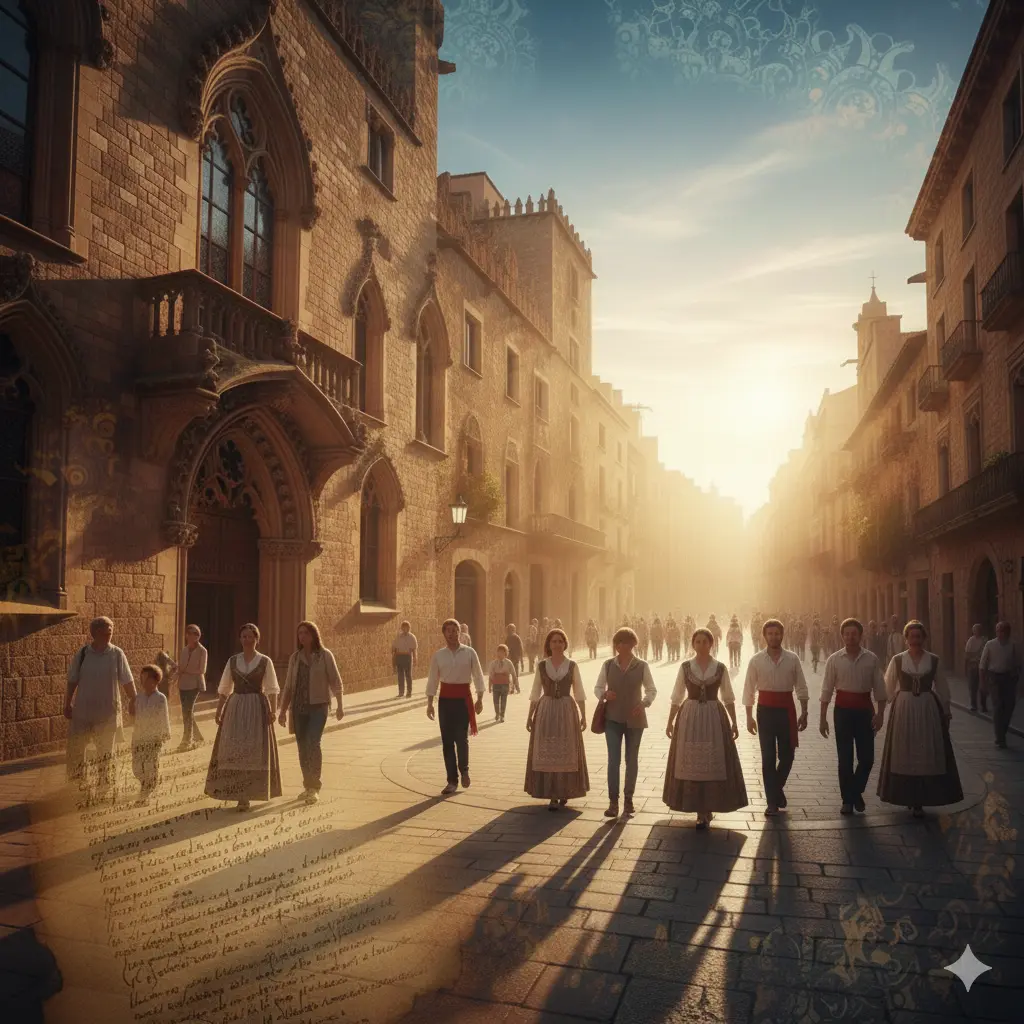
Exploring Roman Roots in Barcelona: A 2026 Travel Guide
Barcelona is often defined by the whimsical curves of Gaudi and the sun-drenched beaches of the Mediterranean. However, beneath the bustling streets and vibrant plazas lies a much older story—one of emperors, legionaries, and ancient stone. Before it was the cosmopolitan capital of Catalonia, it was Barcino, a strategic Roman colony founded around 15-10 BC.
For the first-time traveler heading to Barcelona in 2026, understanding these ancient beginnings is the key to unlocking the city's soul. It explains why the streets of the Gothic Quarter are so narrow, why the local language sounds the way it does, and why the food tastes like sunshine and history.
This guide will take you on a journey through time, comparing the Barcino of the past with the Barcelona of today. We will explore the birth of Catalan culture, the resilience of its language, and the flavors that have survived millennia.
The Foundation: From Barcino to Barcelona
The Origins of the City
When you land in Barcelona, you are stepping onto land that was chosen by the Romans for its strategic perfection. Located on a small hill called Mons Taber (near the current cathedral), the colony was officially named Colonia Iulia Augusta Faventia Paterna Barcino. It wasn't a massive metropolis like Rome or Tarraco (Tarragona), but rather a comfortable retirement settlement for veteran soldiers.
Then: Imagine a compact, walled city spanning just over 10 hectares. It was organized in a grid pattern typical of Roman planning, with two main streets: the Decumanus Maximus (running sea to mountain) and the Cardo Maximus (running river to river). The population was small, perhaps around 1,000 to 2,000 inhabitants, living in relative luxury with public baths, a forum, and running water from aqueducts.
Now: Today, this area is the heart of the Barri Gòtic (Gothic Quarter). While the buildings you see rising high above you are largely medieval or 19th-century neo-Gothic, the footprint is undeniably Roman. The chaotic, winding nature of the district actually preserves the ghost of the ancient enclosure.
Plaça de Sant Jaume: The Eternal Center of Power
There is no better place to start your journey than Plaça de Sant Jaume.
How it used to be: In Roman times, this was the Forum, the intersection of the Cardo and Decumanus streets. It was the civic, political, and religious center of the colony. Here, magistrates debated, markets were held, and the pulse of the city beat strongest.
How it is now: Incredibly, 2,000 years later, it serves the exact same purpose. The square is flanked by the Palau de la Generalitat (seat of the Catalan Government) and the Ajuntament (City Hall). It remains the political brain of Barcelona. When you stand in the middle of this square, you are standing on the exact spot where Roman decisions shaped the region's future.
An Evening Recommendation: Since you are already in the historical heart of the city, consider ending your day where the Romans did—gathered for entertainment. Just a few steps from the Plaça is the Barcelona City Hall Theater. It hosts intimate Flamenco Shows that resonate beautifully against the backdrop of historic architecture. While Flamenco hails from the south of Spain, experiencing the raw passion of the dance in this ancient setting is unforgettable.
- Location: Plaça de Sant Jaume on Google Maps
- Experience: Barcelona City Hall Theater on Google Maps
- Best Time to Visit: Early morning (around 9:00 AM) to appreciate the architecture without the crowds.
Walking the Walls: The Roman Defenses
The Romans were master builders, and nowhere is this more evident than in the city walls.
The Cyclopean Walls
Then: By the 4th century AD, instability in the empire led Barcino to fortify itself. They built massive walls with 76 towers, reaching heights of 16 meters. These walls were so robust that they defined the city's boundaries for over a thousand years.
Now: You don't need to visit a museum to see them; they are woven into the fabric of the streets. The best-preserved section is at Plaça Ramon Berenguer III. Here, you can see a stunning layering of history: the base is the giant Roman wall, the middle section is medieval masonry, and the top is later construction. It is a visual sandwich of time.
- What to look for: Notice the rounded stones and reused materials (spolia) in the lower sections. The Romans often recycled statues and headstones to reinforce the walls quickly.
- Location: Plaça Ramon Berenguer III on Google Maps
Bridging History: From Ancient Walls to Modern Art
Just a five-minute walk from the Roman Walls, passing through the atmospheric streets of the El Born district, you can fast-forward through history.
If the rigid structure of Roman stone fascinates you, the fluidity of the Picasso Museum Barcelona nearby offers a perfect contrast. Located in five adjoining medieval palaces, it houses the formative works of the 20th-century master.
Right next door, for a complete jolt into the contemporary, is the Moco Museum. Seeing modern street art housed in a 16th-century palace perfectly encapsulates Barcelona's ability to blend the old with the new. It is a fantastic detour if you need a break from ancient history.
- Nearby Stop: Picasso Museum on Google Maps
- Nearby Stop: Moco Museum on Google Maps
The Aqueduct at Plaça Nova
At the entrance of the Gothic Quarter near the Cathedral, you will see two square towers flanking a gateway.
Then: This was one of the four main gates into the city. Water from the nearby hills flowed into the city through aqueducts right at this spot.
Now: You will see a reconstructed arch of the aqueduct attached to the towers. While the arch is a modern approximation, the towers are original Roman foundations. It’s a favorite photo spot for travelers entering the historic center.
Nearby Architectural Gem: Just a short stroll from the Aqueduct is the Palau de la Música Catalana. While not Roman, it is a UNESCO World Heritage site that represents the peak of Catalan Modernisme. If the Roman walls represent strength and defense, the Palau represents light and color. It's highly recommended to book an entry ticket to see the stained-glass skylight—it's like stepping inside a kaleidoscope.
The Hidden Temple: A Secret in the Stone
One of Barcelona's most magical secrets is hidden inside a medieval building.
The Temple of Augustus
Then: A grand temple dedicated to Emperor Augustus stood at the highest point of Mons Taber. It was a symbol of loyalty to Rome, featuring six columns at the front and a surrounding colonnade.
Now: Today, four of these Corinthian columns remain, but they are tucked away inside the Centre Excursionista de Catalunya on a tiny street called Carrer del Paradís.
The Experience: You walk down a narrow, shadowed alley, enter a seemingly normal courtyard, and suddenly, you are confronted by 9-meter (30-foot) tall ancient columns. It is a quiet, awe-inspiring space that many tourists walk right past without knowing it exists.
- Insider Tip: Look at the ground near the entrance of the building. You will see a millstone marking the exact summit of Mons Taber—the highest point of the Roman city (16.9 meters above sea level).
- Cost: Free entry.
- Location: Carrer del Paradís, 10 on Google Maps
Going Underground: MUHBA
To truly understand the "Then vs. Now," you must go below street level. The Museu d'Història de Barcelona (MUHBA) at Plaça del Rei is non-negotiable for history lovers.
The Comparison:
- Street Level: You are in the Medieval Royal Palace.
- Underground: You take an elevator down and step out onto the actual streets of Roman Barcino.
You will walk over glass walkways suspended above the ruins of laundry workshops (fullonica), fish salting factories (garum), and winemaking facilities. You can see the vats where they dyed clothes and the grand houses of wealthy families. It provides a visceral connection to the daily life of the ancients.
- 2026 Travel Tip: Book your ticket online in advance. Audio guides are usually included and are fantastic for storytelling. Expect to spend about 90 minutes here.
- Location: Plaça del Rei on Google Maps
The Birth of Catalan Culture
Roman influence didn't stop at architecture; it planted the seeds for the culture that defines the region today. As the Roman Empire faded and the Visigoths and later the Franks moved in, the distinct identity of Catalonia began to take shape.
How Catalonia's Identity Took Shape
Catalonia was originally a collection of "counties" formed as a buffer zone (the Marca Hispanica) by the Frankish kings to protect Europe from the Moors to the south. This isolation and defensive posture fostered a strong sense of independence and self-reliance that persists today.
The "Count of Barcelona" eventually became the primary figure, uniting these counties. This history of being a borderland—a meeting point of cultures yet fiercely independent—is the bedrock of the local mindset. When you visit in 2026, you will feel this pride. It isn't hostility; it is a deep-seated love for a land that has fought to maintain its identity for over a millennium.
The Catalan Language: A Roman Legacy
One of the biggest surprises for first-time travelers is realizing that Spanish (Castilian) is not the only language spoken here. Catalan is a co-official language and is the primary tongue for many locals.
Then: Catalan evolved directly from Vulgar Latin spoken by the Roman soldiers and settlers in the Pyrenees and coastal areas. It is not a dialect of Spanish; it is a sibling, closer in some ways to French or Italian (Occitan) than to Castilian Spanish.
Now: You will see and hear Catalan everywhere.
- Street Signs: Usually written in Catalan first.
- Metro Announcements: Catalan, then Spanish, then English.
- Menus: Often bilingual or trilingual.
Traveler Tip for 2026: Locals appreciate it immensely if you try a few words. You don't need to be fluent, but dropping a "Bon dia" instead of "Buenos días" earns you smiles.
- Hello: Hola (Same as Spanish)
- Good Morning: Bon dia
- Thank you: Gràcies or Merci (Yes, like French!)
- Please: Si us plau
- Goodbye: Adéu
Catalan Cuisine: Ancient Flavors on Modern Plates
The Romans loved three things: Bread, Wine, and Oil. These remain the "Holy Trinity" of the Mediterranean diet and the foundation of Catalan cuisine.
The Evolution of Taste
Then: Roman Barcino was a hub for export. The region produced wine and garum (a fermented fish sauce) that was shipped across the empire. The diet relied heavily on local produce, seafood, and olive oil.
Now: Catalan cuisine is sophisticated yet rustic, focusing on high-quality ingredients rather than heavy spices. It is "Sea and Mountain" (Mar i Muntanya)—mixing meat and seafood in the same dish, a reflection of the geography.
What to Eat & Where
When exploring the Gothic Quarter and Roman roots, you need fuel. Here are places that blend history with gastronomy.
-
Can Culleretes
- The Vibe: This is the oldest restaurant in Barcelona (and the second oldest in Spain), dating back to 1786. While not Roman, it breathes history. The walls are covered in tiles and photos of past celebrities.
- The Dish: Try the wild boar stew or the traditional cannelloni.
- Location: Can Culleretes on Google Maps
-
El Xampanyet
- The Vibe: Located near the Picasso Museum in El Born, this family-run bar retains an old-world charm. It’s loud, crowded, and absolutely authentic.
- The Dish: Their house sparkling wine (Cava) paired with anchovies is legendary.
- Location: El Xampanyet on Google Maps
-
Mercat de Santa Caterina
- The Concept: Built over the ruins of an old convent, this market features a waving, colorful mosaic roof. It’s less chaotic than La Boqueria and filled with locals buying their daily bread and olives.
- Traveler Tip: Grab a seat at the counter bars (Cuines Santa Caterina) for fresh seafood that would make a Roman emperor jealous.
- Location: Mercat de Santa Caterina on Google Maps
Living Traditions: Seeing Culture in Action
Barcelona is not a relic; it is a living stage. The traditions you see today are the glue that has held the community together through centuries of change.
Castells (Human Towers)
This is perhaps the most breathtaking display of Catalan culture.
- What it is: Teams of hundreds of people build towers with their bodies, sometimes reaching 10 stories high. A young child (the enxaneta) climbs to the very top and raises their hand.
- The Meaning: It symbolizes "Força, Equilibri, Valor i Seny" (Strength, Balance, Courage, and Common Sense). It requires absolute trust and unity.
- When to see it: Weekends are best, or during major festivals like La Mercè in September. In 2026, check the schedule for "Diadas Castelleras" near the Cathedral or in the Gràcia neighborhood.
The Sardana
Remember the Plaça de Sant Jaume?
- The Event: On Sunday evenings or during holidays, you might see circles of people holding hands and dancing small, precise steps to the sound of a live band (the cobla).
- The Vibe: It isn't a flamboyant performance; it is a communal, meditative dance of unity. Travelers are often welcome to join the outer circles if they are respectful and follow the steps.
Beyond the Roman Walls: 2026 Highlights
While your focus might be on the ancient, 2026 is a special year for Barcelona. After soaking in the Roman history of the Gothic Quarter, you might want to see how the story continues.
The Ultimate Contrast: Sagrada Familia If the Temple of Augustus was the spiritual heart of the 1st century, the Sagrada Familia is the icon of the 21st. The year 2026 marks the centenary of Gaudi's death and the planned completion of the main towers. Seeing the finalized skyline is a once-in-a-lifetime moment that contrasts sharply with the ruins you’ve just explored.
- Location: Sagrada Familia on Google Maps
A View from Above: Montjuïc Cable Car The Romans chose Mons Taber for its height, but for the best modern view, head to Montjuïc. The Montjuïc Cable Car offers a panoramic sweep of the city, from the Roman walls to the sparkling Mediterranean. It helps you visualize the grid layout of the city that started with those ancient engineers.
- Location: Montjuïc Cable Car on Google Maps
Family Fun: Barcelona Aquarium If you have explored the Roman port area (where garum was exported), continue that maritime theme at the Barcelona Aquarium. Located in Port Vell, it’s a short walk from the bottom of the Gothic Quarter and a great way to cool down after a day of walking the hot stones of history.
- Location: Barcelona Aquarium on Google Maps
Practical Guide for the 2026 Traveler
As you prepare for your trip, here are some specific tips to make your historical exploration smooth and enjoyable.
Best Time to Visit
To explore Roman ruins and walk the city comfortably:
- Spring (April-May): The weather is perfect (15°C - 20°C / 59°F - 68°F), and the city is blooming.
- Late Autumn (October-November): The summer crowds have dissipated, and the light is golden and soft—perfect for photography in the Gothic Quarter.
Budgeting for History
Barcelona can be affordable if you are smart.
- Museum Pass: Consider the Barcelona Card if you plan to do heavy museum hopping.
- Cost Estimates (2026):
- MUHBA Entry: Approx. €8-€10.
- Temple of Augustus: Free.
- Casual Lunch (Menu del Dia): €15-€20.
- Dinner with wine at a place like Can Culleretes: €35-€50 per person.
Things to Keep in Mind
- Respect the Siesta (Sort of): While major shops stay open, small family-run boutiques and some restaurants may close between 4:00 PM and 8:00 PM. Plan your shopping accordingly.
- Dinner Time: Locals eat late. Lunch is 2:00 PM - 3:30 PM. Dinner rarely starts before 9:00 PM. If you walk into a restaurant at 7:00 PM, you might be the only one there.
- Safety: Barcelona is a safe city, but like any popular destination, it requires common sense. Keep an eye on your belongings, especially in the Gothic Quarter where streets are narrow and crowds are dense. A crossbody bag is your best friend.
- Water: There are public drinking fountains all over the city (some are ornate iron Wallace fountains). Bring a reusable bottle to stay hydrated while you hunt for Roman walls.
A Note on Sensitivity
You are visiting a region with a strong distinct identity. You may see flags hanging from balconies—the Senyera (yellow with four red stripes) or the Estelada (with a star). These are expressions of identity and history. View them with curiosity and respect. The locals are warm and welcoming to those who show an interest in their unique heritage.
Frequently Asked Questions
Where can you see Roman ruins in Barcelona?
The best-preserved Roman remains are scattered through the Gothic Quarter: the Cyclopean walls at Plaça Ramon Berenguer III, the aqueduct towers at Plaça Nova, the four Corinthian columns of the Temple of Augustus on Carrer del Paradís, and the underground streets and workshops of ancient Barcino beneath the MUHBA museum at Plaça del Rei.
What was Barcelona called in Roman times?
Barcelona was founded as Barcino around 15-10 BC, officially named Colonia Iulia Augusta Faventia Paterna Barcino. It was a compact walled settlement of roughly 1,000 to 2,000 inhabitants, built as a comfortable retirement colony for Roman veteran soldiers.
Can you still see the ancient Roman walls in Barcelona?
Yes. By the 4th century AD, Barcino was fortified with massive walls featuring 76 towers reaching 16 meters high. The best-preserved section is at Plaça Ramon Berenguer III, where you can see Roman stonework at the base, medieval masonry in the middle, and later construction on top.
What is the MUHBA and why is it worth visiting?
The Museu d'Història de Barcelona (MUHBA) at Plaça del Rei lets you go underground and walk on glass walkways suspended above the actual ruins of Roman Barcino, including laundry workshops (fullonica), fish-salting factories (garum production), and winemaking facilities. Expect to spend about 90 minutes there.
Is there a Roman temple still standing in Barcelona?
Yes. Four Corinthian columns from the Temple of Augustus, once dedicated to the emperor at the highest point of the Roman city, survive inside the Centre Excursionista de Catalunya on Carrer del Paradís. Entry is free, and a millstone near the entrance marks the exact summit of Mons Taber.
Conclusion: A City Built on Layers
Barcelona is not just a city; it is a palimpsest—a manuscript where the original text has been erased to make room for later writing, but traces of the original remain.
When you walk through the Gothic Quarter in 2026, look down at the stones. Look up at the arches. You are walking in the footsteps of Roman legionaries, medieval counts, and modern dreamers. The Roman roots of Barcelona are not dead ruins; they are the living foundation upon which this vibrant, resilient, and beautiful culture stands.
By understanding Barcino, you don't just see Barcelona; you understand it. You see why the walls are where they are, why the people dance in circles holding hands, and why the simple act of rubbing tomato on bread is a declaration of identity.
Enjoy your journey into the past. The Romans may have left 2,000 years ago, but in the streets of Barcelona, they never really left.
Quick Reference: Roman Route Itinerary
Start your morning here for a logical flow:
- Plaça Nova: See the Aqueduct and Towers. (Nearby: Palau de la Música Catalana).
- Carrer del Bisbe: Walk towards the center.
- Carrer del Paradís: Find the Temple of Augustus.
- Plaça de Sant Jaume: Stand in the Roman Forum. (Evening option: Flamenco at City Hall).
- Plaça del Rei: Visit the MUHBA museum (spend 1-1.5 hours).
- Plaça Ramon Berenguer III: View the great Roman Wall.
- El Born: Walk to Picasso Museum or Moco Museum.
- Lunch: Head to Mercat de Santa Caterina or Can Culleretes.