
Exploring the Magical Wonders of Park Guell in Barcelona
When you think of Barcelona, your mind likely drifts to vibrant colors, undulating stone structures, and the playful genius of Antoni Gaudí. Among all his creations, I recommend Park Guell as the place where his imagination truly ran wild. Nestled on Carmel Hill, this public park system is composed of gardens and architectural elements that feel more like a fairytale than a city park. It is a space where nature and architecture shake hands, creating a landscape that is both surreal and deeply rooted in the Mediterranean spirit.
In this guide, I will help you navigate the winding paths, the famous mosaic benches, and the hidden corners of this UNESCO World Heritage site. Whether you are an architecture enthusiast or someone just looking for the best view of the Barcelona skyline, Park Guell is a great spot to spend time on during your journey through Catalonia.
The Evolution of a Dream: Past vs. Present
To truly appreciate what you are seeing, you have to understand the history of this land. Park Guell wasn't originally intended to be a park at all.
How it Used to Be
In 1900, Eusebi Güell, a wealthy entrepreneur, commissioned Gaudí to design a luxury housing estate. The idea was to create a "garden city" away from the noise and pollution of the industrial center of Barcelona. It was meant to be an exclusive enclave for the elite, featuring sixty triangular plots for villas. However, the project was a commercial failure. Only two houses were ever built, and the site was eventually turned into a private garden for events before being opened as a public park in 1926.
What it is Now
Today, the park is divided into two areas: the forest zone (accessible to everyone) and the Monumental Zone (which requires a ticket and has a restricted capacity to ensure preservation). What was once a failed real estate venture is now one of the most visited sites in the world. You can find the main entrance at Carrer d'Olot, 08024 Barcelona, Spain.
The Monumental Zone: The Heart of the Park
This is the area where Gaudí’s architectural interventions are most concentrated. I recommend spending at least two hours in this section alone to soak in the details.
The Entrance Pavilions and the Dragon Stairway
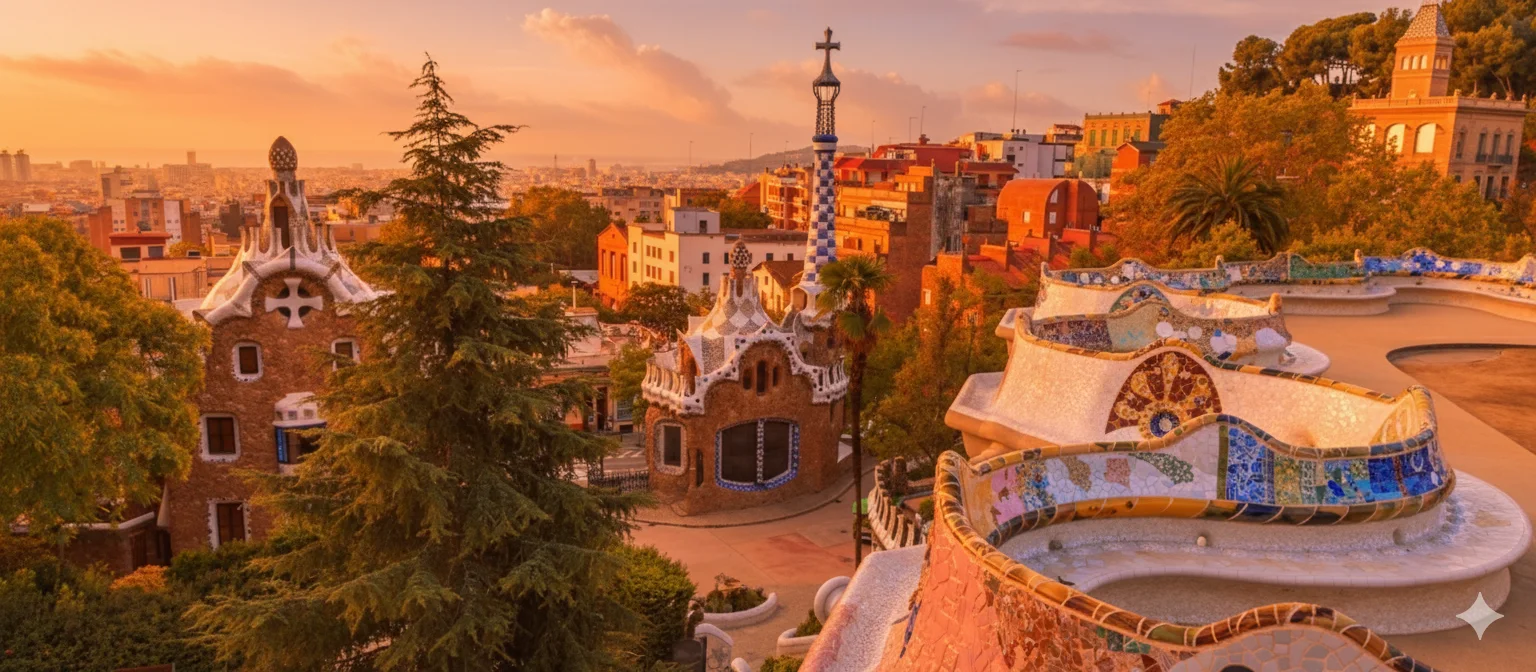
As you enter from Carrer d'Olot, you are greeted by two buildings that look like they belong in Hansel and Gretel. These were originally intended as the porter’s lodge and reception area.
- The Dragon Stairway: Directly ahead is the magnificent double stairway. This is where you will find the famous "El Drac," the multi-colored mosaic salamander. It is covered in trencadís—a technique using shards of broken ceramic tiles.
- Insider Tip: This is the most photographed spot in the park. If you want a photo without the crowds, you should aim to be there the moment the gates open.
The Hypostyle Room
At the top of the stairs lies a forest of 86 massive Doric columns. This was originally designed to be the marketplace for the housing estate.
- Look Up: Don't forget to look at the ceiling. You’ll see beautiful circular mosaics representing the four seasons and the cycles of the moon.
- Acoustics: The space has incredible acoustics; you might occasionally find local musicians playing classical guitar here, which adds a magical layer to the experience.
Nature Square (Plaça de la Natura)
This large open space, formerly known as the Greek Theatre, is the centerpiece of the park. It is framed by the world-famous undulating bench.
- The Bench: This serpentine bench is also covered in colorful mosaics. Gaudí famously had a worker sit in wet plaster to ensure the curve of the bench perfectly fitted the human spine. It’s surprisingly comfortable!
- The View: From here, you get the iconic view of the entrance pavilions with the Sagrada Familia and the Mediterranean Sea in the distance.
Exploring the Higher Grounds and Forest Paths
Many visitors make the mistake of staying only in the Monumental Zone. However, I suggest you head higher up Carmel Hill to experience the "green" side of the park.
The Viaducts and Stone Paths
Gaudí designed the paths to follow the natural contours of the mountain. He created bird-nest-like stone structures and viaducts that look like they are growing out of the earth. These paths were originally meant for carriages to transport residents to their villas. They are great spots to find some shade and escape the Mediterranean sun.
The Three Crosses (Turó de las Tres Creus)
This is the highest point in the park. Gaudí intended to build a chapel here, but when the project stalled, he instead built a monument with three crosses.
- Why Visit: It offers a 360-degree panoramic view of Barcelona. It is much less crowded than Nature Square and provides a peaceful place to watch the sunset.
- Where to find it: Follow the signs for "Turó de las Tres Creus" from the upper part of the park.
The Gaudí House Museum
This is the house where Antoni Gaudí lived for nearly 20 years (1906–1925). It wasn't actually designed by Gaudí but by his assistant, Francesc Berenguer. Today, it serves as a museum containing furniture designed by Gaudí and personal items.
- Recommendation: If you want to understand the man behind the buildings, this is a great place to spend time on.
Nearby Culinary Delights: Where to Eat and Drink
After all that walking and climbing, you will definitely need a break. While there is a small cafe inside the park, I recommend venturing out to the nearby Gràcia or El Coll neighborhoods for a more authentic experience.
For a Relaxed Meal
- Terra Mia: Located just a short walk from one of the park exits, this restaurant offers beautiful Italian-Mediterranean fusion. The terrace is lovely and much quieter than the tourist spots.
- La Panxa del Bisbe: This is a local favorite in the Gràcia district. It serves creative tapas and seasonal dishes. It’s a bit of a walk downhill from the park, but your taste buds will thank you.
Quick Bites and Coffee
- Guelly Sandwichpark: Perfect for a quick, high-quality sandwich or a pastry before you enter the park. They are known for their fresh ingredients and friendly service.
- Santiaguiño: A great spot if you are looking for traditional Spanish empanadas or a simple cafe con leche.
Sweet Treats
- Parrilla Alfajores: If you have a sweet tooth, I recommend trying their Argentinian-style cookies. It’s a small, charming shop located on the way down towards the Lesseps metro station.
Practical Information for Your Visit
To ensure your trip is as smooth as possible, keep these logistical details in mind.
Opening and Closing Hours
Park Guell's hours vary slightly depending on the season, but generally, they follow this schedule:
- Winter Season (End of October to end of March): 9:30 AM to 5:30 PM.
- Summer Season (April to end of October): 9:30 AM to 7:30 PM.
- Note: If you are a resident of the surrounding neighborhoods, there are special hours (early morning and late evening) reserved specifically for locals.
How to Get There
The park is located on a steep hill, so your choice of transport matters!
- Bus 24: This is my top recommendation. It departs from Plaça de Catalunya and drops you off very close to the upper entrance of the park. This means you walk downhill through the park instead of uphill.
- Metro Line 3 (Green Line): Get off at Lesseps or Vallcarca. From Vallcarca, there are escalators on Baixada de la Glòria that take you up the steepest part of the climb.
- Bus Turístic: The official hop-on-hop-off bus has a stop specifically for Park Guell.
Seasonal Considerations
- Spring (April–June): The gardens are in full bloom, and the weather is pleasant. This is arguably the best time to visit.
- Summer (July–August): It can be very hot and crowded. Wear a hat, use sunscreen, and bring a reusable water bottle (there are fountains with drinkable water throughout the park).
- Winter (December–February): The air is crisp and clear, which often leads to the best visibility for views of the sea.
Do’s and Don’ts for a Great Experience
- DO book your tickets online weeks in advance. The Monumental Zone often sells out, and you don't want to arrive only to find you can't get in.
- DON'T wear uncomfortable shoes. The park is full of gravel paths, uneven stone, and many, many stairs.
- DO bring your own snacks and water. While there are places to eat nearby, having a small picnic on one of the forest benches is a wonderful way to experience the park's tranquility.
- DON'T climb on the mosaic structures or the salamander. These are fragile historical artifacts. Security is quite strict about this to ensure the park stays beautiful for everyone.
- DO stay mindful of your surroundings. Like any major global attraction, it attracts many people. While the area is safe and welcoming, keep an eye on your bags and cameras while you are busy taking photos.
- DON'T forget to explore the Gràcia neighborhood after your visit. It’s one of the most charming areas of Barcelona, filled with local boutiques and hidden plazas.
Essential Visitor Tips
- Accessibility: Most of the Monumental Zone is accessible, but due to the natural topography of the hill, some paths are quite steep. There is a specific route recommended for people with reduced mobility.
- Photography: The best light for photos is during the "golden hour"—the hour before sunset. The way the light hits the colored tiles is spectacular.
- Time Management: Allot at least 3 to 4 hours if you want to see both the architectural zone and the higher forest paths.
Final Thoughts
Park Guell is a testament to the idea that even a "failed" project can become a world-changing success. It reflects Gaudí’s belief that "the straight line belongs to men, the curved one to God." Every inch of the park feels intentional, designed to make you feel like you’ve stepped out of reality for a moment.
Whether you are admiring the "trencadís" tiles, listening to a street performer under the Doric columns, or simply looking out at the city from the Three Crosses, I recommend you take your time. Don't just tick it off your list; let the park’s unique energy sink in. It is, without a doubt, one of the most soulful places you will ever visit. Enjoy your journey through this stone forest and let the colors of Barcelona inspire you.