
Discovering the Magic of Palau de la Música Catalana in Barcelona
When you first step into the Ribera neighborhood, the narrow medieval streets might make you feel like you are traveling back to the 14th century. However, as you round a specific corner near the Via Laietana, the scenery shifts dramatically. You are met with a burst of color, floral mosaics, and intricate brickwork. This is the Palau de la Música Catalana, a place I recommend visiting not just for its music, but for its role as the "only concert hall in the world lit entirely by natural light during the day."
This UNESCO World Heritage site is a crowning jewel of Modernisme (Catalan Modernism). Designed by the visionary architect Lluís Domènech i Montaner, it was built between 1905 and 1908. Unlike the more famous Sagrada Família, which has been under construction for over a century, the Palau was completed in just three years—a testament to the passion of the Catalan people for their choral heritage.
Palau de la Música Catalana on Google Maps
A Tale of Two Eras: Then vs. Now
To truly appreciate the Palau, you have to understand its evolution. In the early 1900s, the building was tightly hemmed in by old tenements. It was a hidden treasure, meant for the Orfeó Català (a prestigious choral society). Back then, the entrance was through the ornate "stone corner" featuring the massive sculptural group La cançó popular catalana.
Today, the experience is much more spacious. In the late 1980s and early 2000s, a major renovation opened up the surrounding area. They demolished adjacent buildings to create a small plaza, allowing you to see the glass-walled extension. This modern addition contrasts beautifully with the original red brick. I find this juxtaposition of 20th-century craftsmanship and 21st-century transparency quite striking. You can now sit in the square, enjoy a coffee, and admire the facade that was once obscured by shadows.
What to See Inside: The Architectural Highlights
The Main Concert Hall (Sala de Concerts)
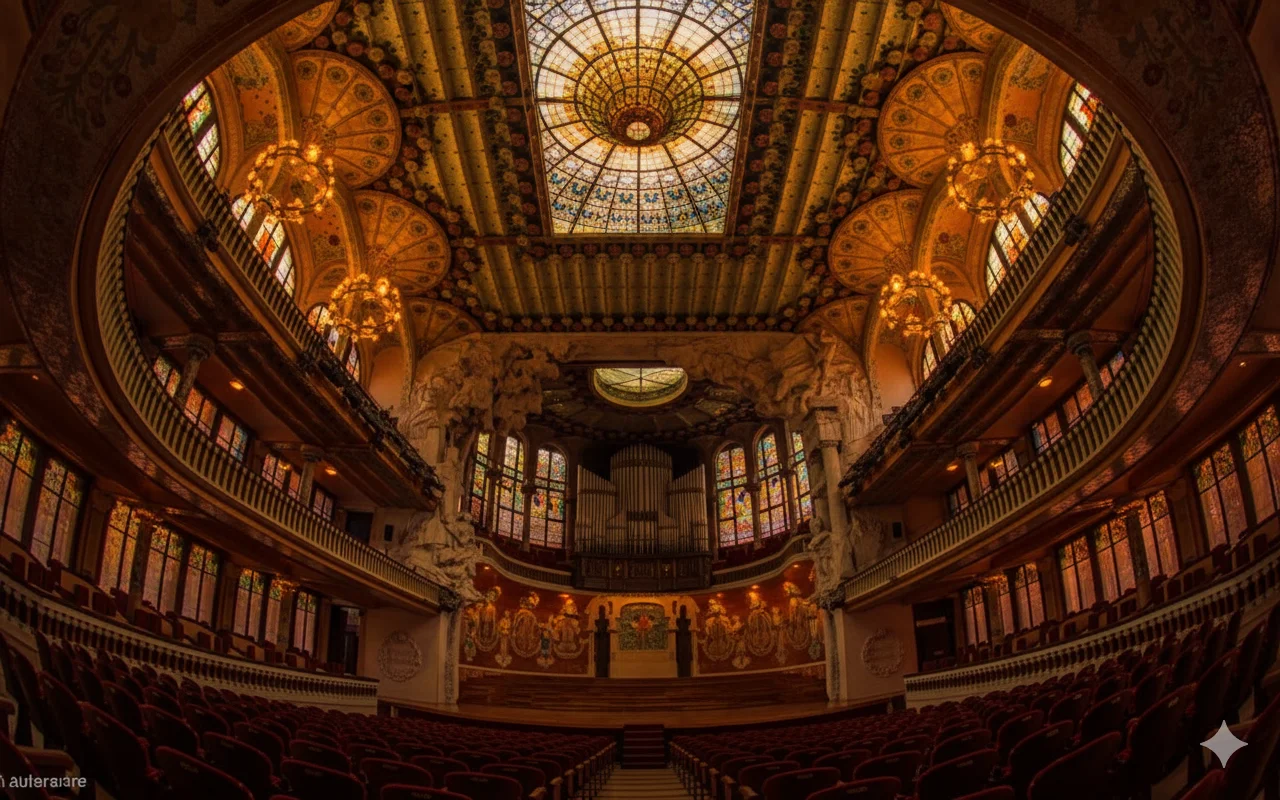
This is the heart of the experience. I suggest you spend a significant amount of time here just looking upward. The centerpiece is the famous inverted stained-glass dome. It looks like a giant droplet of honey and water, depicting the sun surrounded by a choir of female figures.
- The Light: During the day, you don’t need artificial lamps. The glass walls and the ceiling provide a golden glow that changes with the movement of the clouds.
- The Muses: On the stage, you will see 18 muses coming out of the walls. The top halves are sculptures, while the bottom halves are colorful mosaics. This "half-and-half" technique was revolutionary at the time.
The Petit Palau
If you are looking for a more intimate setting, the Petit Palau is a modern, underground chamber music hall. While the main hall is all about 1900s grandeur, this space represents the contemporary functional side of the Palau. It’s located 11 meters below the street level and is a great place to catch a smaller recital.
The Mosaics and Columns
Before you enter the main hall, you will pass through the Lluís Millet Hall. I recommend stepping out onto the balcony. Here, you will find rows of columns, each decorated with unique floral mosaic patterns. No two columns are exactly the same. It is a fantastic spot for photography, as the light reflects off the ceramic tiles beautifully.
Things to Do: How to Experience the Palau
1. Take a Guided or Self-Guided Tour
If you want to understand the symbolism behind the roses and the sculptures, a guided tour is your best bet.
- Self-Guided: You can use your smartphone to access digital content. This is great if you prefer moving at your own pace.
- Guided: I recommend this for history buffs. The guides explain the "Renaixença" (Catalan Rebirth) and how this building was a political statement of Catalan identity.
2. Attend a Live Performance
While tours are informative, the Palau was built for sound. Experiencing a concert here is transformative. Whether it’s a Spanish guitar performance, a full orchestra, or a traditional choral concert, the acoustics are vibrant.
- Insider Tip: If you book a concert, try to arrive 30 minutes early to enjoy the atmosphere of the foyer bar.
3. The Rehearsal Experience
Sometimes, you can catch the Orfeó Català rehearsing. Hearing the voices echo through the hall as the sun sets through the stained glass is a memory you won’t soon forget.
When to Visit and Opening Hours
The Palau is a functioning concert venue, so its schedule can vary based on performances.
- General Visiting Hours: Usually 10:00 AM to 3:30 PM (though it often extends to 6:00 PM during peak seasons like summer or Easter).
- Best Time to Visit: I highly recommend booking a morning slot (between 10:00 AM and 11:30 AM). This is when the sunlight hits the stained-glass ceiling at the perfect angle, illuminating the hall in a warm, ethereal light.
- Seasonal Considerations: In the winter months, the light is softer and more golden. In the summer, the colors are more vivid and sharp.
Check their official website for real-time schedule updates
Things to Keep in Mind: Do’s and Don’ts
To ensure you have a smooth experience and respect the local culture, keep these tips in mind:
The Do’s:
- Book in Advance: This is one of Barcelona's most popular sites. Tours sell out, especially during the summer months.
- Dress Respectfully: For daytime tours, casual wear is fine. However, if you are attending an evening concert, I recommend "smart casual" attire. It shows respect for the performers and the venue's prestige.
- Look Up and Down: Don't just focus on the ceiling. The floor tiles and the wooden carvings on the seats are also works of art.
- Stay Quiet in the Hall: Even if it’s not a concert, the acoustics are so sensitive that whispers carry.
The Don’ts:
- No Flash Photography: You are welcome to take photos for your personal memories, but flash is strictly prohibited as it can damage the delicate pigments of the mosaics and distract other visitors.
- Don't Touch the Sculptures: The stone and ceramic are over 100 years old. The oils from your hands can degrade the materials over time.
- Avoid Rushing: Give yourself at least 60 to 90 minutes. This is not a place to "check off" a list; it’s a place to absorb.
Where to Eat and Drink Nearby
The Sant Pere and Ribera neighborhoods are famous for their culinary scenes. You don’t have to walk far to find high-quality local food.
For a Quick Bite or Coffee
- Cafeteria del Palau: Located right inside the building’s foyer. It’s surprisingly good for a "museum cafe." You can enjoy a café amb llet under the high brick arches. 📍 View on Google Maps
- Tosca Palau: Located directly across from the Palau. They serve excellent tapas and have a great view of the building's exterior. I recommend their patatas bravas. Tosca Palau on Google Maps
For Lunch or Dinner
- El Casal: A cozy bistro offering Catalan-French fusion. It’s a great place to try local seasonal vegetables and meats. El Casal on Google Maps
- Santa Caterina Market (Cuines Santa Caterina): A 5-minute walk away. This market is less crowded than the Boqueria. The restaurant inside offers everything from Mediterranean to Asian dishes, all made with market-fresh ingredients. Santa Caterina Market on Google Maps
For Dessert and Ice Cream
- Gelaaati Di Marco: I recommend this for some of the best artisanal gelato in the city. It’s located near the Cathedral, just a short stroll from the Palau. Gelaaati Di Marco on Google Maps
Other Nearby Experiences
If you are planning a full day in the area, you can easily combine your visit to the Palau with these spots:
- Barcelona Cathedral: A stunning example of Gothic architecture. It’s a 7-minute walk from the Palau. Barcelona Cathedral on Google Maps
- The Kiss Mural (El món neix en cada bes): A beautiful mosaic made of thousands of tiny photos submitted by locals. It’s a hidden gem in a nearby square. The Kiss Mural on Google Maps
- Santa Maria del Mar: Known as the "Cathedral of the Sea," this church is the purest example of Catalan Gothic style.
Why the Palau Matters to the Locals
The Palau de la Música Catalana is more than just a building; it’s a symbol of Catalan resilience. It was funded by the people, for the people. During times when the Catalan language and culture faced restrictions, the Palau remained a sanctuary for their songs and traditions. When you visit, you aren't just looking at pretty glass; you are standing in a place that represents the "soul" of Barcelona.
I recommend taking a moment to sit in the Lluís Millet Hall and imagine the thousands of singers who have stood there over the last century. The sense of history is palpable.
Practical Information Summary
- Location: C/ de Palau de la Música, 4-6, 08003 Barcelona, Spain.
- Accessibility: The Palau is fully accessible for people with reduced mobility. There are elevators to take you to the different levels of the concert hall.
- Best Way to Get There: I recommend taking the Metro (L1 or L4) to the Urquinaona station. From there, it’s a simple 5-minute walk.
- Environment: The area is a pedestrian-friendly zone, making it very pleasant to explore on foot. Just keep your belongings close to you as you would in any major city around the world.
Final Thoughts for Your Visit
The Palau de la Música Catalana is a rare place where architecture and music become one. Whether you are an opera lover or someone who simply appreciates beautiful design, this building will leave an impression on you. Remember to book your tickets a few days in advance, aim for a morning tour to catch the best light, and definitely treat yourself to a gelato afterward.
Your journey through Barcelona's Modernism isn't complete without seeing how Domènech i Montaner used light as a building material. Enjoy the colors, the history, and the music of this incredible Catalan landmark.