
Barcelona Olympic Legacy Guide: How 1992 Reinvented the City
When you land in Barcelona in 2026, you are arriving in one of the most popular urban destinations in Europe. You see miles of golden beaches, a sleek waterfront promenade, and a city that feels open, airy, and confident. It feels like it has always been this way.
But here is the secret that every local knows: Before 1992, this Barcelona did not exist.
For the first-time traveler, it is hard to imagine, but prior to the 1992 Summer Olympics, Barcelona was a gray, industrial city that lived with "its back to the sea." There were no beaches where you could swim—only factories, railway tracks, and shantytowns blocking the Mediterranean. The city was a hidden gem, but it was dusty and disconnected.
The 1992 Games were not just a two-week sports event; they were the catalyst for one of the most successful urban transformations in history. They gave the city a new skin, a new direction, and a new place on the world map.
This guide will take you through the legacy of those games. We will explore how the event shaped the city you see today, comparing the "Then" and "Now," and guiding you to the places where the Olympic spirit still lives.
The Great Opening: Turning to the Sea
The most dramatic change brought by the Olympics was the recovery of the coastline. If you love the beach vibe of Barcelona, you have the urban planners of the late 80s to thank.
Port Olímpic and The Beaches
Then: Before the reconstruction began, the area now known as Vila Olímpica (Olympic Village) and Poblenou was known as the "Catalan Manchester." It was a heavy industrial zone filled with chimneys, warehouses, and a railway line that physically cut the people off from the water. The water itself was polluted, and the "beach" was a rocky, inaccessible strip.
The Transformation: The city buried the coastal railway tracks underground and demolished the old factories. They used the earth from the excavation to build the new coastline. They essentially "invented" the beaches of Barceloneta, Nova Icària, and Bogatell, importing sand to create the leisure paradise you see today.
Now: In 2026, this is the playground of the city. The Port Olímpic (Olympic Port) is currently undergoing a massive renovation to become more family-friendly and focused on the "Blue Economy" (ocean sustainability), moving away from its previous nightlife reputation.
- What to do: Rent a bike and ride the boardwalk from the W Hotel to the Forum. You are riding on the exact line where the industrial wall used to stand.
- The Twin Towers: Look for the two skyscrapers (Mapfre Tower and Hotel Arts) that mark the entrance to the Olympic Port. They were built for the games and remain the tallest buildings in the city (along with the Sagrada Familia).
Nearby Marine Experience: To fully appreciate how the city reclaimed its relationship with the sea, visit the Barcelona Aquarium. Located in Port Vell (the Old Port, which was also renovated for the Games), it is a stunning tribute to Mediterranean marine life. It sits on what was once a run-down wharf, symbolizing the shift from industry to conservation and leisure.
- Location: Barcelona Aquarium on Google Maps
The Main Stage: The Olympic Ring on Montjuïc
While the sea was the emotional victory, the hill of Montjuïc was the stage for the glory. This green hill overlooking the city became the epicenter of the sporting world.
The Anella Olímpica (Olympic Ring)
Then: Montjuïc was a quiet, underutilized park with a few museums and an old stadium from 1929 that had fallen into disrepair. It was disconnected from the urban grid.
Now: The Anella Olímpica is a spacious, majestic esplanade that feels like a temple to sport. It is open to the public and free to walk around.
-
Estadi Olímpic Lluís Companys:
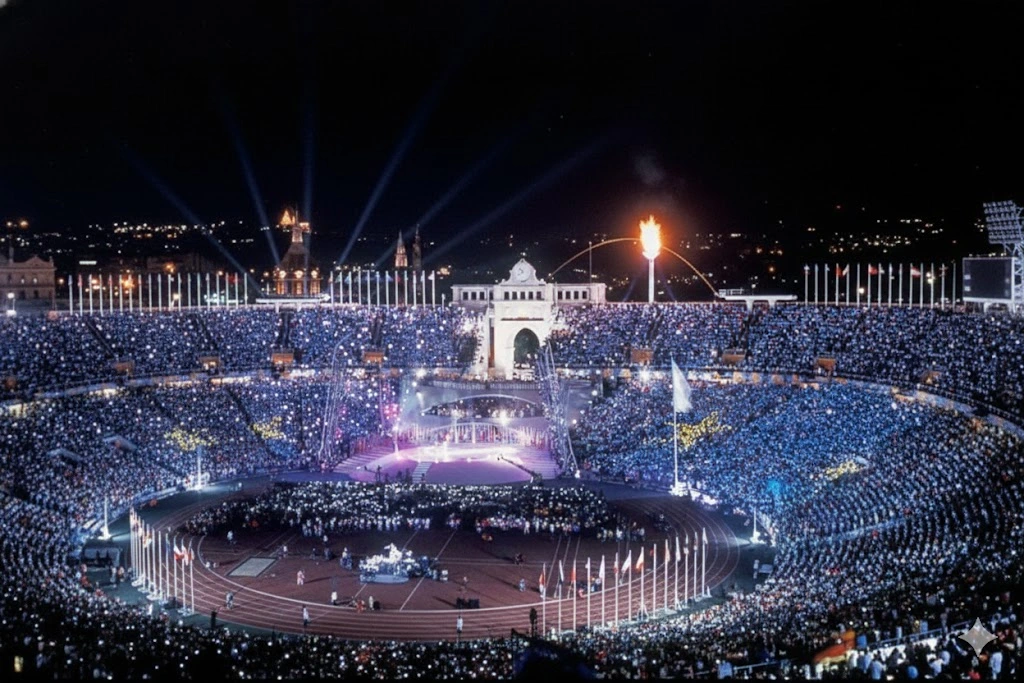
- The History: Originally built for the 1929 Expo, it was gutted and rebuilt for 1992. This is where the opening ceremony took place—where the archer lit the cauldron with a flaming arrow.
- The Visit: You can usually walk into the main stand for free to see the track and field area. It gives you chills to stand where legends stood.
- Location: Estadi Olímpic Lluís Companys on Google Maps
-
Palau Sant Jordi:
- The Architecture: Designed by Arata Isozaki, this indoor arena looks like a futuristic turtle shell or a mechanical wave. It is a masterpiece of modern engineering and is still used today for concerts by global superstars.
-
Torre de Calatrava (Telecommunications Tower):
- The Icon: This white, curved tower was built to broadcast the games to the world.
- Hidden Detail: It is designed to look like an athlete holding the Olympic torch. It also functions as a giant sundial; the shadow of the central needle tells the time on the plaza below.
How to get there: The Scenic Route
The best way to approach the Olympic Ring is from the air, just as the cameras did in '92. The Montjuïc Cable Car offers panoramic views of the entire city and the port. It allows you to visualize the layout of the Olympic facilities against the backdrop of the sea.
- Insider Tip: Take the cable car up to the Castle, then walk down through the gardens to the Olympic Stadium. It is a gentle downhill stroll through history.
- Location: Montjuïc Cable Car on Google Maps
The Athlete's Home: Vila Olímpica
Where do 10,000 athletes sleep? You build a new neighborhood.
The First "Open" Neighborhood
Then: An industrial wasteland of warehouses.
Now: The Vila Olímpica (Olympic Village) is a quiet, upscale residential neighborhood.
- The Design: Notice the layout. The buildings are arranged in blocks with large interior gardens. This was a revolutionary design in the 90s, aiming to bring green space into urban living.
- Frank Gehry’s Goldfish: On the waterfront near the Hotel Arts, you will see a massive, shimmering gold sculpture that looks like a fish jumping (or floating). This is El Peix, designed by Frank Gehry for the Olympics. It has become one of the city's most photographed icons, glittering in the sunset.
Nearby Nature Connection: The "greening" of the city that started with the Olympic Village extended to the nearby Parc de la Ciutadella. Just a short walk from the Olympic Port, you can visit the Barcelona Zoo. It’s a perfect family stop that connects the modern Olympic area with the historic center.
- Location: Barcelona Zoo on Google Maps
Infrastructure: Sewing the City Together
The legacy wasn't just about stadiums; it was about moving people.
The Rondas (Ring Roads)
Before 1992, crossing Barcelona by car was a nightmare of traffic jams. The Olympics forced the construction of the Ronda de Dalt (Upper Ring) and Ronda Litoral (Coastal Ring).
- Why it matters to you: If you take a taxi from the airport or a bus to the city center, you are likely using these roads. They reduced traffic in the center and allowed pedestrians to reclaim the streets.
Removing the "Scar"
The most significant infrastructure change was burying the train tracks that ran along the coast. This "urban surgery" healed the scar that divided the neighborhoods from the beach. When you walk from the Gothic Quarter to the beach today without climbing over fences or crossing tracks, you are enjoying the Olympic legacy.
The Cultural Boom: Barcelona on the Map
Economically, the 1992 Olympics were the "launch party" for Brand Barcelona.
From Business to Tourism
Then: Barcelona was known mainly as a business and manufacturing hub within Spain. It wasn't a top-tier European tourist destination like Paris or Rome.
Now: The broadcast of the beautiful city, the sunny weather, and the vibrant culture turned it into a global phenomenon.
- The Spirit: The Games introduced the world to the Catalan spirit—a blend of tradition and modernity.
Sports as Culture
The Olympics cemented Barcelona's status as a sports capital. This didn't start with the games, but it was amplified by them.
- Experience: While the FC Barcelona Museum at Camp Nou focuses on football, the global prestige of the club skyrocketed as the city became famous. Visiting the museum is a way to understand how sport is woven into the city's identity. In 2026, the renovated stadium stands as a modern counterpart to the historic Olympic Stadium on the hill.
- Location: FC Barcelona Museum on Google Maps
Art in the Streets: "Barcelona Posa't Guapa"
Leading up to 1992, the city launched a campaign called "Barcelona, posa't guapa" (Barcelona, make yourself pretty). This involved cleaning soot off gothic facades, renovating modernist buildings, and commissioning public art.
The Open-Air Museum: The city commissioned artists like Roy Lichtenstein (the "Face of Barcelona" sculpture at the Old Port) and Rebecca Horn (the "Wounded Star" on the beach).
- The Vibe: The Olympics made art accessible. You didn't need to go inside a gallery; art was on the beach, in the squares, and on the streets.
Modern Art Connection: This tradition of embracing contemporary art continues. The Moco Museum, located in the Born district (near the Olympic-renovated Santa Maria del Mar area), houses modern subversive art. It reflects the same spirit of "newness" that the '92 Games brought to the city.
- Location: Moco Museum on Google Maps
The Lifestyle Shift: Dining Al Fresco
One subtle but massive change was the lifestyle. With the opening of the seafront and new plazas, Barcelona embraced outdoor living like never before.
The Rise of the Chiringuito
Then: Beach bars were often rickety shacks or non-existent in the industrial zones.
Now: The chiringuito (beach bar) is an institution. In 2026, they are stylish, regulated spots where you can sip a vermouth with your feet in the sand. This entire culture of beachside leisure was made possible by the coastal recovery.
Cultural Entertainment
The influx of visitors post-1992 allowed local cultural scenes to thrive and professionalize.
- Experience: To see the passion that the world fell in love with during the Games, catch a show at the Barcelona City Hall Theater. Their Flamenco Show is intimate and powerful. While the Olympics brought the world to Barcelona, shows like this keep the local soul alive.
- Location: Barcelona City Hall Theater on Google Maps
Practical Guide for the 2026 Traveler
Understanding the Olympic geography will help you plan a more efficient trip.
When to Visit the Olympic Areas
- Montjuïc (Olympic Ring): Go in the morning. It is exposed to the sun, and it can get very hot in the afternoon during summer.
- The Beaches (Vila Olímpica): Early morning is best for running or swimming. Late afternoon is best for drinks at a chiringuito.
- Seasonal Note: In July and August, the beaches are packed. For a quieter experience, head north towards the Forum area (the newest part of the coast).
Getting Around
- The Bus: The "Bus Turístic" (Hop-on Hop-off) has a specific route (usually the Red Route) that covers the Olympic sites perfectly.
- Walking: You can easily walk from the Columbus Monument at the end of Las Ramblas, across the Rambla de Mar (wooden bridge), past the Aquarium, and all the way to the Olympic Port. It’s a flat, beautiful 45-minute walk.
Budgeting
- Free: Walking the beaches, viewing the exterior of the stadiums, and seeing the public art is completely free.
- Cable Car: The Montjuïc Cable Car costs around €15-€16 (round trip) and is worth it for the views.
- Museums: The Olympic and Sports Museum (located next to the stadium) is affordable (approx €6) and highly interactive.
What to Keep in Mind
- Respect the Neighborhoods: Places like Barceloneta and Vila Olímpica are residential. While they look like resorts, locals live there. Please keep noise down at night and dress appropriately (shirts on) when leaving the sand and entering the shops.
- Hydration: The Olympic Ring on Montjuïc is vast and has little shade. Bring a water bottle.
Frequently Asked Questions
What is Barcelona's Olympic legacy?
It is the transformation of Barcelona from a gray, industrial city that lived "with its back to the sea" into the open waterfront metropolis of today. The 1992 Games buried the coastal railway tracks, demolished the old factories, and used the excavated earth to build the beaches of Barceloneta, Nova Icària, and Bogatell, while also giving the city the Rondas ring roads, the Anella Olímpica on Montjuïc, and a new global brand as a top tourist destination.
How did the 1992 Olympics transform Barcelona?
The Games acted as a catalyst for one of the most successful urban transformations in history. They reclaimed the industrial coastline for public beaches, built the Vila Olímpica as a new residential neighborhood with green interior gardens, constructed the Ronda de Dalt and Ronda Litoral ring roads to fix the city's traffic, and buried the railway line that had cut neighborhoods off from the sea. The broadcast of the Games also launched Barcelona as a global tourism brand, shifting it from a mainly business and manufacturing hub into a top-tier European destination.
What did Barcelona's beaches look like before the 1992 Olympics?
Before the Games, the area now known as Vila Olímpica and Poblenou was an industrial zone nicknamed the "Catalan Manchester," filled with chimneys, warehouses, and a railway line that physically blocked access to the water. The water was polluted and the "beach" was a rocky, inaccessible strip rather than the sandy shoreline visitors swim at today.
What is the Anella Olímpica on Montjuïc?
The Anella Olímpica, or Olympic Ring, is the esplanade on Montjuïc hill that hosted the 1992 Games' main venues, including the Estadi Olímpic Lluís Companys (rebuilt from a 1929 stadium), the Palau Sant Jordi arena designed by Arata Isozaki, and the Torre de Calatrava telecommunications tower. It is open to the public and free to walk around.
Where can I still see Olympic-era landmarks in Barcelona today?
Olympic landmarks are visible across the city: the Mapfre Tower and Hotel Arts mark the entrance to the Port Olímpic, Frank Gehry's golden fish sculpture (El Peix) sits on the waterfront near the Hotel Arts, and public artworks like Roy Lichtenstein's "Face of Barcelona" and Rebecca Horn's "Wounded Star" remain from the pre-Games "Barcelona, posa't guapa" beautification campaign.
Conclusion: A City Reinvented
The 1992 Olympics did more than just hand out gold medals. They handed Barcelona a new identity. They took a city that was closed, gray, and industrial, and turned it into the open, blue, and vibrant metropolis you see today.
When you walk along the beach in 2026, remember that you are walking on land that was reclaimed by vision and hard work. When you look up at the communications tower on Montjuïc, you are seeing a symbol of the moment Barcelona decided to say "Hello" to the world.
The legacy of 1992 is not in the stadiums; it is in the spirit of the city itself—confident, welcoming, and always looking toward the horizon.
Quick Reference: The Olympic Trail Itinerary
A logical flow to see the best of the '92 Legacy.
- Morning: Start at Montjuïc. Take the Montjuïc Cable Car to the castle, then walk down to the Olympic Ring.
- Visit: Walk inside the Estadi Olímpic (free) and admire the Calatrava Tower.
- Lunch: Head down to Poble Sec or take the bus to Barceloneta for seafood.
- Afternoon: Walk the boardwalk from Port Vell. Pass the Barcelona Aquarium.
- See: The Golden Fish sculpture by Frank Gehry at the base of the Hotel Arts.
- Relax: Spend the late afternoon on the Bogatell Beach (quieter than Barceloneta).
- Evening: Dinner in Vila Olímpica or nearby Poblenou.