
The Modernisme Movement: How Art Nouveau Transformed Barcelona
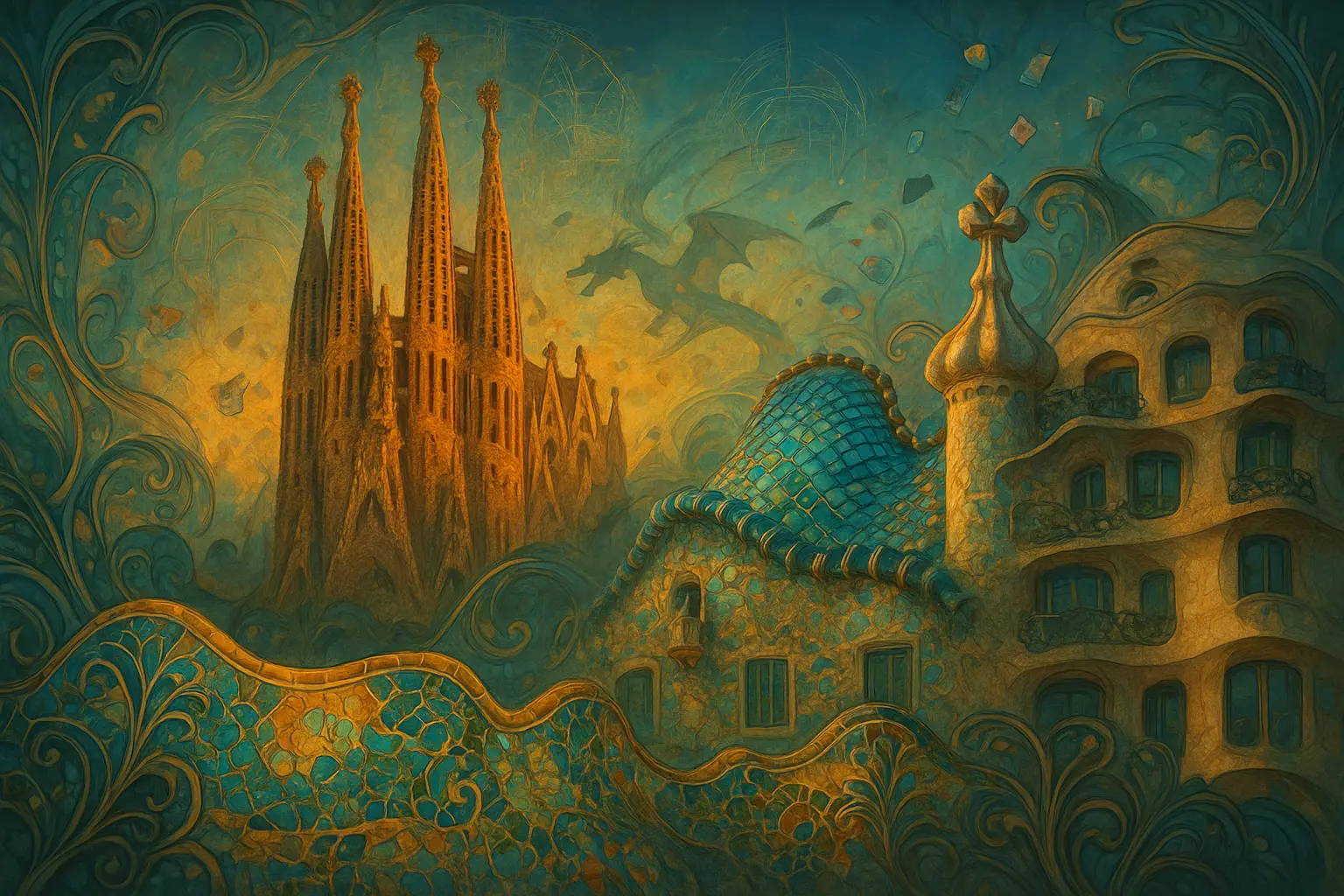
When you walk through the Eixample district of Barcelona in 2026, you are not just walking through a city; you are stepping into a lucid dream. Balconies look like the masks of carnival goers, rooftops curl like the backs of dragons, and columns tilt like trees in a forest. This is the legacy of Modernisme, the Catalan interpretation of Art Nouveau that swept through the city between 1888 and 1910.
For the first-time traveler visiting in 2026, this year is particularly poignant. It marks the centenary of the death of Antoni Gaudí, the movement's most famous son. The city is alive with exhibitions, finished towers, and a renewed appreciation for the period that turned a gray industrial town into the colorful capital of the Mediterranean.
But Modernisme was more than just pretty buildings. It was a social revolution, a political statement of Catalan identity, and a fierce competition between the wealthiest families of the era. This guide will peel back the layers of ceramic tile and stone to show you how Barcelona was transformed, comparing the bourgeois past with the vibrant present, and guiding you on where to find the soul of the city today.
The Canvas: The Eixample Expansion
To understand the art, you must understand the canvas.
Then: The Egalitarian Grid
In the mid-19th century, Barcelona was suffocating within its medieval walls. The city was dense, dark, and unhealthy. Enter Ildefons Cerdà, a visionary engineer who designed a massive expansion called L'Eixample (The Expansion).
- The Vision: Cerdà designed a strict grid system with wide streets, sunlight for every apartment, and octagonal blocks with cut corners to allow steam trams to turn easily. It was meant to be a utopian, egalitarian space where everyone had equal access to light and air.
Now: The Runway of the Elite
By the year 1900, Cerdà’s egalitarian grid had been hijacked by the ultra-wealthy. The bourgeoisie moved out of the cramped old city and turned the Passeig de Gràcia into their showground. They hired star architects to build mansions that screamed, "I am rich, and I am Catalan."
- The Experience Today: As you stroll down this avenue in 2026, look up. The ground floor may house luxury brands like Prada and Gucci, but the floors above tell the story of the families who built this city. The grid remains, but the buildings broke the mold.
Insider Tip: To see the sheer scale of Cerdà's grid, you need elevation. The Montjuïc Cable Car offers a stunning bird’s-eye view where you can see the perfect geometry of the blocks stretching to the sea.
- Location: Montjuïc Cable Car on Google Maps
The Block of Discord: A Clash of Titans
If you only have time to visit one city block in Barcelona, make it the Illa de la Discòrdia on Passeig de Gràcia.
Past: The Architectural Beauty Pageant
In the early 1900s, three of the most famous architects—Antoni Gaudí, Josep Puig i Cadafalch, and Lluís Domènech i Montaner—were hired to renovate three neighboring houses. The result was a stylistic clash so intense that locals dubbed it the "Block of Discord." It wasn't a fight; it was a competition for prestige.
Present: An Open-Air Museum
Today, you can stand on the sidewalk and compare three distinct flavors of Modernisme without moving your feet.
- Casa Batlló (The Dragon):
- The Look: Designed by Gaudí, the façade glitters with trencadís (broken tile mosaic) that shifts color like reptile scales. The roof is arched like a dragon's spine, and the turret represents the lance of Saint George (Catalonia's patron saint).
- Then: It was the home of the Batlló family, textile industrialists who wanted to be the talk of the town.
- Now: It is a UNESCO World Heritage site. In 2026, the immersive "10D Experience" allows you to see the house through the mind of Gaudí.
- When to Visit: Early morning (9:00 AM) to catch the sunlight hitting the glass mosaic.
- Location: Casa Batlló on Google Maps
-
Casa Amatller (The Chocolate House):
- The Look: Next door to Batlló, this building by Puig i Cadafalch looks Flemish, with a stepped triangular roof. It is geometric and regal.
- Then: The home of a wealthy chocolatier.
- Now: It is the only one of the three that retains the original furniture of the owners, giving you a true glimpse into 1900s domestic life.
- Sweet Tip: There is a chocolate shop on the ground floor where you can taste the legacy of the original owner.
-
Casa Lleó Morera:
- The Look: By Domènech i Montaner, this corner building is famous for its floral ornaments and intricate sculptures.
The Stone Quarry: Casa Milà (La Pedrera)
Just a few blocks north stands a building that broke every rule of architecture.
Then: The Neighborhood Joke
When Casa Milà was unveiled in 1912, the locals hated it.
- The Reaction: They called it La Pedrera ("The Stone Quarry") because its undulating limestone façade looked like a rough cliff face. Satirical magazines published cartoons of people raising rabbits on the roof because there were no flat surfaces. It was controversial, dark, and seen as a folly.
Now: An Icon of Engineering
Today, the mockery has turned to reverence.
- What changed: We now understand that Gaudí was decades ahead of his time. The building is supported by pillars, not walls, allowing for an open plan that modern architects envy.
- The Roof: The rooftop is an alien landscape of chimneys shaped like warriors. Standing here offers a 360-degree view of the city and a direct line of sight to the Sagrada Familia.
- Insider Tip: Visit during the "Night Experience." The audiovisual show projected onto the stairwells is mesmerizing and less crowded than the day tours.
- Location: Casa Milà - La Pedrera on Google Maps
The Masterpiece: La Sagrada Familia
This is the definition of Modernisme: faith, nature, and audacity combined.
Past: A Church in the Fields
When construction began in 1882, the site was surrounded by grazing sheep. It was technically outside the city limits. Gaudí took over the project in 1883 and dedicated the last 43 years of his life to it, living in a workshop on-site. He knew he wouldn't live to see it finished, famously saying, "My client [God] is not in a hurry."
Present: The Final Countdown
In 2026, you are witnessing history. The central Tower of Jesus Christ is scheduled for completion, making it the tallest church building in the world.
- The Interior: Stepping inside is like entering a forest. The columns branch out like trees, and the stained glass paints the air with color—cool blues and greens at sunrise, warm reds and oranges at sunset.
- Comparison: Unlike the dark, heavy Gothic cathedrals of the past, this temple is filled with light. It is an optimistic architecture.
- Practical Advice: Tickets sell out weeks in advance. Do not show up without a reservation. Book the "Tower Access" to see the details of the fruit finials up close.
- Location: Sagrada Familia on Google Maps
Nearby Experience: After the intensity of the Basilica, walk down the Avinguda de Gaudí. At the end of this avenue lies another Modernist gem, the Hospital de Sant Pau. It is less crowded but equally stunning, looking more like a palace than a hospital.
Nature as Architecture: Park Güell
Gaudí didn't just design buildings; he tried to design a lifestyle.
Then: A Failed Real Estate Project
Park Güell was never meant to be a public park. In 1900, Count Eusebi Güell hired Gaudí to build a luxury gated community for the super-rich, modeled after English garden cities.
- The Failure: It was a commercial disaster. It was too far from the city center, and the restrictions on cutting down trees deterred buyers. Only two houses were built—one of which Gaudí bought himself because no one else wanted it.
Now: A Public Wonderland
The city purchased the land in 1922 and opened it as a public park.
- The Design: There are no straight lines here. The viaducts mimic natural caves, and the famous serpentine bench is shaped to fit the human body perfectly. The bench is covered in trencadís made from recycled ceramics, showing Gaudí's early commitment to sustainability.
- Visiting in 2026: The park is divided into a free forest zone and a paid "Monumental Zone" (where the lizard and bench are). You must book the paid zone in advance.
- Comparison: What was once a lonely hill for the rich is now the city's most popular sunset spot.
- Location: Park Guell on Google Maps
The Palace of Light: Palau de la Música Catalana
While Gaudí gets the headlines, Lluís Domènech i Montaner built the soul of Catalan music.
Then: The People's Palace
Built between 1905 and 1908, this concert hall was funded by the people—the choral society Orfeó Català—rather than the monarchy or the church. It was a symbol of the Renaixença (the Catalan cultural rebirth).
Now: A Box of Music
Tucked away in the narrow streets of the Sant Pere neighborhood, it is the only concert hall in the world to be a UNESCO World Heritage site.
- The Skylight: The auditorium is illuminated entirely by natural light during the day, thanks to a massive stained-glass skylight that drops from the ceiling like a golden tear.
- The Experience: You can take a tour, but seeing a show here is transformative. The acoustics are brilliant.
- Practical Tip: Book Palau de la Música Catalana Entry Tickets early. Even if you don't see a concert, the architectural tour is worth every cent to see the "stone garden" of sculptures on the stage.
- Location: Palau de la Música Catalana on Google Maps
Modernisme Beyond Buildings: Culture and Cuisine
The movement wasn't just about stone; it was about living artfully.
The Bohemian Hub: Els 4 Gats
To understand the vibe of the era, you must eat where the artists ate.
- Then: Modeled after Le Chat Noir in Paris, Els 4 Gats opened in 1897. It was the watering hole for the avant-garde. A young Pablo Picasso held his first solo exhibition here.
- Now: It is still a functioning restaurant. The interior is pure Modernisme—dark wood, tiles, and sketches on the wall. While the food is traditional Catalan, you go for the atmosphere.
- Nearby Art: To trace the evolution from this era to the next, visit the Picasso Museum Barcelona, located just a short walk away in the El Born district. It houses the works of the artist who grew up in the shadow of Modernisme before breaking it apart with Cubism.
- Location: Picasso Museum Barcelona on Google Maps
Contemporary Contrasts
If you find yourself overwhelmed by the intricate floral patterns of 1900, step into the Moco Museum, located right next to the Picasso Museum.
- The Shift: Housed in a historic palace, it features modern and contemporary art (Banksy, KAWS). It’s a perfect palate cleanser that shows Barcelona’s continuing love affair with rebellious art.
- Location: Moco Museum on Google Maps
Dining in a Modernist Garage
For a culinary experience that matches the architecture, head to El Nacional on Passeig de Gràcia.
- The Space: It was built in 1889 as a café-theater, then became a dye factory, and later a car garage.
- The Vibe: Today, it is a stunning multi-zone culinary space. The high ceilings and iron pillars are beautifully preserved. You can grab tapas, grilled meats, or fresh fish in a setting that feels like a 1920s movie set.
Living Traditions: Language and Identity
Modernisme was fueled by a desire to assert Catalan identity.
- Language: You will see street signs in Catalan (Carrer instead of Calle, Sortida instead of Salida). The language was repressed during the mid-20th century but is now the primary language of education and government.
- The Spirit: The audacity of these buildings reflects the Catalan concept of rauxa (sudden bursts of passion or madness), balanced by seny (common sense).
Cultural Night Out: To end a day of architectural touring, immerse yourself in another Spanish tradition that has deep roots here. The Barcelona City Hall Theater hosts intimate Flamenco Shows. While Flamenco originated in the south of Spain, Barcelona's tablaos became legendary in the 20th century as migration brought different cultures together.
Practical Guide for the 2026 Traveler
When to Go
- Spring (April-May): The city is in bloom, matching the floral motifs of the architecture.
- Autumn (September-October): The light is golden, perfect for photography.
- Note: 2026 is a celebration year. Expect larger crowds around Gaudi-related sites.
Budgeting for Art
Modernisme is expensive to maintain, and ticket prices reflect that.
- Sagrada Familia: ~€26-40.
- Casa Batlló: ~€35-45.
- Casa Milà: ~€25-35.
- Park Güell: ~€10.
- Tip: If you are on a budget, choose one house interior (Batlló for fantasy, Milà for architecture) and enjoy the exteriors of the others, which are free.
Getting Around
The Eixample is vast.
- Walking: The best way to see the "Quadrat d'Or" (Golden Square) of architecture is on foot.
- Metro: Fast and efficient.
- Relaxing: If you need a break from the city heat, the Barcelona Zoo in Ciutadella Park offers a green escape. The park itself was the site of the 1888 Universal Exposition, the event that kickstarted the Modernisme movement.
- Location: Barcelona Zoo on Google Maps
- Cooling Down: If the stone jungle gets too hot, head to the Barcelona Aquarium in Port Vell. It’s a modern facility but offers a cool, dark retreat and a look at the Mediterranean marine life that inspired many of Gaudi's organic shapes.
- Location: Barcelona Aquarium on Google Maps
Conclusion: A City That Dreamed
Modernisme was a brief flash in history—lasting only about 30 years—but it burned so brightly that it defined the city forever. It was a time when architects were rock stars, and a house wasn't just a shelter; it was a poem.
As you stand before the melting façade of Casa Batlló or look up at the starry ceiling of the Sagrada Familia in 2026, remember that you are looking at the result of pure, unadulterated optimism. These creators believed they could reinvent the world through beauty.
Barcelona today is a blend of that historic optimism and modern innovation. Whether you are eating tapas in a Modernist garage or watching the sunset from Park Güell, you are living inside their dream.
Quick Reference: The Modernisme Trail
- Start: Sagrada Familia (Book 9:00 AM).
- Walk: Down Av. Gaudí to Hospital Sant Pau.
- Transit: Metro to Passeig de Gràcia.
- Visit: Casa Milà (La Pedrera).
- Lunch: At El Nacional or Els 4 Gats.
- Visit: Casa Batlló and the Block of Discord.
- Evening: Concert or tour at Palau de la Música Catalana.
- Sunset: Park Güell.