
Discovering the Most Spectacular Barcelona Unique Landmarks and Hidden Gems
When you step off the plane into the Catalan capital, you are immediately greeted by a city that feels like a living, breathing art gallery. Exploring Barcelona unique landmarks is not just about ticking boxes on a tourist map; it is about immersing yourself in the visionary mind of Antoni Gaudí and the rich, layered history of the Mediterranean. From the sun-drenched tiles of Park Güell to the somber, ancient stones of the Gothic Quarter, this city offers a sensory journey unlike any other. Whether you are a first-time visitor or a returning traveler, the architectural landscape here continues to evolve, blending century-old traditions with modern innovation.
In this guide, I recommend the absolute must-see sites, provide tips on how to avoid the biggest crowds, and point you toward the best local spots to refuel between your adventures.
The Crown Jewel: Basílica de la Sagrada Família
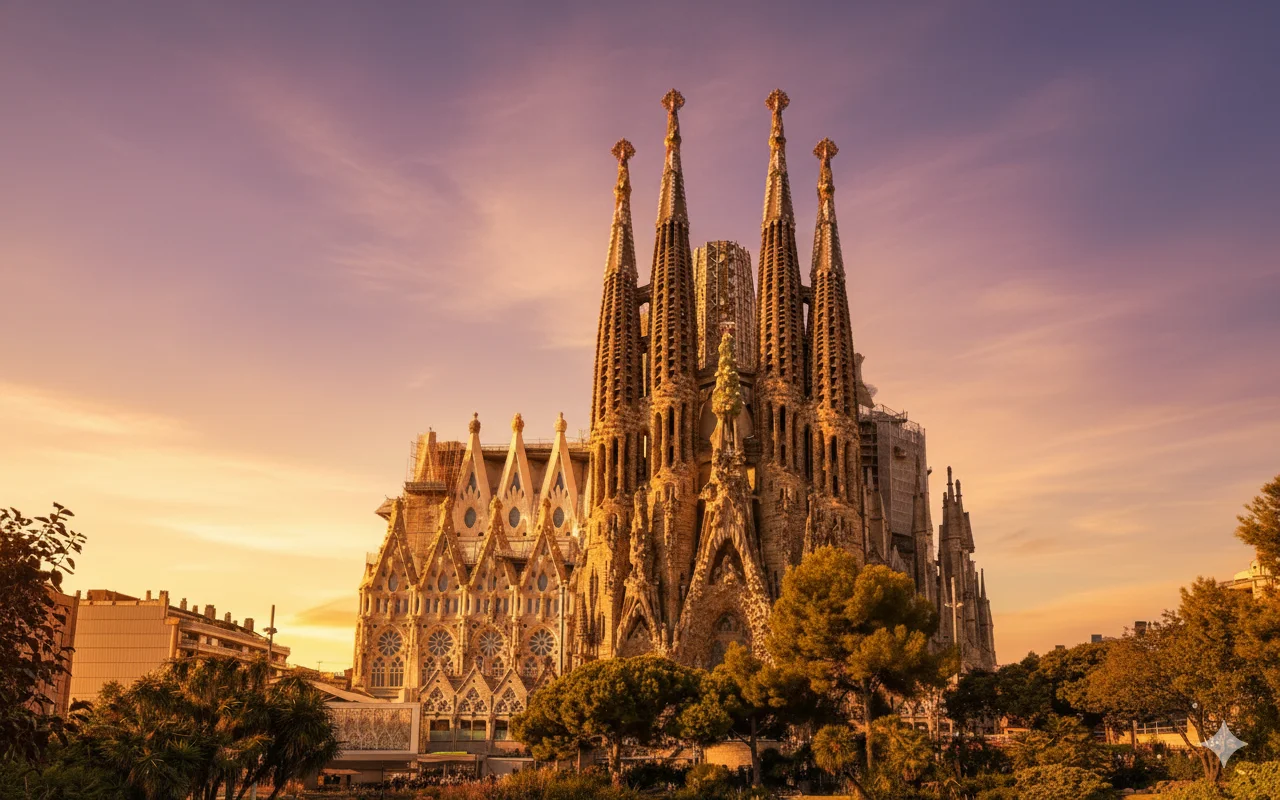
No discussion of Barcelona unique landmarks can begin without the Sagrada Família. This is more than a church; it is an organic forest made of stone.
- Then vs. Now: For decades, visitors remember the Sagrada Família primarily as a construction site dominated by giant cranes and hollow shells. Today, while construction continues, the interior is a finished masterpiece. Walking inside now feels like entering a kaleidoscope as the sunlight filters through massive stained-glass windows, a vast difference from the dusty, dark interior of twenty years ago.
- When to Visit: I highly recommend booking the first slot at 9:00 AM. The morning light hitting the "Nativity" side creates a cool, blue atmosphere, while the late afternoon sun floods the "Passion" side with fiery reds and oranges.
- Insider Tip: Don’t just look up. Spend time in the museum in the basement to see the 3D models Gaudí used, as he rarely drew traditional blueprints.
- Nearby Experience: After your visit, walk five minutes to Can Kenji. It is a wonderful Japanese-Catalan fusion restaurant that offers a peaceful break from the tourist rush.
- Location: Carrer de Mallorca, 401, 08013 Barcelona
The Whimsical World of Park Güell
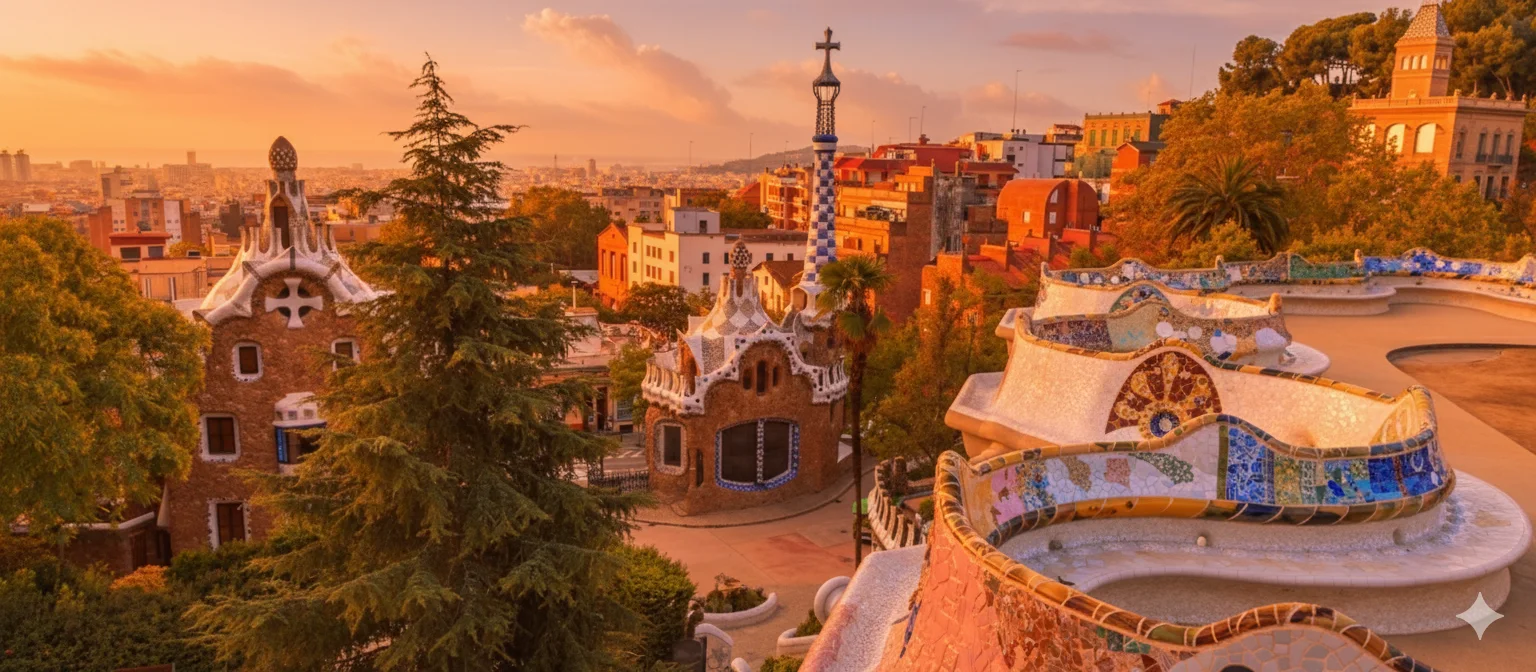
Designed as a failed luxury housing estate, Park Güell is now one of the most recognizable public spaces in the world. It is a place where you can see Gaudí’s ability to marry architecture with nature.
- The Experience: You will find the iconic mosaic dragon at the entrance and the serpentine bench that offers a panoramic view of the city skyline and the sea.
- Then vs. Now: It used to be a completely free park where locals took their dogs for walks. Now, to preserve the delicate mosaics, the "Monumental Zone" requires a paid ticket and has restricted entry times. I recommend booking at least a week in advance during the summer months.
- Best Time for Photos: Sunset is magical here, but if you want that perfect shot on the mosaic bench without a hundred other people in it, you need to arrive right at opening time (usually 8:30 AM).
- Google Maps: Park Güell, 08024 Barcelona
Refuel Nearby: Just outside the park entrance, stop by Terra Mia. They serve fantastic artisanal gelato and light Mediterranean bites that are perfect after a long walk up the hill.
The Architectural Rivalry: Passeig de Gràcia
Walking down Passeig de Gràcia is like walking through a high-fashion runway, but look past the shop windows to see the "Block of Discord," where three different architects competed to build the most beautiful house.
Casa Batlló
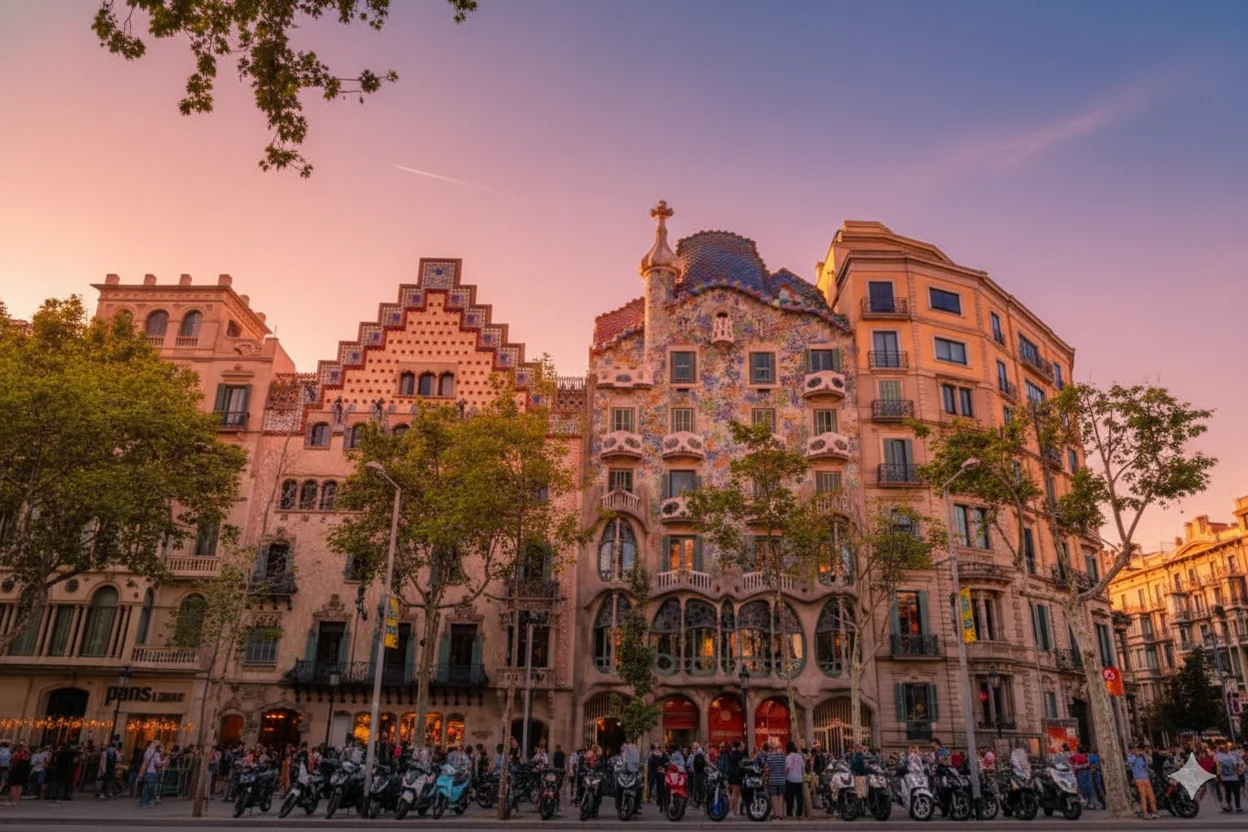
I recommend this place for its sheer creativity. It is often called the "House of Bones" due to its skeletal balconies.
- The Experience: The roof features a dragon’s back made of iridescent tiles. Inside, the immersive "Gaudí Cube" uses 360-degree screens to show what was going on in the architect's mind—a very modern addition to a historic landmark.
- Location: Passeig de Gràcia, 43, 08007 Barcelona
Casa Milà (La Pedrera)
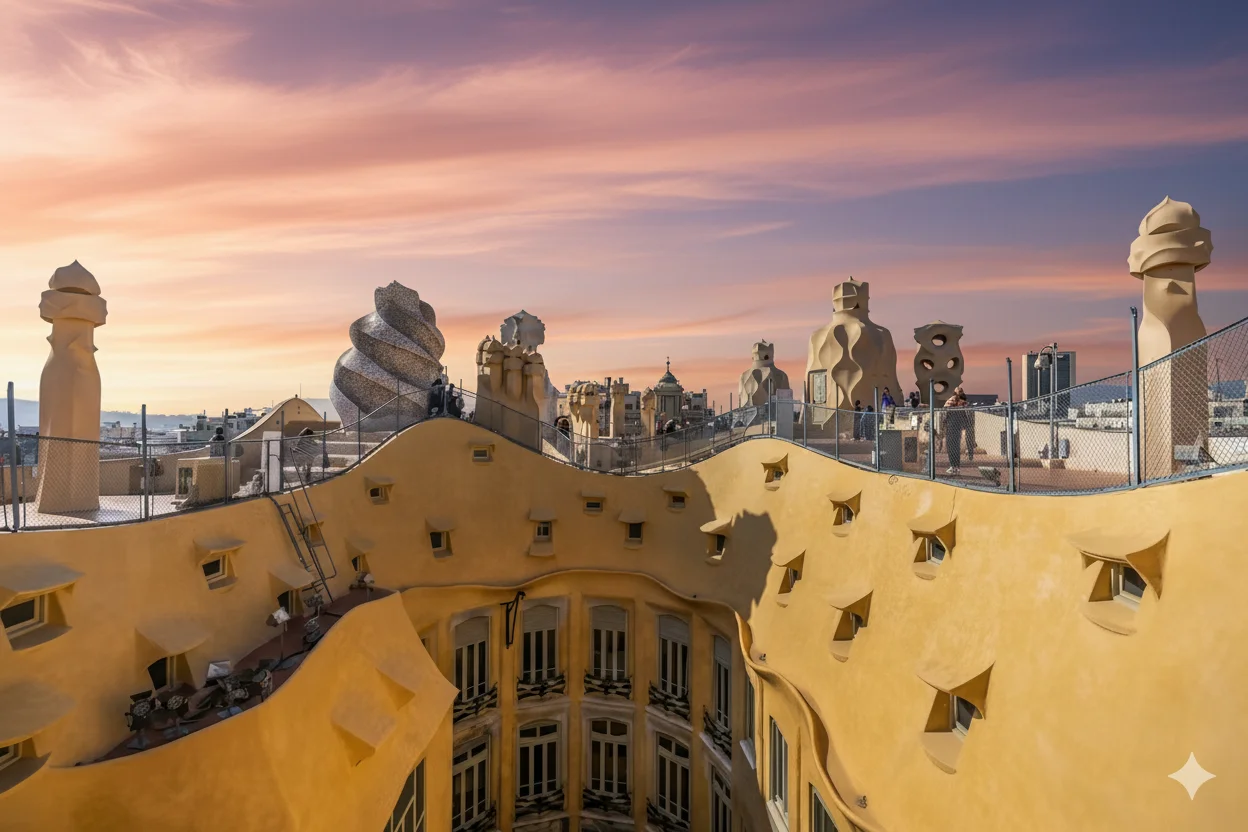
Just a few blocks up, you will find "The Quarry." It is famous for its undulating stone facade and its chimney-pot roof, where the chimneys look like medieval knights.
- Insider Tip: I recommend the night tour here. They project a light show onto the chimneys accompanied by live music and a glass of cava.
- Location: Passeig de Gràcia, 92, 08008 Barcelona
Dining Recommendation: Between the two houses, you will find El Nacional. It is a stunning multi-space restaurant housed in a restored 19th-century industrial pavilion. I recommend the "La Tapería" section for an authentic tapas experience.
The Masterpiece of Music: Palau de la Música Catalana
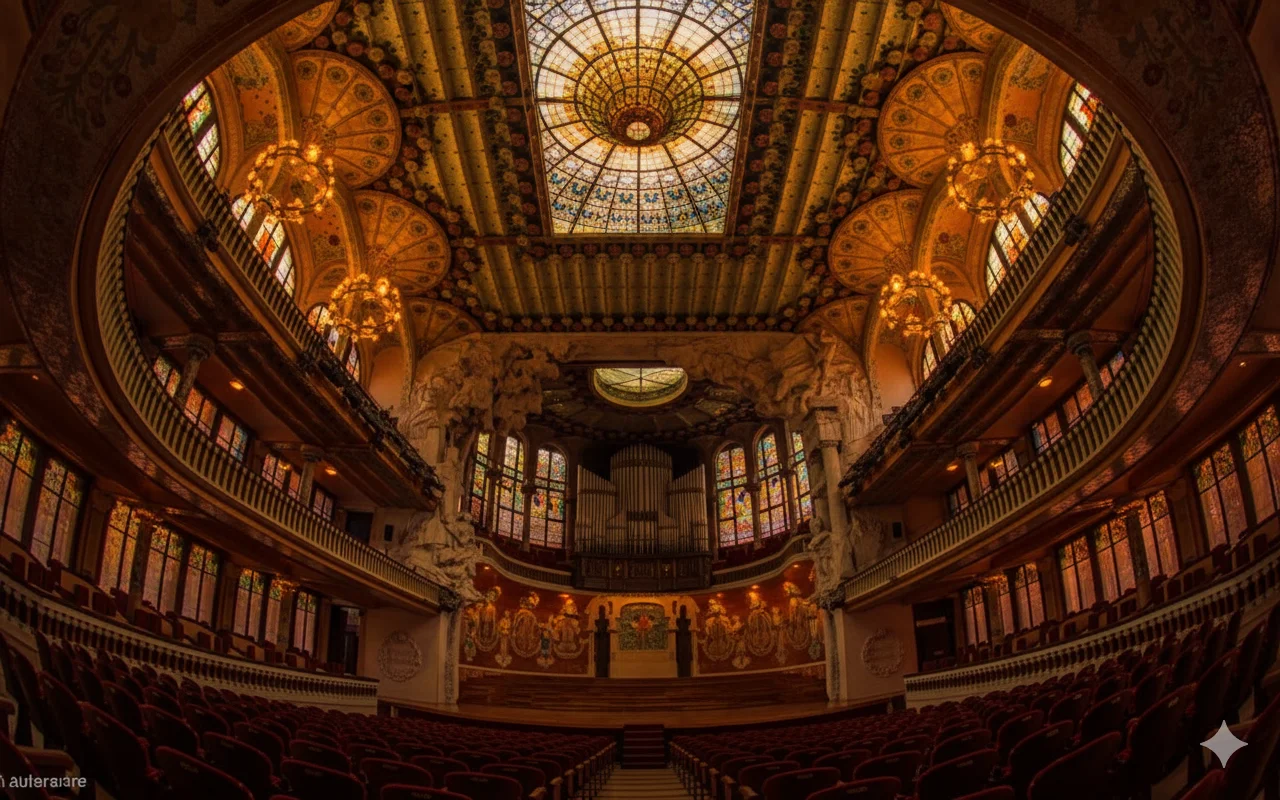
While Gaudí dominates the headlines, Lluís Domènech i Montaner designed this breathtaking concert hall. It is arguably the most beautiful "Modernista" interior in the city.
- The Highlight: The central stained-glass skylight, which drops down like a giant golden honey drip. It is the only concert hall in Europe that is entirely lit by natural light during the day.
- Why Visit: It feels much more intimate than the larger landmarks. I recommend taking a guided tour to see the intricate floral carvings and the sculptures of the muses on the stage.
- Nearby Café: I recommend Tosca Tapas y Café right across the street. It is a great spot to spend time on a glass of vermouth while admiring the building's exterior.
- Location: C/ de Sant Pere Més Alt, s/n, 08003 Barcelona
The Healing Garden: Hospital de Sant Pau
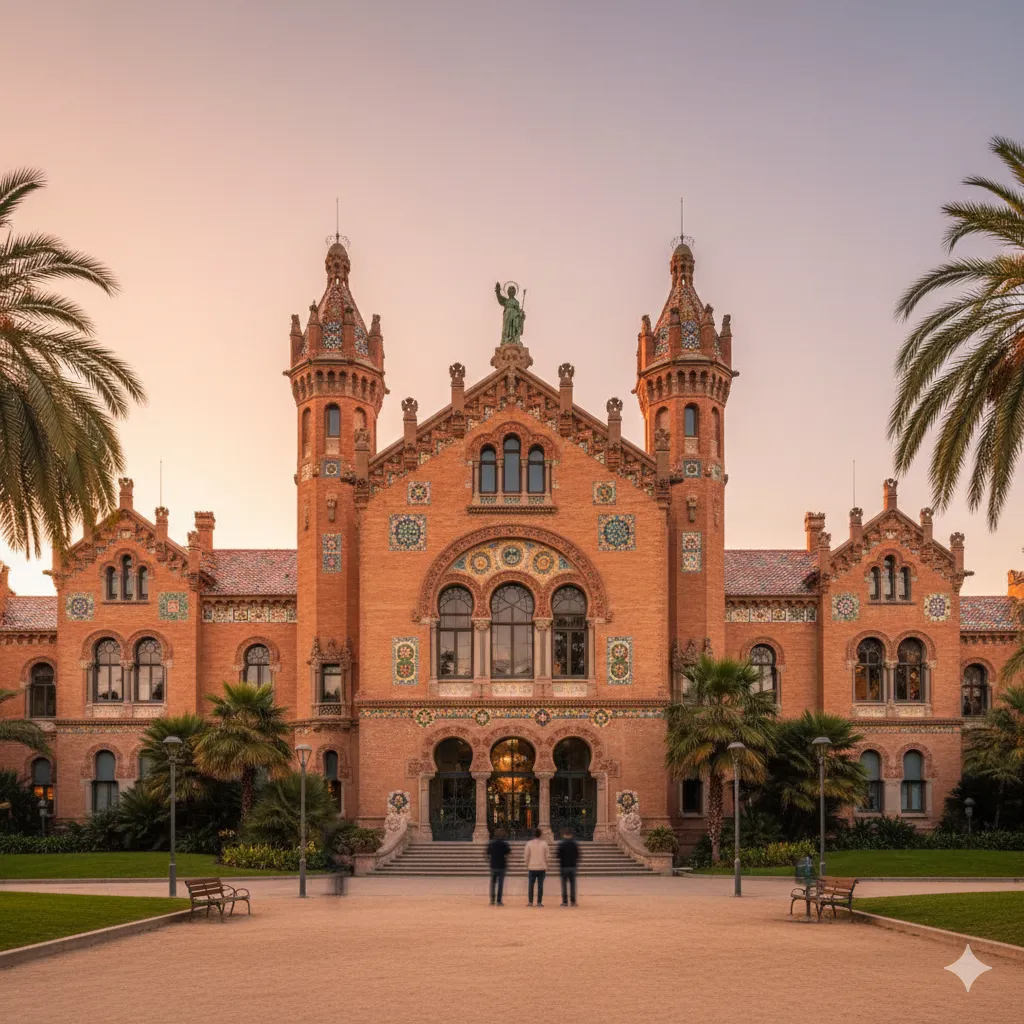
Just a short walk from the Sagrada Família via the pedestrianized Avinguda de Gaudí, you will find the Recinte Modernista de Sant Pau. It is the largest Art Nouveau complex in the world.
- The History: This was a fully functioning hospital until 2009. Domènech i Montaner believed that patients would heal faster if surrounded by beauty and fresh air.
- Then vs. Now: For a century, this was a place of surgery and illness. Today, it has been restored to its former glory. It is significantly less crowded than other Barcelona unique landmarks, making it a peaceful escape.
- Insider Tip: Check out the underground tunnels that connect the different pavilions—they were used to move patients without exposing them to the weather.
- Google Maps: C/ de Sant Antoni Maria Claret, 167, 08025 Barcelona
Reaching for the Sky: Tibidabo and Sagrat Cor
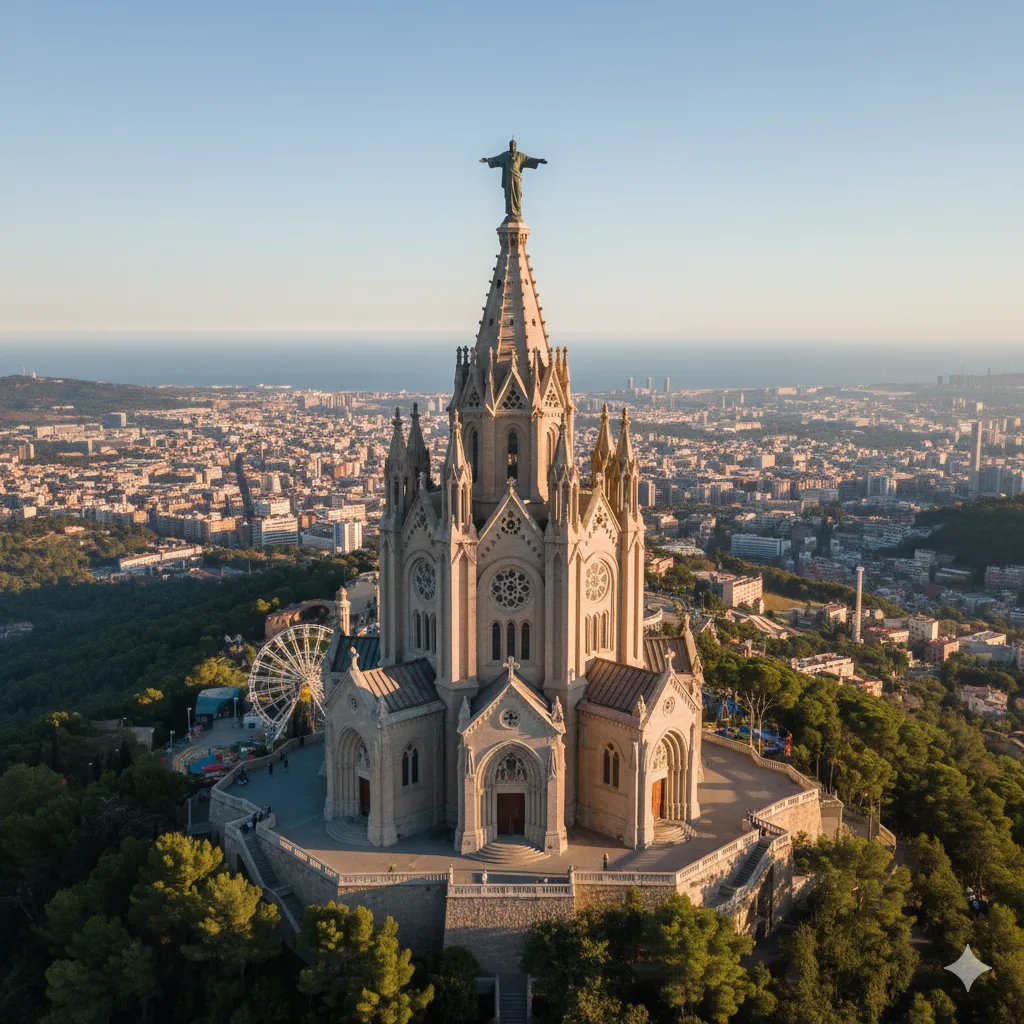
If you look toward the mountains, you will see a church with a golden statue of Jesus. This is the Temple del Sagrat Cor on Mount Tibidabo.
- The Experience: It is actually two churches in one—a dark Romanesque crypt at the base and a bright, neo-Gothic church on top. You can take an elevator to the highest tower for a view that stretches to the Montserrat mountains.
- Amusement Park: Right next to it is the Tibidabo Amusement Park, one of the oldest in the world. I recommend riding the "Avió," a red airplane ride from 1928 that is still powered by its own propeller.
- Dining Recommendation: Visit Mirablau at the base of the funicular for a panoramic restobar experience.
- Google Maps: Tibidabo, 08035 Barcelona
Modern Marvels: Torre Glòries and Mercat dels Encants
Barcelona isn't just about the early 1900s. The Glòries area showcases the city's futuristic side.
Torre Glòries (formerly Agbar Tower)
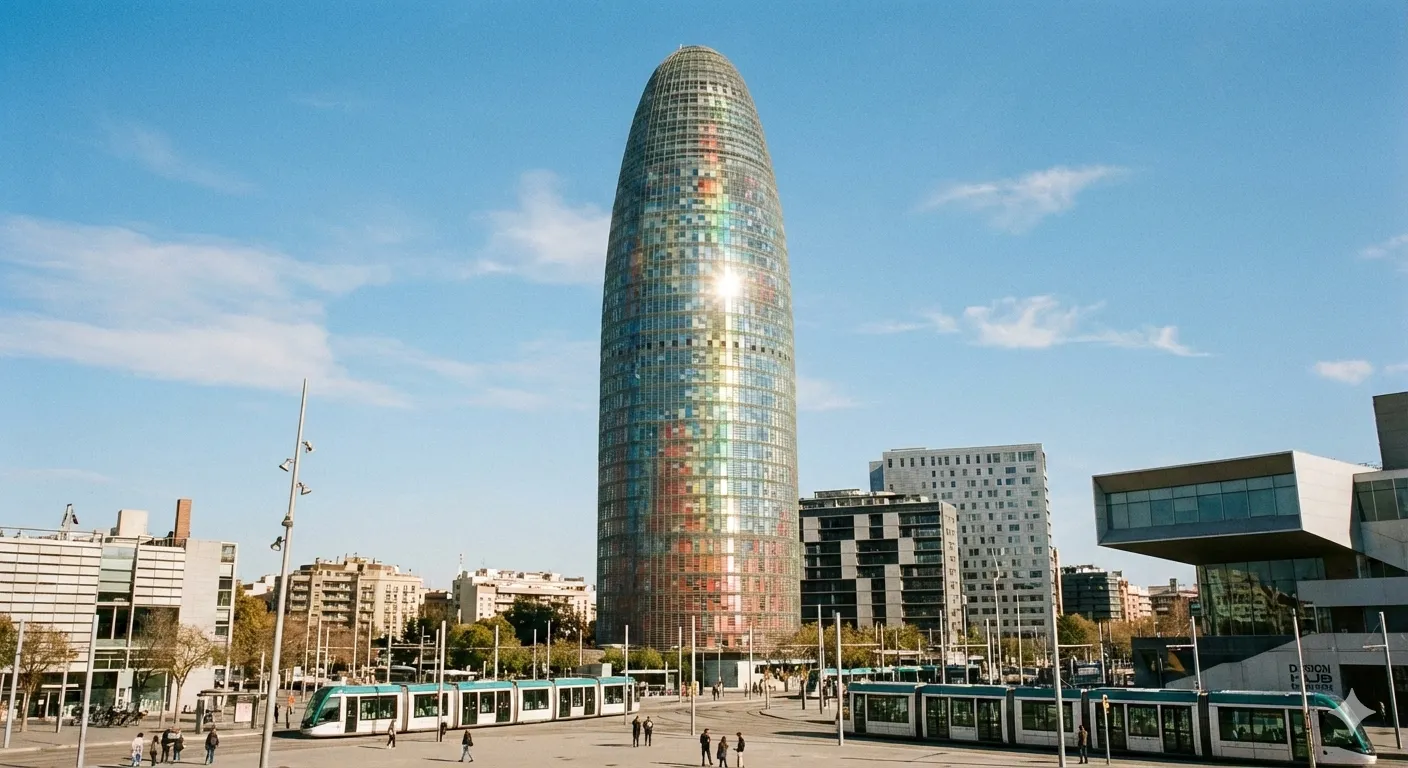
This bullet-shaped tower by Jean Nouvel is a modern icon. I recommend visiting at night when the facade glows with 4,500 LED lights. You can now visit the "Mirador Torre Glòries" for a high-tech view of the city.
- Location: Avinguda Diagonal, 211, 08018 Barcelona
Mercat dels Encants
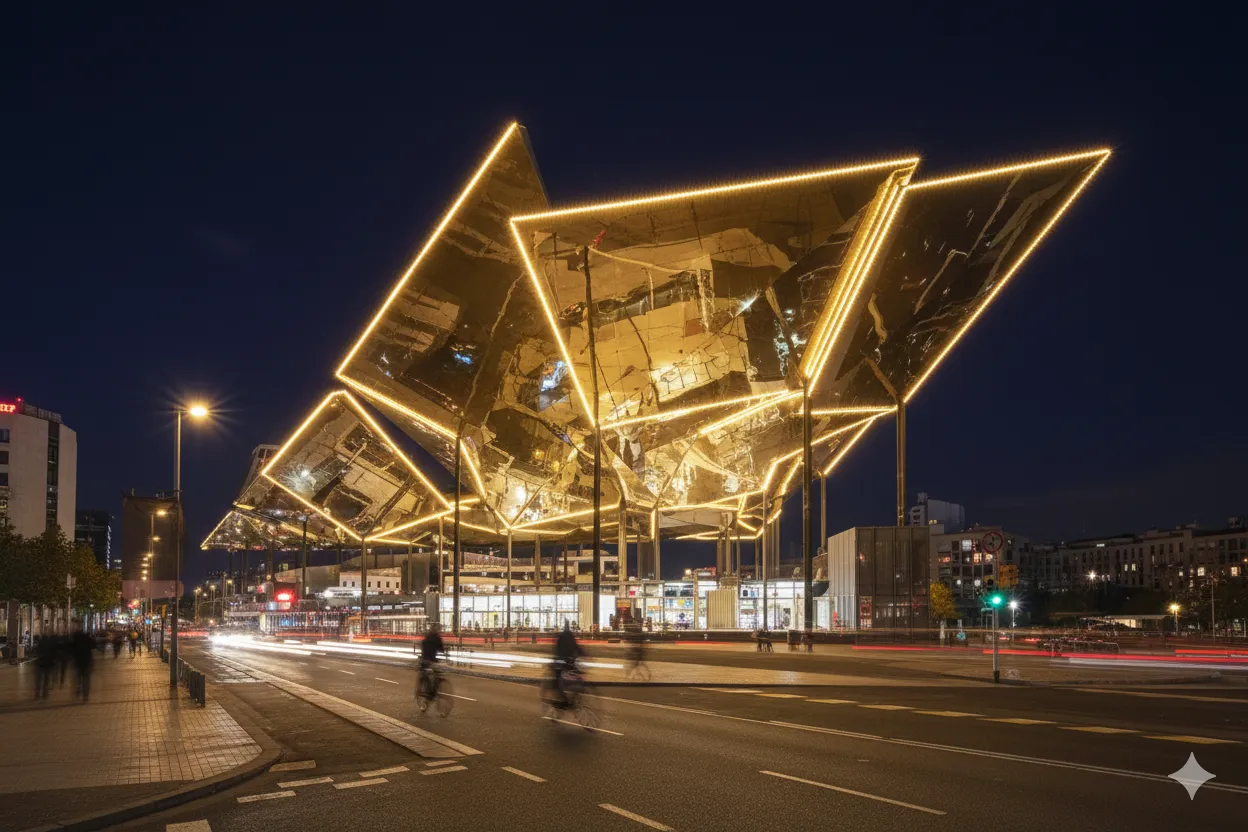
Directly across from the tower is the city's oldest flea market, housed under a spectacular mirrored roof.
- Why go: The roof reflects the chaos of the market below. It is a great spot to spend time people-watching and hunting for vintage treasures.
- Google Maps: C/ de Castillejos, 158, 08013 Barcelona
The Ancient Soul: Temple d'August and the Gothic Quarter
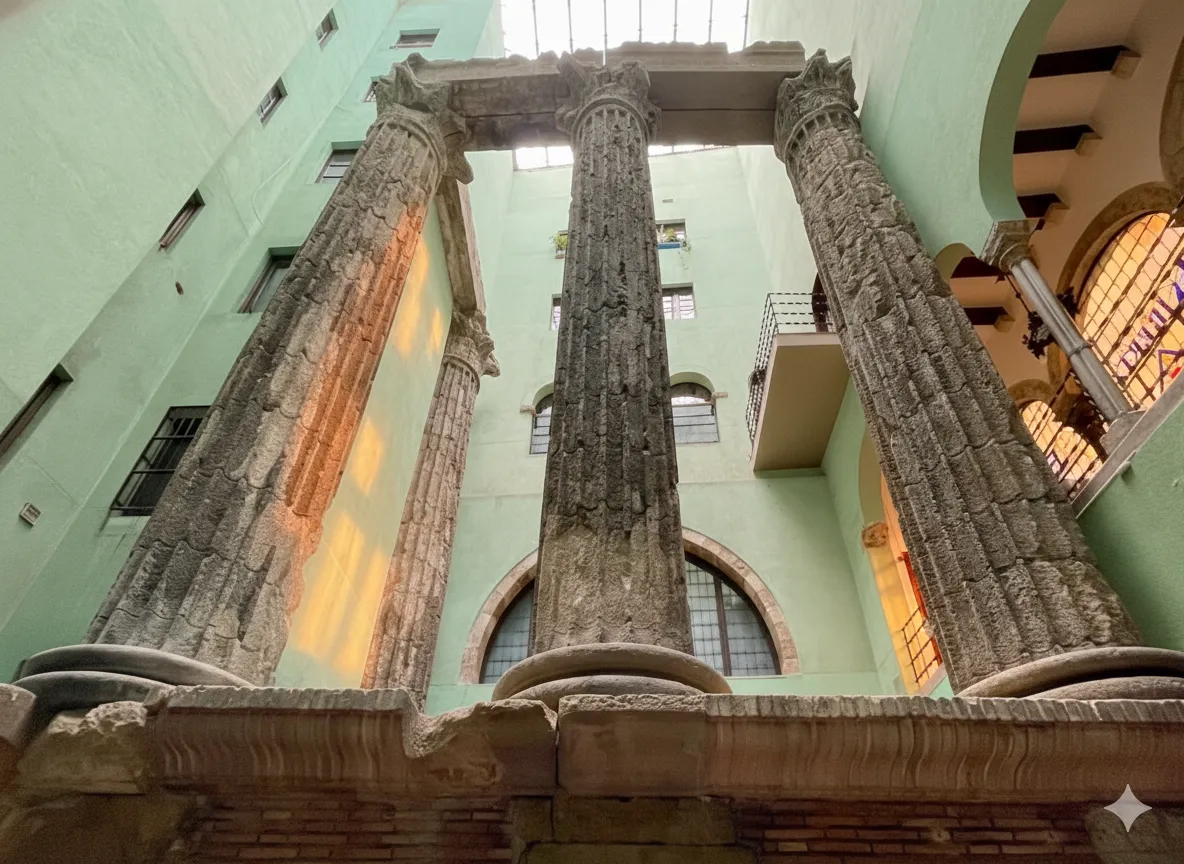
Tucked away in the narrowest alley of the Gothic Quarter is a landmark that predates Gaudí by 2,000 years.
- The Columns: Inside a small courtyard at the Center Excursionista de Catalunya, you will find four massive Roman columns. They are the remains of the Temple of Augustus from the Roman colony of Barcino.
- The Vibe: It is a moment of total silence in a bustling district. It is free to enter and offers a humbling perspective on the city's age.
- Google Maps: Carrer de Paradís, 10, 08002 Barcelona
A Sweet Finish: Just a short walk away is Gelaaati Di Marco. I recommend their "Crema Catalana" flavor—it is a local custard dessert turned into gelato, and it is the perfect way to taste the history of Barcelona.
Practical Tips for Exploring Barcelona Unique Landmarks
To make your trip to these Barcelona unique landmarks as smooth as possible, keep these logistical points in mind:
1. Booking in Advance
In 2026, "walk-in" tickets for the Sagrada Família, Casa Batlló, and Park Güell are essentially a thing of the past. I recommend using official websites to book at least 72 hours in advance. For the Sagrada Família, two weeks in advance is safer during the summer.
2. The Best Way to Move
The Barcelona Metro is incredibly efficient. Lines L2, L3, and L5 will get you to almost all major landmarks. I recommend getting a "T-Usual" or "T-Casual" card depending on your length of stay.
- Walking: Many landmarks are within walking distance. Walking from Sagrada Família to Hospital de Sant Pau takes you down Avinguda de Gaudí, a beautiful pedestrian street lined with cafes.
3. Staying Mindful
While the city is very safe and welcoming, staying mindful of your personal belongings in busy plazas like Plaça de Catalunya or around the Sagrada Família will ensure your trip remains stress-free. Avoid leaving bags on the floor in outdoor cafes.
4. Seasonal Considerations
- Spring/Fall: The weather is perfect for walking.
- Winter: The crisp winter light is the best for photography.
- Summer: It can be very humid; I recommend visiting the most popular landmarks at opening time (usually 8:30 AM or 9:00 AM) to avoid the midday sun.
Summary Checklist for Travelers
- Comfortable Shoes: You will likely walk 15,000 steps a day.
- Power Bank: Taking photos of these architectural marvels will drain your battery fast.
- Water Bottle: Use the public "fonts" (drinking fountains). The water is safe, cold, and free.
- Digital Tickets: Keep your QR codes handy on your phone; almost all landmarks are now paperless.
Barcelona is a city that rewards the curious. Every time you turn a corner, you might find a hidden Art Nouveau door or a Roman wall integrated into a modern cafe. Enjoy the hunt for these Barcelona unique landmarks, and let the city's vibrant energy guide you. Happy travels!