
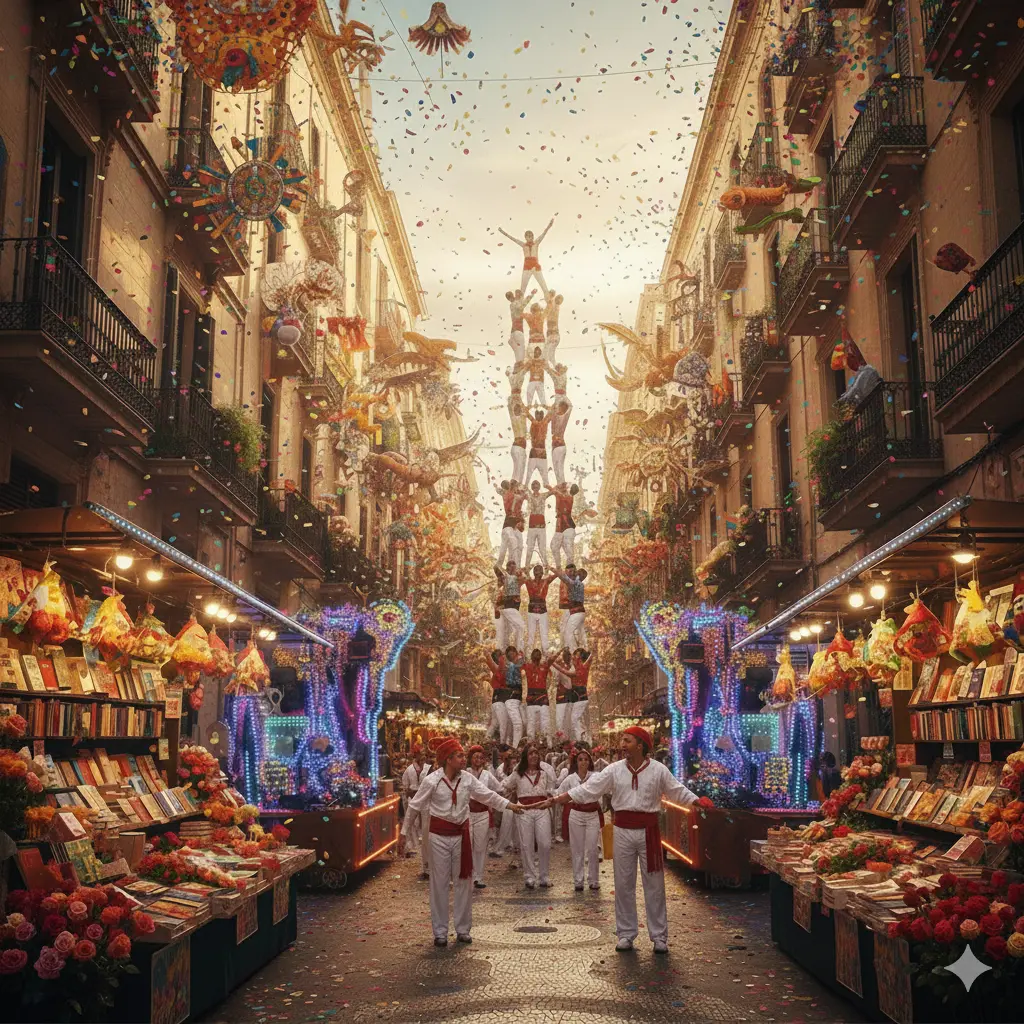
Barcelona Today: A Blend of Tradition and Innovation
When you step off the plane in Barcelona in 2026, you are stepping into a city that has successfully pulled off a magic trick. It has managed to grow into a futuristic "Smart City" without losing the soul of its ancient streets. It is a place where grandmothers still buy bread from the same bakery their parents did, while digital nomads code in coffee shops next door.
For the first-time traveler, modern Barcelona can feel like a paradox. You will see drones filming 14th-century spires and electric scooters buzzing past Roman walls. This is not a city stuck in the past; it is a city that uses its past as a foundation for a bold future.
In 2026, Barcelona is celebrating monumental milestones—most notably the progress on the Sagrada Familia towers—and redefining what it means to be a Mediterranean capital. This guide will help you navigate the "Now," understanding how the city breathes today, how the culture has evolved, and how you can experience this unique blend of the old and the new.
How Present Day Barcelona Took Shape
To understand the Barcelona of today, you have to look at how it manages its space. The city has undergone a quiet revolution in the last decade, prioritizing people over cars.
The Superblocks (Superilles)
Then: In the 20th century, the Eixample district (the grid system) was dominated by automobiles. It was noisy, smoky, and stressful. The "garden city" vision of the original designers had been lost to traffic.
Now: Barcelona is world-famous for its Superillas (Superblocks).
- What changed: The city reclaimed the streets. Intersections that used to be for cars are now playgrounds, picnic spots, and green plazas.
- Where to see it: Walk through the Sant Antoni or Poblenou neighborhoods. You will see children playing soccer in the middle of the street and neighbors chatting on benches. It is a return to village life within a metropolis.
The 22@ District: The "Manchester" of the South
Then: Poblenou was once the industrial engine of Catalonia, filled with cotton mills and factories. By the late 20th century, many of these stood empty and decaying.
Now: This is the 22@ District, the technological heart of the city.
- The Blend: Old red-brick factory chimneys have been preserved, but now they stand next to gleaming glass office towers housing startups and tech giants.
- Cultural Connection: This blend of old walls and new ideas is perfectly captured at the Moco Museum. Located in the nearby Born district (a short walk away), it houses modern and contemporary art (like Banksy and KAWS) inside a 16th-century palace. It symbolizes Barcelona today: historic skin, modern heart.
- Location: Moco Museum on Google Maps
The Skyline of 2026: Icons Reimagined
The silhouette of Barcelona has changed dramatically in the last few years.
The Sagrada Familia
Then: For over a century, it was the "unfinished church," a construction site that moved at a snail's pace. It was a symbol of patience.
Now: The skyline changed for good in 2026: the exterior of the Tower of Jesus Christ, the central and tallest tower, was completed on February 20, 2026, reaching 172.5 meters and making Sagrada Familia the world's tallest church. Pope Leo XIV inaugurated the tower on June 10, 2026, coinciding with the centenary of Gaudí's death. The basilica isn't entirely finished — interior work continues through 2027-2028, and the Glory Facade and monumental staircase aren't expected until around 2034 — but for the first time in over a century, the exterior silhouette that defines the skyline is complete.
- The Experience: Digital technology now allows you to see the future of the building through VR experiences on-site. The contrast between the stone carved by hand in the 1890s and the stone cut by lasers today is visible on the façade.
- Location: Sagrada Familia on Google Maps
The Waterfront & Sustainability
Then: The port was purely for logistics or high-end yachting.
Now: The waterfront is the center of the "Blue Economy"—focused on ocean sustainability and research.
- Educational Leisure: The Barcelona Aquarium in Port Vell is a prime example. It has shifted focus from just "displaying fish" to conservation education, teaching visitors about the Mediterranean ecosystem. It’s a favorite for families and shows how the city is protecting its greatest natural asset.
- Location: Barcelona Aquarium on Google Maps
Festivals & Traditions Through the Ages
You might think that a modern city would let old traditions die out. In Barcelona, the opposite has happened. The younger generation has embraced folklore with renewed energy.
La Mercè: The City's Birthday
The Tradition: Every September, the city honors its patron saint, La Mercè.
- Then: It was a strictly religious procession.
- Now: It is a massive street party involving projection mapping on buildings, drone shows, and alternative music festivals (BAM). Yet, the core remains ancient: the Gegants (Giants) still dance, and the Correfoc (Fire Run) still fills the streets with sparks and drums.
Castellers: Human Towers
The Symbolism: Nothing defines Catalan culture better than Castells.
- The Act: Hundreds of people build a human tower. It requires força, equilibri, valor, i seny (strength, balance, courage, and common sense).
- Today: In 2026, you will see men and women, old and young, and people from diverse immigrant backgrounds joining the colles (teams). It has evolved from a rural tradition to a symbol of social integration in the modern city.
Living Culture: Flamenco
While Flamenco has its roots in Andalusia, Barcelona has a long history with the art form due to internal migration in the 20th century.
- The Modern Experience: Today, Flamenco in Barcelona is sophisticated and theatrical. The Barcelona City Hall Theater hosts Flamenco Shows that respect the raw, historic roots of the dance while presenting it in a setting that appeals to the modern global traveler. It is a perfect evening activity to feel the passion that still runs through the city's veins.
Language and Culture Today
One of the first things you will notice is the language.
The Revival of Catalan
Then: There were periods in history when the Catalan language was suppressed and removed from public life.
Now: Catalan is vibrant, alive, and cool. It is the language of the government, schools, and local hip-hop artists.
- For the Traveler: You will hear a mix of Catalan, Spanish, and English.
- Insider Tip: Locals switch effortlessly between languages. If you say "Bon dia" (Good morning in Catalan) instead of "Buenos días" (Spanish), you will instantly see a warmer smile. It shows you recognize their specific identity.
The Palace of Identity
To see where this cultural pride lives, visit the Palau de la Música Catalana.
- The Significance: Built as the home for the Orfeó Català choir, it was a symbol of the Catalan Renaissance.
- Today: It remains a working concert hall, not just a museum. Seeing a concert here, surrounded by the stunning stained glass and mosaics, connects you directly to the artistic soul of the region.
Cuisine Today: The Gastronomic Revolution
Barcelona's food scene in 2026 is a tug-of-war between the grandmother's kitchen and the science lab—and the winner is your stomach.
The Return of the Bodega
Then: Bodegas were dusty wine cellars where old men drank cheap wine from the barrel. In the early 2000s, many closed down.
Now: The "Bodega" is back in fashion. Young people crowd into these small spaces on weekends to drink Vermut (vermouth) and eat tinned seafood (which is considered a delicacy here, not cheap food!).
- What to order: A glass of house vermouth (vermut de la casa), olives, and a Gilda (a skewer of olive, pepper, and anchovy).
Innovation on the Plate
Catalonia is home to some of the world's best chefs who pioneered molecular gastronomy.
- The Trend: Today, high-end dining is less about foam and smoke and more about "Zero Kilometer" sustainability. Restaurants pride themselves on growing their own vegetables in the outskirts of the city.
Market Life
The markets are still the beating heart of the neighborhoods.
- Comparison: While the La Boqueria market is famous, it is very crowded with tourists. For a more authentic "Barcelona Today" experience, visit Mercat de Sant Antoni. It was recently renovated and shows how a 19th-century market can be adapted for 21st-century needs, with underground logistics and modern stalls.
The Travel Industry Today: Smart Tourism
Barcelona has led the way in managing popularity. In 2026, the travel experience is smoother but requires more planning.
The "Book Ahead" Culture
Then: You could show up to Park Güell or the Picasso Museum on the day and buy a ticket.
Now: Spontaneity is difficult for major sites. The city uses "smart tourism" to control crowds and protect the monuments.
- Park Güell: Limits the number of visitors per hour to preserve the nature and the mosaics. This makes the experience much more pleasant than it was ten years ago, but it means you must book weeks in advance.
- Location: Park Guell on Google Maps
- Picasso Museum: Located in the medieval palaces of El Born, it also has strict capacity limits. It remains the vital link between the old art world and the modern one.
- Location: Picasso Museum Barcelona on Google Maps
Digital Experiences
Heritage sites have embraced tech.
- Casa Batlló: This isn't just a house tour anymore; it's an immersive 10D experience with AI and projections that let you see into Gaudí's mind. It's a perfect example of how Barcelona innovates to keep history engaging for a digital generation.
- Location: Casa Batlló on Google Maps
- Casa Milà (La Pedrera): They offer "Night Experiences" with hologram projections on the rooftop chimneys.
- Location: Casa Milà - La Pedrera on Google Maps
Casa Milà (La Pedrera) tickets 🎫
Sports and Leisure: The Modern Cathedrals
For many, the modern religion of Barcelona is football.
FC Barcelona
Then: A football club that represented Catalan identity during difficult political times.
Now:
- Now: It is a global brand and a technological powerhouse. The FC Barcelona Museum is often the most visited museum in the city. In 2026, the stadium experience is cutting-edge, blending the history of the players (Kubala, Cruyff, Messi, Yamal) with interactive gaming and VR.
- Location: FC Barcelona Museum on Google Maps
A Day of Thrills
If you want to see how modern Catalans spend their leisure time away from history, they head to Port Aventura World. Located about an hour south of the city, it is one of Europe's largest theme parks. While not in the city center, it represents the modern tourism infrastructure that connects Barcelona to the wider region. * Location: Port Aventura World on Google Maps
Green Spaces
The Barcelona Zoo in the Ciutadella Park has transformed its mission.
- Change: Moving away from traditional exhibition, the zoo today focuses heavily on preserving endangered species and biodiversity. It reflects the city's growing ecological conscience.
- Location: Barcelona Zoo on Google Maps
A Bird's Eye View of the Blend
To truly understand this "Blend of Tradition and Innovation," you need to see it from above.
Montjuïc Cable Car
Take the Montjuïc Cable Car. As you float over the city, look down.
- What you see: You will see the perfect medieval maze of the Gothic Quarter, the mathematical grid of the 19th-century Eixample, the Olympic ring from 1992, and the modern glass hotels of the waterfront—all in one glance. It is the visual proof of Barcelona's evolution.
- Location: Montjuïc Cable Car on Google Maps
Practical Guide for the 2026 Traveler
Best Time to Visit
- Shoulder Season: May/June and September/October are the sweet spots. The weather is perfect (20-25°C), and the city is fully open.
- Winter: January is crisp and sunny. It’s the best time to see the city without the crowds, though you can't swim in the sea.
Costs & Budgeting (2026 Estimates)
- Coffee: €2.00 - €2.50.
- Menu del Dia (Lunch): €15 - €20.
- Museum Entry: Major sites range from €25 - €40.
- Transport: The "Hola Barcelona" travel card is excellent value for unlimited metro and bus use.
Things to Keep in Mind
- Respect the Siesta (Sort of): In 2026, big shops stay open all day. However, small local boutiques and markets still close between 2:00 PM and 5:00 PM. Use this time to have a long lunch like a local.
- Dinner Time: Do not try to eat dinner at 6:00 PM. Kitchens open at 8:00 PM, and the atmosphere gets good around 9:30 PM.
- Dress Code: Barcelona is stylish but casual. Comfortable shoes are non-negotiable. However, if you visit religious sites like the Cathedral or Sagrada Familia, cover your shoulders and knees.
Safety
Barcelona is safe, but it is busy.
- Awareness: In high-traffic areas like Las Ramblas or the Metro, be aware of your belongings. The "backpack on the front" look is common for a reason.
- Etiquette: Please do not walk around the city center in swimwear. It is frowned upon (and actually finable). Save the bikini for the beach.
Frequently Asked Questions
What's new in Barcelona today, in 2026?
The biggest change is the Sagrada Familia's central Tower of Jesus Christ, whose exterior was completed on February 20, 2026 (172.5 meters, the world's tallest church), inaugurated by Pope Leo XIV on June 10, 2026. Beyond that, the city continues rolling out its Superblocks (Superilles), the tech-focused 22@ District in Poblenou, and "smart tourism" booking systems at major sites.
What are Barcelona's Superblocks (Superilles)?
Superblocks are former car-dominated intersections that the city has reclaimed as pedestrian plazas, playgrounds, and picnic spots, most visible in the Sant Antoni and Poblenou neighborhoods.
What is the 22@ District?
It's Poblenou's former industrial zone, once filled with 19th-century cotton mills and factories, now redeveloped into the city's technology hub, where preserved brick chimneys stand alongside glass office towers.
Do I need to book tickets in advance for sites like Park Güell in 2026?
Yes. Barcelona's major sites now use "smart tourism" systems to manage crowds — Park Güell limits visitors per hour, and the Picasso Museum enforces strict capacity limits, so spontaneous same-day visits are no longer reliable; book weeks ahead where possible.
When is the best time to visit Barcelona in 2026?
May/June and September/October are the shoulder-season sweet spots, with comfortable 20-25°C weather and the city fully open. January is crisp, sunny, and much less crowded, though the sea is too cold for swimming.
Conclusion: The City That Never Stopped
Barcelona today is a city that respects its ghosts but doesn't let them haunt the house. It is a place where you can watch a 500-year-old dance in the morning and visit a world-class supercomputing center in the afternoon.
As a first-time traveler in 2026, you are arriving at a peak moment in the city's history. The scars of the past have healed into character lines, and the technology of the future is being used to preserve the lifestyle of the past.
So, order that vermouth, book that ticket to the Sagrada Familia, and get ready to explore a city that is fiercely proud of where it came from—and even more excited about where it is going.
Quick Reference: The "Today" Itinerary
A suggested flow to see the modern blend.
- Morning: Visit Casa Batlló (The digital/modernist blend).
- Stroll: Walk up Passeig de Gràcia to Casa Milà.
- Lunch: Have tapas in a modern eatery in the Eixample.
- Afternoon: Visit the Moco Museum (Modern art in old walls).
- View: Take the Montjuïc Cable Car for the skyline view.
- Evening: Experience a Flamenco Show at Barcelona City Hall Theater.
- Dinner: Late dinner in the Born district.