
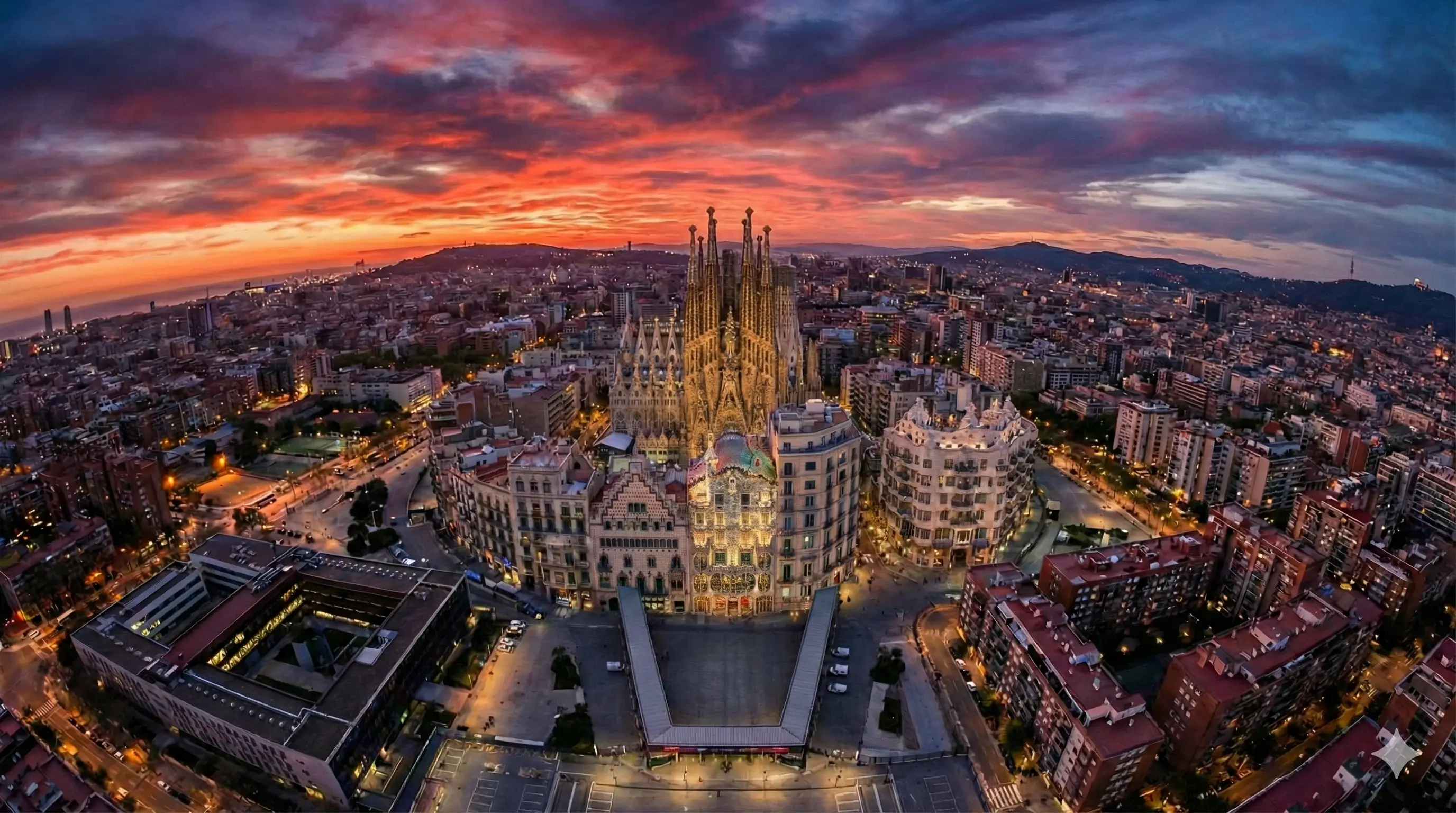
A Warm, Story-Driven History of Barcelona
Barcelona is one of those rare cities where the past never feels distant. You feel it the moment you walk through the Gothic Quarter, where lanterns glow softly above stone passages, or when you stand in front of the Sagrada Família — a masterpiece both historic and still in progress. What makes Barcelona special is not just its age, but how beautifully its history blends with everyday life. Here, ancient ruins sit beside bookshops, medieval plazas echo with laughter, and modern creativity thrives in places shaped by centuries of cultural exchange.
This journey begins more than 2,000 years ago, when Barcelona was just a small Roman outpost overlooking the Mediterranean.
1. Barcino — The Quiet Roman Beginning
Long before Barcelona became the bustling city we know today, it was a humble settlement called Barcino. The Romans chose this spot for its gentle slopes, fresh water, and proximity to the sea. While Barcino was not the empire's grandest colony, it thrived quietly, protected by sturdy walls that shaped its early footprint.
Today, travelers can still find traces of that ancient world woven into modern streets. Step into the Gothic Quarter and you're walking directly over Roman foundations. The Temple of Augustus is tucked away inside a quiet courtyard, its towering columns surprising visitors who wander in by accident. At the MUHBA (Barcelona History Museum), you can descend into a preserved Roman walkway — a beautifully quiet experience that feels like standing inside a time capsule.
These sites are easiest to enjoy in the late morning, when the old town begins to wake up but crowds are still light. Spending about two hours here is enough to appreciate Roman Barcelona, especially if you pair your walk with a small guided tour that unravels stories you may not notice on your own.
Nearby, the Cathedral of Barcelona, Plaça del Rei, and the charming Carrer del Bisbe offer perfect extensions to a Roman-themed morning.
2. The Medieval Heart of the City — Life Between Stone Walls
As centuries passed, Barcino grew into a lively medieval town. Merchants, shipbuilders, craftsmen, and families filled its narrow streets, shaping a vibrant community that would define Barcelona for generations. This era left behind some of the city's most cherished landmarks — many of which visitors unknowingly admire every day.
The Gothic Quarter (Barri Gòtic) still preserves the maze-like charm of this medieval world. Streets like Carrer del Bisbe, with its photogenic neo-Gothic bridge, feel almost cinematic. The Barcelona Cathedral rises proudly at the center, its spires and cloisters offering a peaceful refuge from the lively squares outside. A short walk away, the Santa Maria del Mar stands gracefully in the El Born neighborhood, known affectionately as the "Cathedral of the Sea."
Exploring this part of the city in the early morning is especially lovely — the streets are calmer, the stones still cool from the night, and you can wander without rush. As evening arrives, soft lighting brings a different kind of magic, perfect for leisurely strolls or tapas in El Born.
Don't miss a quiet moment at Plaça de Sant Felip Neri — a small, meaningful square that invites reflection and offers a gentle pause from the busier areas.
3. A Time of Transformation — 16th to 18th Centuries
Between the 1500s and 1700s, Barcelona went through periods of change and adaptation, like many European cities. Yet even during transitions, its community maintained a strong cultural identity. Craftsmen continued their work, local markets buzzed with life, and tradition thrived in the city's plazas.
This era is best appreciated through places like Santa Maria del Pi and the civic heart at Plaça Sant Jaume, where Barcelona's political life has centered for centuries. The area offers a glimpse into how the city balanced growth, governance, and daily life over hundreds of years.
For travelers who love quieter corners, the nearby streets hide several small cafés, artisan shops, and peaceful side alleys where you can enjoy a moment away from the crowds.
4. The 19th Century — The Birth of Modernisme
The 1800s marked a turning point when Barcelona began to look beyond its medieval walls, both literally and creatively. The old fortifications were removed, making space for the ambitious Eixample district, designed with wide streets, open squares, and a brilliant grid layout that brought fresh air, light, and elegance to the expanding city.
At the same time, Barcelona experienced an artistic awakening known as Modernisme — a movement full of color, imagination, and bold ideas. Leading the charge was Antoni Gaudí, whose work still defines the city's skyline and artistic spirit.
The Modernisme landmarks of Barcelona are truly unforgettable. Sagrada Família feels simultaneously ancient and futuristic.
Casa Batlló, with its flowing shapes and shimmering façade, looks like it grew naturally rather than being built.
La Pedrera (Casa Milà) is another masterpiece that blends sculpture with architecture.
Casa Milà (La Pedrera) tickets 🎫
Meanwhile, Park Güell offers sweeping views paired with playful mosaics, making it one of the city's most joyful places to explore.
Visiting these sights is particularly enjoyable in the early morning or late afternoon when light falls beautifully on the architecture. Many travelers find it helpful to explore the Modernisme masterpieces over half a day, with a relaxed break in Passeig de Gràcia — an elegant street filled with cafés, boutiques, and architectural surprises.
5. Creativity, Culture, and Identity — Barcelona in the 20th Century
The 20th century brought moments of challenge and resilience, but it also shaped Barcelona's creative soul. This was the era that nurtured legendary artists like Picasso, Miró, and Dalí, whose early inspirations can be traced to the colors, textures, and spirit of the city.
You can explore this period through the Picasso Museum in El Born — a must-visit for art lovers — or the Joan Miró Foundation on Montjuïc, which pairs art with breathtaking city views.
For those drawn to contemporary culture, MACBA offers a bold contrast to the surrounding historic streets of Raval.
Nearby attractions such as Montjuïc Castle, the Magic Fountain, and Poble Sec's tapas bars help make this part of the city a full-day experience.
6. The 1992 Olympic Games — Barcelona's Rebirth
Few events shaped modern Barcelona as profoundly as the 1992 Olympics. What was once an industrial waterfront was transformed into beautiful beaches, green parks, and inviting promenades. The city opened itself to the world with renewed energy and pride.
Today, travelers can still visit the Olympic Stadium, walk through Montjuïc's Olympic Park, or enjoy the relaxed coastal vibe of Port Olímpic. Sunset along the beach is especially wonderful — a reminder of how a single event helped reshape the city's relationship with the sea.
7. Barcelona Today — A City of Warmth, Culture, and Everyday Joy
Modern Barcelona feels both historic and fresh, traditional yet creative. It's a city where local markets buzz with life, neighborhoods each have their own personality, and beaches invite visitors to slow down and enjoy the Mediterranean breeze.
For first-time travelers, exploring the Gothic Quarter, discovering Gaudí's masterpieces, strolling along Las Ramblas in the morning light, and relaxing at Barceloneta Beach offer the perfect introduction to the city. Food lovers will enjoy El Born, Gràcia, and Poble Sec — neighborhoods where local delicacies and warm hospitality define the experience.
Practical Tips for Exploring Barcelona's History
While much of Barcelona's charm comes naturally, a few practical suggestions can help you appreciate its history more fully.
If you're focusing on historical sights, two days are enough to explore the essentials — the Roman ruins, Gothic Quarter, and Gaudí's major works. But spending three or four days lets you enjoy Montjuïc, art museums, and lesser-known Modernisme gems without rushing.
The best months to visit are generally March to June and September to November, when the weather is pleasant and walking tours feel breezy rather than tiring. While exploring historic neighborhoods, be mindful of noise late at night, and consider supporting local artisans, cafés, and family-owned shops that bring so much heart to the city.
Underrated places like Hospital de Sant Pau, El Call (Jewish Quarter), and Palau Güell offer deeper insights into Barcelona's past, often with fewer crowds.
FAQ
What is the history of Barcelona in brief?
Barcelona began as the Roman settlement of Barcino around 2,000 years ago, grew into a medieval trading port centered on today's Gothic Quarter, transformed during the 19th-century Modernisme movement led by Gaudí, and was reshaped again by the 1992 Olympics, which opened the city to the waterfront it's known for today.
Are there Roman ruins in Barcelona?
Yes. The Gothic Quarter sits directly over Roman Barcino's foundations — you can see the Temple of Augustus's columns tucked into a quiet courtyard, and descend into a preserved Roman walkway at the MUHBA (Barcelona History Museum).
What is Barcelona's Olympic legacy?
The 1992 Olympics transformed an industrial waterfront into the beaches, parks, and promenades that define the city today. You can still visit the Olympic Stadium and Olympic Park on Montjuïc, or walk along Port Olímpic.
What is the Gothic Quarter known for?
Its maze of medieval streets built over Roman foundations, the Barcelona Cathedral, and landmarks like Santa Maria del Mar and Plaça de Sant Felip Neri. It's the best-preserved medieval core in the city.
How many days do you need to see Barcelona's historic sites?
Two days cover the essentials — Roman ruins, the Gothic Quarter, and Gaudí's major works. Three to four days lets you add Montjuïc, the art museums, and lesser-known Modernisme sites at a slower pace.
Conclusion — A City Built by Time, Resilience, and Creativity
Barcelona's history is more than a timeline — it's a living, breathing story that continues to grow. The city invites travelers not just to see its landmarks, but to feel the centuries of life that shaped them. Whether you're standing among Roman ruins, admiring the curves of Gaudí's architecture, or watching the sun set over the Mediterranean, Barcelona gently unfolds its past in a way that feels warm, human, and beautifully authentic.
Enjoy discovering the city — one story, one plaza, and one unforgettable moment at a time.