
A Comprehensive Guide to the Best Cultural Festivals in Barcelona
Barcelona is a city that thrives on the energy of its streets, and there is no better way to experience this than through its traditional festivals. As you plan your first journey to the Catalan capital in 2026, you are likely looking for more than just a checklist of monuments; you want to feel the pulse of the local culture. Barcelona’s calendar is punctuated by celebrations that blend ancient religious roots with modern artistic expression, creating an atmosphere that is both historical and contemporary.
In the past, these festivals were intimate, local affairs, often centered around neighborhood parishes and small community guilds. Today, they have evolved into massive, city-wide events that attract visitors from across the globe while maintaining a deep, fiercely protected sense of Catalan identity. This guide will walk you through the most significant celebrations, helping you navigate the crowds and find the most authentic experiences.
The Evolution of Celebration: Past vs. Present
Barcelona’s festivals have undergone a remarkable transformation over the last century. During the mid-20th century, many traditional Catalan expressions were suppressed or carefully monitored. However, since the late 1970s, there has been a massive "reclaiming of the streets." The 2026 traveler will witness a triumphant revival where tradition meets technology.
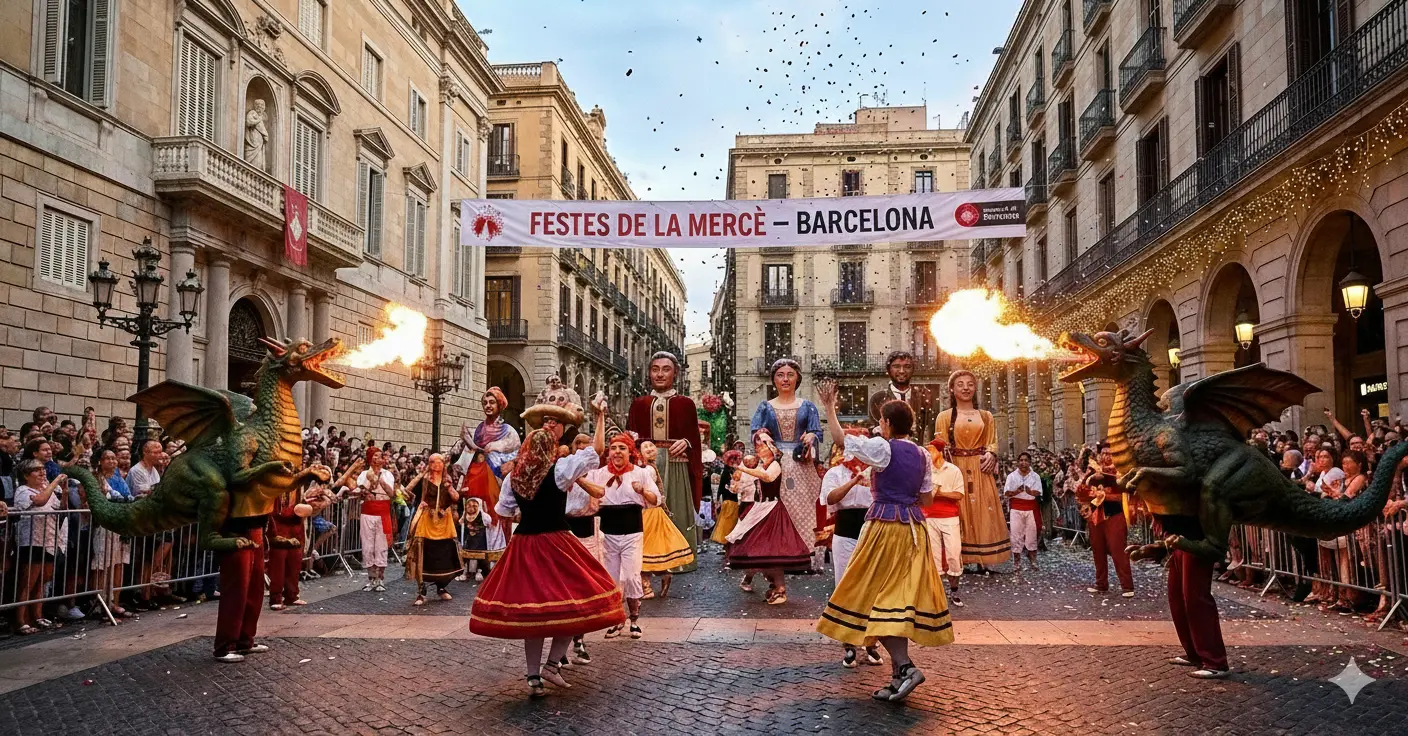
Modern festivals are now characterized by "Superilla" (super-block) pedestrian zones, sustainable materials in street decorations, and advanced digital mapping shows on historic facades. While the "Gegants" (giants) and "Castellers" (human towers) remain the heart of these events, they are now accompanied by electronic music stages, international food trucks, and light shows that use the city's architecture as a canvas.
La Mercè: The Grand Autumn Festival
If you visit Barcelona in late September, you will witness La Mercè, the city’s largest and most significant festival. Held in honor of the patron saint of Barcelona, this event marks the transition from the heat of summer to the crisp air of autumn.
What to Expect in 2026
In 2026, La Mercè is expected to be larger than ever, with a focus on integrating decentralized locations to ensure a comfortable experience for everyone. You can expect:
- Castellers (Human Towers): Witnessing hundreds of people forming a human pyramid in Plaça de Sant Jaume is a profound experience. It represents the Catalan motto: "Strength, balance, courage, and sanity."
- Correfocs (Fire Runs): Groups dressed as devils dance through the streets with fireworks attached to pitchforks. It is loud, smoky, and exhilarating.
- Insider Tip: If you plan to attend the "adult" Correfoc, wear long sleeves, a hat, and cotton clothing to protect yourself from sparks.
- Gegants (Giants): Massive papier-mâché figures representing historical kings, queens, and local characters parade through the Gothic Quarter.
- Cost: Almost all events are free to the public, funded by the city.
📍 Location: Plaça de Sant Jaume on Google Maps
Nearby Experiences During La Mercè
While you are in the city center for the festivities, take a break from the noise by visiting the Picasso Museum Barcelona. It offers a quiet, contemplative look at the artist's formative years in this very neighborhood.
📍 Location: Picasso Museum Barcelona on Google Maps
If you want to keep the cultural momentum going, head to the Barcelona City Hall Theater: Flamenco Show. The passion of the dancers mirrors the intensity of the festival outside, providing a perfect evening transition.
📍 Location: Barcelona City Hall Theater on Google Maps
Dining Tip: Visit Can Culleretes, the oldest restaurant in Barcelona, located just off the Ramblas. Their traditional "Canelons" are a festival staple.
📍 Location: Can Culleretes on Google Maps
Sant Jordi: The Day of Books and Roses
Occurring every April 23rd, Sant Jordi is often described as the Catalan version of Valentine's Day, but it is much more inclusive. It commemorates Saint George, the patron saint of Catalonia, who according to legend, killed a dragon to save a princess, with a red rose blooming from the dragon's blood.
The Modern Tradition
The city transforms into a giant outdoor bookstore and florist. Traditionally, men gave women a rose, and women gave men a book. In 2026, you’ll find that these roles have become entirely fluid—everyone gives books and roses to friends, family, and partners.
- Passeig de Gràcia: This iconic boulevard becomes pedestrian-only, lined with hundreds of stalls.
- Seasonal Delicacy: Look for "Pa de Sant Jordi," a savory bread made with sobrassada (red) and cheese (yellow) to mimic the colors of the Catalan flag.
- Atmosphere: It is a day of civic pride. You will see people of all ages carrying single long-stemmed roses wrapped in wheat stalks and the Catalan flag.
📍 Location: Passeig de Gràcia on Google Maps
Cultural Stops Nearby
On Sant Jordi, you cannot miss Casa Batlló. The facade is traditionally adorned with thousands of red roses, making it the most beautiful building in the city for that day.
📍 Location: Casa Batlló on Google Maps
Just up the street, Casa Milà - La Pedrera often hosts literary events or rooftop sessions. In the past, these were private; now, they are accessible to travelers who book in advance.
📍 Location: Casa Milà (La Pedrera) on Google Maps
Casa Milà (La Pedrera) tickets 🎫
Festa Major de Gràcia: The Neighborhood Masterpiece
In mid-August, the neighborhood of Gràcia hosts what is arguably the most creative festival in Europe. This is a grassroots competition where residents of about 20 different streets work year-round to decorate their blocks based on a chosen theme.
The Decorated Streets
Imagine walking through a street transformed into a 1920s jazz club, followed by one that looks like the bottom of the ocean, and another that replicates a Japanese garden—all made from recycled materials like plastic bottles, egg cartons, and discarded wood.
- Past vs. Present: In the past, these were simple paper streamers. Now, they are sophisticated engineering feats with moving parts and elaborate lighting.
- Social Etiquette: Remember that these are residential streets. While tourists are welcome, it is important to be mindful of the noise and avoid touching the delicate decorations.
- Timing: August 15th to 21st.
📍 Location: Gràcia District on Google Maps
Experiences Near Gràcia
Since you are already in the upper part of the city, this is the perfect time to visit Park Guell. The whimsical nature of the park aligns perfectly with the creative spirit of the Gràcia festival.
📍 Location: Park Güell on Google Maps
For a modern contrast, head to the Moco Museum. Its focus on contemporary and street art provides a professional look at the same kind of creative energy you see in the decorated streets of Gràcia.
📍 Location: Moco Museum on Google Maps
Dining Tip: Stop by Botafumeiro for some of the city's finest seafood. It is an institution in the Gràcia area and has hosted everyone from local poets to Hollywood stars.
📍 Location: Botafumeiro on Google Maps
Nit de Sant Joan: The Night of Fire
On the night of June 23rd, Barcelona celebrates the Summer Solstice. It is known as the "Nit del Foc" (Night of Fire).
How it Works
This is not a festival of organized parades, but a city-wide celebration of fire and light. People gather for "revetlles" (street parties) with bonfires, firecrackers, and music.
- The Beach Scene: The most popular place to be is the Barceloneta beach. Thousands of people gather with picnics and drinks to watch the sunrise.
- Coca de Sant Joan: You must try this traditional sweet flatbread topped with candied fruit and pine nuts.
- The Fire: The "Flama del Canigó" (a flame from the Canigó mountain) is brought to the city to light all the bonfires, symbolizing the unity of the Catalan lands.
📍 Location: Barceloneta Beach on Google Maps
Nearby Marine Life
If the beach crowds become too much, seek the tranquility of the Barcelona Aquarium nearby. It is one of the largest in Europe and offers a cool, quiet escape from the summer heat and the smoke of the firecrackers.
📍 Location: Barcelona Aquarium on Google Maps
Three Kings Parade: A Winter Magic
If you are visiting in early January, the Cavalcada de Reis (Three Kings Parade) on the evening of January 5th is a spectacle of joy, especially for families.
The Arrival
In Barcelona, the Three Kings (Melchior, Caspar, and Balthazar) do not arrive on camels—they arrive by boat! They dock at the Port Vell, where the Mayor gives them the keys to the city so they can enter every home.
- The Parade: A massive procession of floats, dancers, and musicians moves through the city center, throwing tons of candy to the crowds.
- Past vs. Present: In the past, the coal given to "naughty" children was real; now, it is a popular sweet made of black sugar.
📍 Location: Port Vell on Google Maps
Nearby Winter Visits
While at the port, take the Montjuïc Cable Car up the hill. The winter air is usually very clear, providing the best visibility of the year for panoramic photos of the city and the snow-capped Pyrenees in the distance.
📍 Location: Montjuïc Cable Car on Google Maps
For families, the Barcelona Zoo is also nearby and much quieter during the winter months, offering a relaxed afternoon before the evening parade begins.
📍 Location: Barcelona Zoo on Google Maps
The Sounds of 2026: Music Festivals
Barcelona has become the European capital of music festivals. If your trip coincides with these dates, you are in for a world-class auditory experience.
- Primavera Sound (June): A massive multi-genre festival at the Parc del Fòrum. It has grown from a small indie gathering to a global behemoth.
- Sónar (June): A festival of "Advanced Music and Digital Art." It is as much about technology and AI as it is about dancing.
- Gamper Trophy (August): While not a music festival, this is the FC Barcelona season-opening match. Visit the FC Barcelona Museum during this time to feel the "Culer" passion at its peak.
📍 Location: FC Barcelona Museum on Google Maps
Practical Tips for Festival Goers in 2026
Transport and Mobility
During major festivals like La Mercè or Sant Jordi, the metro is your best friend. It often runs 24 hours during these events. Avoid taxis or buses in the city center, as many streets will be closed to vehicles.
Safety and Awareness
Barcelona is a safe and welcoming city. During festivals, the crowds can be very dense. It is always a good idea to keep your personal items in a secure, front-facing bag and stay aware of your surroundings, just as you would in any major world city.
Respecting Local Sentiments
- Language: While everyone speaks Spanish, the festivals are a celebration of Catalan identity. Learning a few words like "Bon dia" (Good day) or "Gràcies" (Thank you) goes a long way.
- Participation: Feel free to join in! If you see a circle of people dancing the Sardana (a traditional communal dance), they often welcome onlookers to join the circle.
- Hydration: Barcelona in summer (August festivals) can be very hot. Use the city's many public water fountains (Font de Canaletes style) which provide clean, free drinking water.
Cost Ranges
- Street Festivals (Mercè, Gràcia, Sant Jordi): Free.
- Music Festivals (Sónar, Primavera): €80 - €300 for tickets.
- Food: Festival street food usually ranges from €5 - €15 per item.
Summary of Major Festivals 2026
| Festival | Date | Best For | Location |
|---|---|---|---|
| Three Kings | Jan 5 | Families & Magic | Port Vell to Center |
| Sant Jordi | April 23 | Romance & Culture | Passeig de Gràcia |
| Primavera Sound | June | Music Lovers | Parc del Fòrum |
| Sant Joan | June 23 | Beach Parties | All City / Beaches |
| Festa de Gràcia | Aug 15-21 | Art & Community | Gràcia District |
| La Mercè | Sept 24 | Traditions & Fire | Citywide |
Conclusion
Participating in a Barcelona festival is the quickest way to move from being a tourist to being a guest of the city. Whether you are ducking from the sparks of a Correfoc in September or smelling the thousands of roses in April, these events offer a sensory experience that no museum can replicate.
As you plan your 2026 trip, remember to book your accommodation early if you plan to visit during these dates, as the city fills up quickly. Respect the traditions, engage with the locals, and you will find that Barcelona’s festivals are the true heart of the Mediterranean.
Final Tip: For a truly grand finale to any festival day, visit the Palau de la Música Catalana. Even if there isn't a festival event happening there, a tour of this modernist jewel reminds you that in Barcelona, every day is a celebration of art.
📍 Location: Palau de la Música Catalana on Google Maps